
* A Distributed Proofreaders Canada eBook *
This eBook is made available at no cost and with very few restrictions. These restrictions apply only if (1) you make a change in the eBook (other than alteration for different display devices), or (2) you are making commercial use of the eBook. If either of these conditions applies, please contact a https://www.fadedpage.com administrator before proceeding. Thousands more FREE eBooks are available at https://www.fadedpage.com.
This work is in the Canadian public domain, but may be under copyright in some countries. If you live outside Canada, check your country's copyright laws. IF THE BOOK IS UNDER COPYRIGHT IN YOUR COUNTRY, DO NOT DOWNLOAD OR REDISTRIBUTE THIS FILE.
Title: The Flying Canoe
Date of first publication: 1929
Author: J. E. (James Edward) Le Rossignol (1866-1959)
Illustrator: Franz (Frank) Johnston (1888-1949)
Date first posted: July 23, 2026
Date last updated: July 23, 2026
Faded Page eBook #20260752
This eBook was produced by: John Routh & the online Distributed Proofreaders Canada team at https://www.pgdpcanada.net

Copyright, Canada, 1929
By McClelland & Stewart, Limited, Publishers, Toronto
Printed in Canada
TO JESSIE
The thanks of the author and the publishers are due to the editors of the Toronto Star Weekly, and the Canadian Home Journal for their courteous permission to republish certain stories which appeared originally in these journals.
| CONTENTS |
| The Flying Canoe (La Chasse-Galerie) |
| Market Day |
| Le Vaurien |
| Le Colporteur |
| The Stranger |
| Le Coureur Des Bois |
| La Ceinture Fléchée |
| The Habitant-Bourgeois |
| A Truthful Angler |
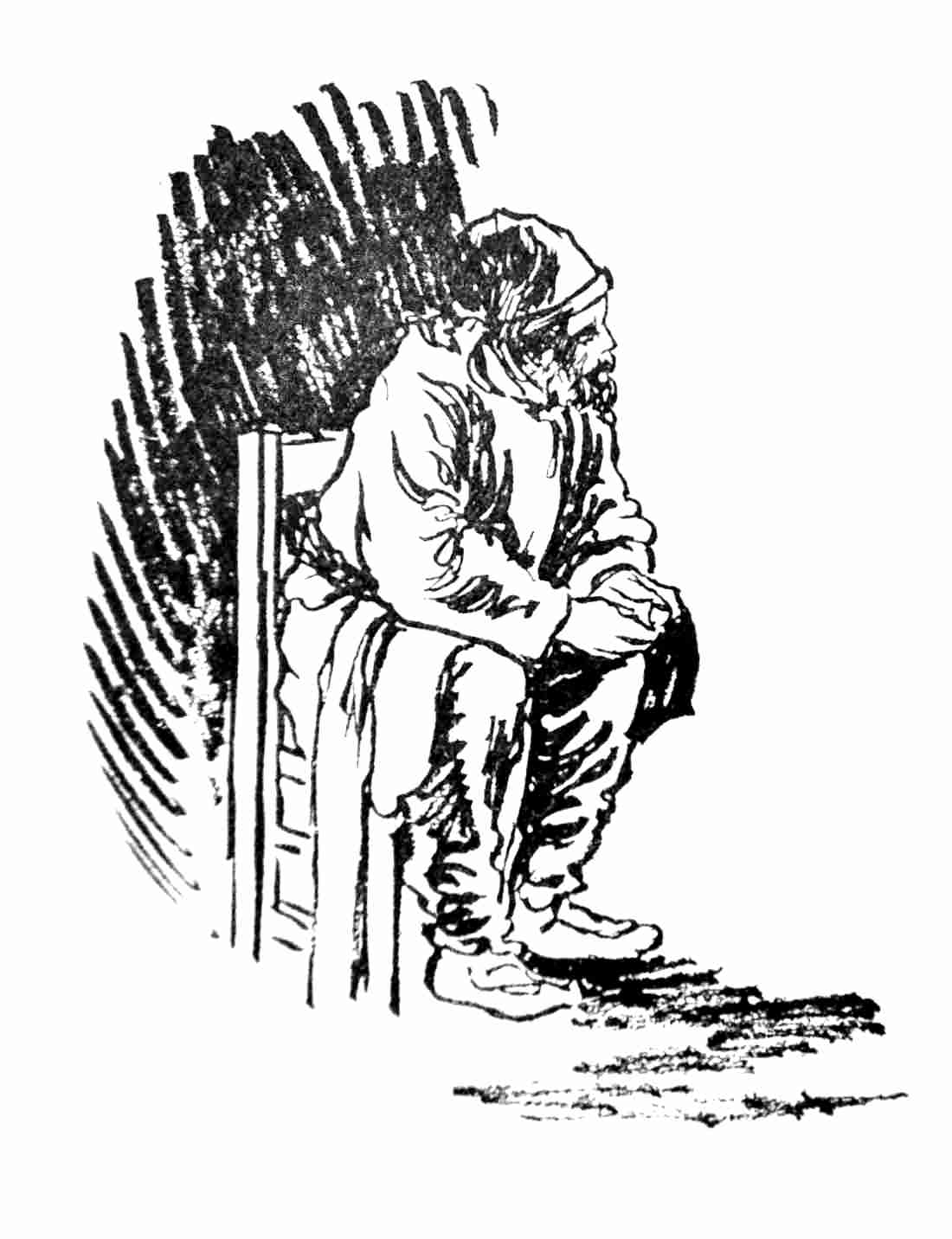
It was a wintry night, yet the usual company were assembled chez Bédard, and if they gathered close about the fire, it was not merely to bask in the cheerful blaze, but to hear every word of the story which they expected from the raconteur, Pierre Thibault. As he never began without an introduction, it became the duty and privilege of Bonhomme Bédard to set the ball a-rolling.
“As you see, Cousin Pierre, we are all here, regardless of the weather, so you will give us something special to-night, will you not?”
“Something better than usual, M’sieu mon cousin?”
“No, no! Do not misunderstand me, Cousin Pierre. Your usual would be hard to beat. But something special all the same—to match the weather, I will say. Yes, that is my idea.”
“A difficult task, mon cousin, on a night like this, with the snow piling in great drifts and the wind howling about the place as though the devil and all his angels were at large. There—I have it. How would you like to hear about a little sorcery?”
All the company made the holy sign, but no other protest, so the conteur began:
“I know nothing of sorcery, me, but my cousin, Sébastien Laforce, of St. Joachim, there below, has had experience of that—an adventure which he will never forget. No, for he has a mark on his body to remind him of it. As if that were necessary.
“Bon! It came about like this. Cousin Sébastien was bûcheron one winter in the lumber camp of M’sieu Dulard on the river Peribonca, just below the forks. And a master bûcheron he was, one who could cut down a three-foot pine while you would say cric-crac. Yes, a valuable man, commanding the highest wages of the camp—twenty-five dollars a month with board and bunk.
“No, Cousin Michel, Sébastien was not foreman at that time, because of a certain weakness for the bottle. And yet, there was not much strong drink to be had on the Peribonca—the bourgeois would not allow it. By consequence it was the most quiet and peaceful camp you ever saw—no gaiety, no fighting, no cursing, no stories that you could not tell to your mother-in-law. They did not even sing. It was like Sunday all the time.
“A dull place that for Cousin Sébastien, who was by nature of a sociable disposition and loved all the good things of life—food, drink, song, jest, and the winsome ways of pretty girls.
“No, Cousin Marie, Sébastien was not married nor even engaged. Interested only, in several of the demoiselles of St. Joachim, especially la belle Louise Ducharme, daughter of a rich habitant, at whose house he had attended many a veillée in times past. How well he remembered those gay soirées, where one could play, sing, or dance, as one might wish, or, better still, could sit aside in some quiet corner exchanging sweet nothings with one’s partner and making remarks about the rest of the company. Yes, those were memories to console one during the long winter, or to make one rage at the deadly ennui of the camp on the Peribonca.
“If only one had better food—that is to say, something different. A good beefsteak, for example, now and then, or a fried trout, or a big batch of galettes such as one often had at home. How fine that would be, how appetizing! Something to which one could look forward during the long morning and again in the afternoon. But that everlasting pea-soup, pork, potatoes, and beans, three times a day, with sour bread, strong butter, and bitter tea—it was too much. How could one fell trees all day on food like that? And in the evening, how could one play, or fight, or sing? No pleasure in life, no change, no variety. Except on Friday, when there was codfish or red herring. Think of it—the day of fast the best of the week!
“As you may imagine, Cousin Sébastien was not happy in that camp. Often did he think of quitting the job, but did not know where to find another. As to getting out of the woods, that was not easy—fifty miles over the snow to Lac St. Jean, seventy more to Chicoutimi, and then nothing to do. That was before the days of the paper mill, as you know. So my poor cousin was a prisoner in the wilderness, far from his foyer, his old friends, and the fêtes approaching. No wonder that he was depressed and melancholic. His sole consolation was the thought of the good money which he would have in the spring, after the drive, and which he would take back to St. Joachim—if he did not spend it in Chicoutimi on the way home. It would help to buy a little farm on the slope of Cap Tourmente, when, perhaps, la belle Louise would think him worth considering. But many months of winter were yet to come and there was no other light ahead.
“Until Damon Le Corbeau arrived one evening on snowshoes from the camp at the discharge, with a letter from the bourgeois recommending him as a bûcheur of the first class. As the boss was short of men, he took the newcomer on at once, assigned him a bunk directly over that of Sébastien and ordered him to accompany my cousin as piqueur on the very next day. The piqueur, as you know, follows the bûcheron to cut the branches off the trees, so Le Corbeau was companion and partner to Cousin Sébastien.
“This citizen was well named, for he was black as a crow, with straight, shiny hair, bushy eyebrows, and a pointed beard like that of a grand seigneur. His black eyes, you should have seen them, shining and sparkling as though from fire within. And his conversation, also, was quick as a flash, passing from one subject to another like lightning in a summer cloud. He was far too clever for Sébastien, who could only look at him with open mouth, not speaking a word, but greatly enjoying the entertainment.
“As to the work, he followed Sébastien like a shadow, doing always far more than his share. As soon as a tree was felled he would leap upon it, and, with a few blows of his sharp axe, lop off all the branches and the bushy top, leaving the naked trunk for the sawyers to cut into logs. Then, clearing the brush away, he would come to the aid of Sébastien in felling another tree, making the chips fly so fast that very soon the biggest pine would come crashing down. And so on, hour after hour, day after day. No wonder that Sébastien, with such a partner, could polish off more trees than any other bûcheron in the camp, which made the rest jealous and started the talk of sorcery.
“A bad suspicion, that, and dangerous for everybody. But what was the evidence? Well, you shall judge for yourselves. On the morning after Damon’s arrival Polydore Laflèche had followed his tracks down the river, and found that, all at once, they disappeared. How then had Le Corbeau come to the Peribonca, if not through the air, as the crow flies? Species of sorcery, that.
“Zéphyrin Boucher, who had watched Damon and conversed with him as much as possible, declared that he never said prayers, had no patron saint, wore no scapulaire, and had not made his confession in more than seven years, even at Easter. Whereupon all the gang were horrified and looked to see Damon, some bad night, turn into a loup-garou.
“But that was not the worst. Ignace Doucette, brother of a priest, felt it his duty to plead with Damon, hoping to save his soul. Then the lost one told him a fearful story of a black mass in which he had taken part on the top of Cap Tourmente, and to which sorcerers and sorceresses had come from every part of the world. They came riding on broomsticks, black cats, goats, and many other vehicles and beasts. And when they were all assembled they offered sacrifice to Satan, who was there, with horns, hoofs, and tail, seated on a great rock, while all the sorcerers bowed to the ground and said the blasphemous prayers of the occasion. After that there were horrible orgies, of which one must not even think, much less speak.
“Ignace was shocked and terrified, but that did not prevent him from repeating the story, with enlargements of his own.
“All of which, you may be sure, came to the ear of the boss, so one Saturday evening, when everybody was there, he took occasion to reprove them for their evil gossip, while giving Damon a chance to deny the rumors, if he wished.
“ ‘There, Damon,’ he said, at the end, ‘I have defended you, for I am sure that you are a good man and no sorcerer. Now what do you say?’
“Damon rose and made his bow to the boss and all the gang.
“ ‘Grand merci, M’sieu Tremblay,’ he said, ‘for your kind solicitude. My reputation is established. A good man and no sorcerer. A fine commendation, that. I take it to myself. I accept the dignity. I place the crown of virtue on my head. I will have it carved on my tombstone, for the edification of my surviving friends. It is to laugh. Ha, ha! Ho, ho!’
“Whereupon and without reason one of the men began to laugh, then another, and another, until the whole gang, even the boss, joined in the chorus, laughing to split their sides, and could not stop until Damon gave the word.
“ ‘That,’ he said, ‘is a species of sorcery, if you like. Why did you laugh, Polydore? You don’t know? No, how should you? But wait—I will show you something else.’
“With that Damon took an ancient concertina from the wall, a relic of former days, and, after a few notes running up and down, began to play an old, old tune, which every man there remembered from his earliest years, to which, perhaps, he had been sung to sleep in the little cradle by the foyer of his distant home. It was the immortal melody of La Claire Fontaine, which, as Damon played, touched the heart strings of every mother’s son and unloosed a flood of tears. Strange, indeed, to see those rough bûcheurs cry like babies while the sorcerer played. Even the cook was wiping his eyes with his apron, while the boss was furiously blowing his nose.
“ ‘There,’ said Damon, at last, ‘no more of that. Let us have another tune—something more gay. Let us sing, also. Here goes—everybody!’
‘Derrier’ chez nous, ya-t-un étang,
En roulant ma boule.
Trois beaux canards s’en vont baignant,
Rouli, roulant, ma boule roulant.
En roulant ma boule roulant,
En roulant ma boule.’
“A grand song, that, in which everybody took part, especially in the chorus, which they bellowed forth, keeping time with arms in the air, bodies swaying, and feet stamping on the floor, until, as Sébastien said, there was noise enough to raise the roof.
“Then, at the end of the thirteenth verse, Damon rose in his place, concertina in hand, made a bow to M’sieu Tremblay, another to the gang, and said, as polite as you please:
“ ‘M’sieu Tremblay; mes amis. A great night, this. You have laughed; you have wept; you have sung like angels; and now you shall dance—like demons. Clear the floor. Take your boots off. Now I will sing you a little song. Here it is:
‘C’est notre terre d’Orléans
Qu’est le pays des beaux enfants,
Toure-loure;
Dansons a l’entour,
Toure-loure;
Dansons a l’entour.
‘Venez-y tous en survenants,
Sorciers, lézards, crapauds, serpents,
Toure-loure;
Dansons a l’entour,
Toure-loure;
Dansons a l’entour.’
“ ‘Now, my friends, let us dance. Toure-loure; dansons a l’entour. Toure-loure—like this—’
“It was the strangest performance you ever saw, beginning with a grand march around the big room by the light of a blazing fire. Then, presently, Damon established himself by the foyer, playing a wild tune, while the rest of the gang, in pairs, executed a species of snake dance, winding about the room, whirling, leaping, prancing—everyone in his own way. Even the boss was in it, his arms about the cook, doing a veritable war dance. But all without a word, and very little sound of any kind, except the squeaking of that blessed concertina, which made the feet go.
“And every time the dancers passed the place where Damon was standing, they bowed to the ground, as though to kiss his feet, while the sorcerer made a sign as of a priest blessing the congregation. But not a holy sign—far from that. It was, in fact, a sorcerers’ dance, which continued until past midnight. Strange celebration, that, to begin the feast of St. Sylvestre on the last day of the year.
“At last, Damon, tired of his wicked joke, put the concertina away, and the dancers were released. Then the gang, exhausted and humiliated, climbed into their bunks. Fortunate for them that they could rest on Sunday.
“ ‘Well, Sébastien,’ said Damon Le Corbeau, as they were walking along the lumber road on the following afternoon, ‘how did you like our little sabbat? A fine celebration, that—almost as good as the real thing.’
“ ‘Bon Dieu!’ said my cousin, growing pale and crossing himself repeatedly, ‘that was too much for me. But it was not my fault—you did it.’
“ ‘Do not make those signs, idiot, or I will spit you on this little stick. Think I could not, eh? And as for the person on whom you call, do not mention him again. He is not here—I have him en cache down by Lac St. Jean. Understand?’
“ ‘Yes, yes,’ muttered Sébastien, trembling in his boots. ‘O, why am I here? None of the rest would go with you.’
“ ‘No, my courageous one, they would not. Moreover, our noble boss, the good Ignace Tremblay, does not wish to see me any more. So I am invited to go away, which I will do, this very evening.’
“ ‘Go away, M’sieu Le Corbeau! But where, how? The woods are full of snow and the wind blows on the river. Fifty miles to Lac St. Jean—no, you could not.’
“ ‘Sacré fou! Is it possible that you have not heard of La Chasse-Galerie?’
“ ‘But yes. I have heard of it, certainly. And this is the fête of St. Sylvestre, the last day of the year. There will be soirée chez Ducharme. How I should like to go! But to run Chasse-galerie? No. I dare not. It might cost me my soul.’
“ ‘Your soul? Ha, ha! Ho, ho! Very much hypothecated since last night, I will say. But no, you can release it all right. Abbé Perrault will attend to that when you get back to St. Joachim. As to Chasse-galerie, there is no danger. I will take care of you. Yes, you shall go to the soirée and dance with la belle Louise. Eh? What do you say to that?’
“ ‘But, M’sieu Le Corbeau—’
“ ‘No buts! Meet me at moonrise above the falls and you shall see. But remember this: if you make the holy sign, or speak the name of that person, or touch the cross on a church steeple, the devil will take you. Understand?’
“ ‘Yes, I understand far too well. I will not go.’
“ ‘Oh, yes, you will. At moonrise. Remember!’
“Sure enough, at the time appointed, Damon and Sébastien met at the chute, where the river comes out from the ice, plunges into the abyss, and disappears under the ice again. It was bright moonlight and very cold, but that was nothing, for they had thick clothing and a good bottle of gin, which Damon provided, from which they took un petit coup now and then to keep up the courage and warm the heart. But I have often thought that there may have been more than gin in that bottle.
“For a while they waited, seeing nothing unusual—only the round moon, the twinkling stars, the black forest, and the pale, shining stretch of the Peribonca. Presently, above the roar of the falls came a strange murmur in the forest—not the hoot of an owl, nor the howl of a wolf, but the sound of men singing in concert, which quickly increased until it became a veritable roar. Then over the trees came a great canoe full of men paddling for dear life, while shouting the old song of the Canadian bûcherons:
‘Voici l’hiver arrivé,
Les rivières sont gelées,
C’est le temps d’aller au bois
Manger du lard et des pois!
Dans les chantiers nous hivernerons!
Dans les chantiers nous hivernerons!’
“Chasse-galerie did not stop at all, but by some magic my cousin found himself in it, paddling and singing furiously with the rest, while the great canoe flew through the air like a flock of wild geese bound for some distant shore. They followed the white stretch of the Peribonca all the way to Lac St. Jean, crossed over to the grand-décharge and took the route of the Saguenay. In no time at all they saw the lights of Chicoutimi, far below. Then on down the river, passing Ha Ha Bay, Cape Eternity, Anse St. Jean, and St. Etienne, until, at Tadousac, making a great swing to the right, they were flying above the broad St. Lawrence toward Malbaie, Baie St. Paul, Les Eboulements, and St. Joachim.
“At this point Sébastien turned to look at his companions, to see what species of guests were going to the soirée, and was surprised to see several of his old schoolfellows. There were Jules Desaulniers, Philippe Hamel, Zotique Charbonneau, and some whom he did not know so well, from l’isle des sorciers, across the river. But Jules had been drowned in the fleuve ten years before; Philippe had been lost in a storm on Lac des Neiges; and Zotique had been killed by Indians in Labrador. All were dead men, spirits—that is to say, all but Sébastien himself and Damon.
“But where was Damon? Not in the body of the canoe, nor in front, but standing in the stern with a great paddle, steering the ship. Damon was commander of Chasse-galerie. Strangely changed, also, in coat and ceinture of flaming red, as also his capuchon, with the peak sticking up in the middle and pointed ears or horns at the sides. And his eyes were shining in the moonlight like those of a wild beast. Surely, thought my cousin, this is no longer Damon, but Satan himself, with a cargo of lost souls. Yet my cousin was not at all afraid—only curious to see what was going to happen.
“Soon they were flying past the shoulder of Cap Tourmente, dipping down toward St. Joachim, and in another moment they alighted in a field behind the barn of Bonhomme Ducharme. Then they all marched to the house, entering as the door blew open, and found themselves in a large company of neighbors and friends, some dancing, and others, as usual, merely looking on.
“Strange to say, nobody noticed the newcomers. It was as though they were not there. Sébastien went up to Bonhomme Ducharme, who was standing by the fire smoking his pipe, but the old man did not seem to see him, nor to hear, either, when he offered the salutations of the new year. Then Sébastien pulled him by the sleeve, so that he started, and his pipe fell to the foyer, broken to bits—but that was all. No recognition, no word of welcome.
“There was Mamselle Louise, too, cutting pigeon wings with Isidore Boivin, his old rival. He signalled and called to her repeatedly, but without response. After a while, when she was standing alone for a moment, Sébastien approached to ask for the honor of a dance with the daughter of the house.
“ ‘You do not know me, Louise?’
“ ‘No,’ she replied, as one in a dream. ‘Who is it?’
“ ‘Sébastien, of course, who has come all the way from the Peribonca for one dance. Just one, Louise.’
“At this Louise made a little curtsey, extended her hand to her partner, and, with all her old-time sweetness and grace, executed the movements of the minuet. Meanwhile, the others stood aside, speechless, though why they should be surprised to see Louise and himself dance together, as they had often done before, Sébastien could not make out.
“After this a round dance began, forbidden pleasure in St. Joachim, where Abbé Perrault had his congregation in good control. But on this occasion they broke loose, and everybody, young and old, went whirling about the room, while the passengers of Chasse-galerie joined in the wild dance, which continued long after midnight. Strange soirée, that, for the respectable home of Bonhomme Ducharme in the quiet parish of St. Joachim. At last the door blew open again, all the voyageurs trooped out, embarked in their canoe, and were gone.
“Like the wind they flew back the way they had come and in less than an hour they were sailing up the Peribonca toward the camp, roaring out the bûcherons’ song to the very end.
‘Ah! bonjour donc, mon cher enfant!
Nous apport’-tu ben d’l’argent?
Que l’diable emport’ les chantiers!
Jamais d’ma vie j’y r’tournerai!
Dans les chantiers, ah! n’hivernons plus!
Dans les chantiers, ah! n’hivernons plus!
“Then the pilot, Damon, spoke to the crew.
“ ‘What now, my children? Back to the shanties—eh?’
“ ‘Non, non!’ they shouted. ‘To our own place—aux enfers!’
“ ‘Well said, my brave ones. And our little friend Sébastien, shall we take him along?’
“ ‘Oui, oui!’ shouted all the dead men, as Chasse-galerie turned toward the north star.
“ ‘O, mon Dieu!’ cried Sébastien in great distress. ‘A moi! Sauvez moi! Mon Dieu, mon Dieu!’
“At this Damon struck my cousin a fearful blow on the head with the paddle and seized him by the neck as though to carry him away bodily. But Chasse-galerie vanished in smoke, while the two struggling ones fell through the air for a thousand feet, as it seemed, and plunged into a great snowdrift at the brink of the falls, where they had started, a few hours before. It was like sudden awakening from a bad dream.
“ ‘Well, my little one,’ said Damon, when they had crawled out of the drift, ‘so you could not hold your tongue, after all. For that you have lost your soul.’
“Sébastien shivered.
“ ‘But no,’ he muttered feebly. ‘That cannot be. I did not agree to it. There was no contract.’
“ ‘No contract, eh? Don’t fool yourself. Signed, sealed and delivered. Look on your left shoulder when you return to camp and you will see. Au revoir, mon vieux!’
“ ‘Then Damon, without another word, tied on his snowshoes, took the trail around the falls, descended to the river below, and marched away toward Lac St. Jean. Sébastien stood there until his former friend was a small black speck on the snow of the Peribonca, and that was the last he ever saw of Damon Le Corbeau.’ ”
The raconteur lit his pipe and began to blow rings in the air, while the company waited in silence as though expecting something more. At last, little Marie Bédard spoke up:
“But, Cousin Pierre, surely that is not the end of the story?”
“Why not, Cousin Marie? The sorcery was finished and the sorcerer gone. What would you?”
“I would know what became of the sorcerer, Cousin Pierre. I find him interesting.”
“Interesting, my dear little cousin! He was a bad man. But I will tell you all I know. Ignace Doucette, brother of the priest, believed that Satan took him. Polydore Laflèche, who found no tracks on the river, accused Sébastien of having thrown him down the chute. But they could not prove it. No, for before morning a snowstorm had come with a high wind, covering everything.”
“And Damon was never seen again?”
“I will not say that. On the contrary, I have heard of a strolling wizard of that name, and I think—yes, I am very sure—that it is the same man. Species of sorcerer, that one, making magic which nobody can explain.”
“And Sébastien,” continued Marie, “what was on his left shoulder?”
“A black mark like a bird—a crow, perhaps. Ignace said it was the mark of Satan, but how does he know? For me, I say it was one of the tricks of Damon—a souvenir of his visit, if you like.”
“But Sébastien himself—what of him?”
“He is a lay brother at Notre Dame du Lac, in the abbey of La Trappe, where he works all day, prays all night, and never speaks to his fellow man. He will make his salvation, no doubt.”
“Oh, the poor fellow! But what of the soirée chez Ducharme?”
“Well, Cousin Marie, if you must know, there are two stories—the one from Sébastien himself, the other from Bonhomme Ducharme and the invited guests at the soirée. As to the latter, nobody saw Chasse-galerie, nor any of the crew. But the door did blow open, and there were strange voices in the room. Also, la belle Louise was dancing all alone, as in a dream. And after that everybody went wild, until the door blew open once more and the voices were gone. Strange party, that. Any more questions, ma petite cousine?”
“Only one, Cousin Pierre. What of la belle Louise? She also went to the convent, I suppose.”
“Not at all. She is Madame Isidore Boivin, of St. Joachim, and quite happy. But, possibly, she may think sometimes of her old cavalier, Sébastien Laforce.”
“Possibly,” murmured little Marie.
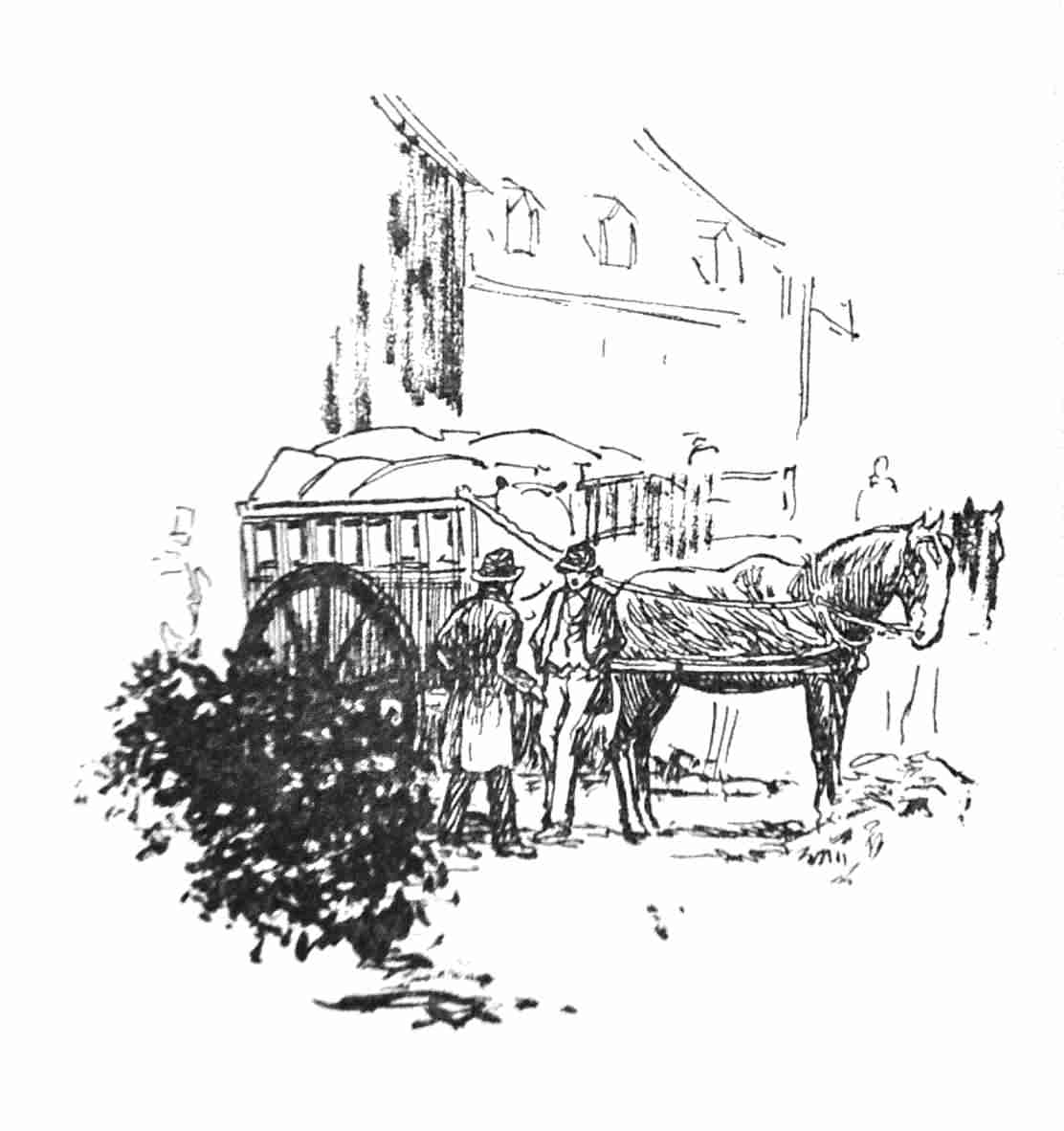
There had been active higgling that evening chez Bédard, with much debate and chatter, but after a while the noise died away, for everyone was eager to have a new story from the wandering merchant. And when the silence was complete, so that one could have heard a pin drop, Bonhomme Bédard gave the word.
“Well, Cousin, Pierre, here we are once more and we are all glad to see you. I wish that you could come often—every month, at least. Could you not?”
“Mais non, M’sieu mon cousin. As you know, I have my little tour, my circuit—down the north shore to Tadousac, across the fleuve to Rivière du Loup, and back on the other side to Pointe Lévis and Québec, with good customers everywhere. No. I could not neglect them—I should lose my business.”
“What a journey, that! To think of all the places you see, all the people you meet, and all the good stories you hear. One of which you will tell us, perhaps, this very evening.”
“Possibly, my dear cousin. Yes, it might be so, if all the company requested it.”
Whereupon everybody clapped their hands until all pretense of modesty and resistance was overcome. When order was restored, the raconteur began.
“Once upon a time, and not so very long ago, a certain Mademoiselle Trudelle lived in a little cottage near the main road of L’Ange Gardien and cultivated a small strip of land cut from the property of her elder brother. An ancient and honorable family, those Trudelles, as you know, descended from one of the first settlers of the parish, and by no means few in number. Cousins of ours, of course.
“Well, la vielle fille, having no children of her own, while her brother Jean had them en masse, obtained permission to adopt his daughter Juliette, a pretty little créature of seven years, with the understanding that the child was to be trained in ways of industry, frugality, and virtue, without neglecting the book learning proper to the daughter of a prosperous and respected cultivator. All of which was faithfully performed, so that, after ten years, Juliette was one of the most beautiful and capable girls of the parish.
“During the winter she studied with the good sisters of the convent, but the season of which I speak, being summer, was not the time for study, but for cultivating the garden and doing other useful work about the place.
“Behold the two, then, on a fine afternoon in August, gathering potatoes, turnips, cabbages, onions, and other vegetables, washing them at the pump, and packing them in the charette for the journey to Québec on the following day. They were wonderful vegetables, I assure you, which had been carefully planted in the month of May, lovingly tended all summer, and now were ready for market a full week ahead of the season. Without doubt, the like did not exist in all the Côte de Beaupré—so large, tender, juicy, of a flavor incomparable.
“Joyously Mamselle Trudelle and her niece worked in the garden all afternoon, until the charette was almost full, leaving space only for a dozen spring chickens and some pounds of butter, which, of course, must remain in the cellar until the last moment. By this time the evening twilight was coming on, so Mamselle pronounced the work finished for the present and invited Juliette to come to supper after she should have said good-night to all the beasts and birds of the little estate.
“Soon after supper they went to bed, promising each other to rise early and to be on the road long before the break of day.
“They sleep well, young people like Juliette, and Mamselle was knocking on the wall a long time before she could awaken her little niece. But at last she was up and doing, all eager for the joys of market day.
“ ‘But come here, Juliette. Vite, vite!’ called a voice, in great distress.
“Juliette flew to the next room.
“ ‘What is the matter, sa tante? Oh, what is it?’
“ ‘There, there, chérie,’ said Mamselle, between her groans. ‘Nothing serious, no. Only my rheumatism, that has come back. Oh! I can hardly move. No market for us today. Too bad for those fine vegetables, those pounds of butter, those chickens. Oh! It is to cry.’
“Tears came to the eyes of Juliette, as she tried to help and console her dear aunt. Then, all at once, a bright thought appeared—a light in the darkness, so to speak, which illuminated everything.
“ ‘Sa tante,’ she said, in her sweet, gentle voice, ‘console yourself. You will be all right very soon. In two days, at most, you will be working in the garden. It has always been thus, as you know. Meanwhile, we will take care of you—that is to say, my sister Simonne will come for the day. And I—I will go to the market.’
“ ‘No, no, Juliette, you could not. You might go, perhaps, and return in safety; but at the market what would you do? Those bourgeoises would cheat you.’
“ ‘No danger, sa tante. I know them, me. I have been there with you, have I not? I have seen; I have heard. Fear nothing. All is arranged. Say yes, sa tante.’
“ ‘Juliette, you are a good girl and very capable, as I know. That is why I adopted you. But to deal with those bourgeoises, that is not so easy. They have their tricks. I fear for you, for myself. But you are right—there is nothing else to do. We cannot eat all those things, and the neighbors do not want them. We might give them to M’sieu le curé, perhaps, but why that? We have paid our tithes; we owe him nothing. No. You must go to market, that is evident. C’est ça. I feel better already. Now let us have a cup of tea and we shall be all right.’
“Before long all was ready. Rose, the white cavale, stood at the door, attached to the charette, while the charioteer was receiving final instructions from her anxious aunt.
“ ‘Pay attention, Juliette,’ she said, for the tenth time, ‘for it is an important confidence which I am reposing in you. You have there a load of early vegetables and other merchandise worth, at the very least, ten dollars—and much more, if you can get it. They are worth all that the buyers will pay—remember that. You will demand a good price at the first, as you have seen me do, though you may come down a little, after a while, if you must, especially to the poor. But those rich bourgeoises shall pay the top of the market, and more, if possible.’
“ ‘Now, chérie, you must go, in order to arrive early and find a good place. Call at brother Jean’s on the way and ask Simonne to come down. Do not drive too fast—nor too slowly. When you have found your place in the market, leave the charette there and take Rose, as usual, to the stable of Cousin Ambroise, in the rue St. Pierre. You will dine, also, with our good cousins. All that will cost you nothing. Be sure to give a pound of butter and a large cabbage to Cousin Justine, also the cassot of maple sugar and the package of spruce gum. And do not forget the twist of tabac du pays for Cousin Ambroise. That will please him much. Above all, do not forget to say your prayers in the church, before the market opens, and to present the candle which I promised to Notre Dame des Victoires. From the wax of our own bees—that should count for something.’
“ ‘Well, Juliette, there is something more, but I have forgotten. No matter. Take good care of Rose, the charette, and yourself. My respects to Cousins Ambroise and Justine. But beware of the bourgeoises. Au revoir, chérie. Bonne chance.’
“Juliette was in high spirits as she drove up the lane and took the highway toward Québec. It was night, of course, but not dark at all, for the full moon was shining over the hill and there were bright stars in the sky. When they were crossing the bridge over the Montmorency she paused to see the moon reflected in the still water, to hear the roar of the falls, and to demand of the morning star what the day should bring. The response must have been satisfactory, for she drove on well content, singing to herself an old song:
‘Par derrier’ chez ma tante
Il lui ya-t-un étang . . .
Je me mettrai anguille,
Anguille dans l’étang.
‘Si tu te mets anguille,
Anguille dans l’étang,
Je me mettrai pêcheur:
Je t’aurai en pêchant.’
“No need to repeat the song, for you all know it. Enough to say that Juliette was looking forward to the day’s adventures with great pleasure. Though why she should be singing love songs on the way to market it is hard to say. Perhaps because there are no others so good. Yes, that must be it.
“By and by the dawn came, the moon paled, the stars were extinguished, the road stretched out ahead, the great river appeared, the Isle of Orléans, the city, and all the hills. Presently there was a rosy glow in the east, which spread around the circle of the sky to show that soon the sun would rise.
“Juliette began to fear that she would be late to market and find all the good places occupied. So she spoke to Rose, touched her with the whip, and soon the little cavale was trotting her best, passing everybody on the road, and did not diminish the speed until they were crossing the bridge over the St. Charles. There, after paying the usual toll, they were admitted to the rue du Pont, whence it was not far to the Champlain market.
“Let us change the scene for a moment to see Madame Angèle Larocque and her son André emerge from one of the great houses on the rue des Remparts, just as the sun was rising over the heights of Lévis. Madame had a basket on her arm, but M’sieu André carried nothing on this occasion, as he had lately become an officer in the Voltigeurs. Evidently, he did not think it becoming his dignity and his uniform to be going to market with his mother. Foolish pride, that, but very common in those days among the jeunesse dorée of the city.
“However, such cobwebs of the mind could not endure the bright sunshine of that summer morning, and soon Madame Larocque and her tall son were chatting gaily as they went along Rampart Street, across Mountain Hill, down the Breakneck Steps, and through Little Champlain Street to the old market place. There many habitants were standing or sitting by their merchandise and an increasing crowd of customers were going up and down, inspecting everything with a distant air, and asking with great indifference what the prices might be.
“Madame Larocque, a housekeeper of long experience and much wisdom, passed quickly through the market, seeing everything, but showing no interest at all until she came to a remote corner where there was a charette full of vegetables and a little habitante standing by, discouraged, because all the best places had been taken by people who had come the day before or had spent all night on the road.
“ ‘Bonjour, ma chère,’ said Madame Larocque, very sweetly. ‘Too bad that you have not a better stand.’
“ ‘Oui, Madame,’ said Juliette, touched by the sympathy of the kind lady. ‘My aunt was sick and I was delayed. But our vegetables are very fine, as you see, and our chickens are fat and tender. As to our butter, there is none better. We shall sell everything, certainly, no matter where we are.’
“ ‘Let us hope so, my dear. Your vegetables are fine, no doubt, but I have seen others almost as good, over there. It is a question of price, of course. Combien les patates?’
“ ‘Deux schellings le sac, Madame.’
“ ‘What? Two shillings the sack? Too dear, my little one. Much too dear. No. I could not. And the cabbages?’
“ ‘Dix sous, Madame. That is not much for those fine heads. Look at them—so large, so solid, of such a beautiful color. They make good soup, Madame.’
“ ‘No doubt, my dear. But it is the price that I do not like. Trop chère, trop chère. Well, we shall see. Possibly we may return after a while. Au revoir, ma petite.’
“ ‘But, ma mère,’ said André, as they turned away, ‘these vegetables are by far the best in the market, with the prices most reasonable. And the poor little créature with her short skirt, her dainty bottes sauvages, her green blouse, her straw hat, her pigtail—and tears in her eyes. Buy her vegetables, ma mère. Take them all.’
“ ‘Not so fast, André. You do not know them, those habitant girls. She would cheat you, if she could, just like the vielle fille, her aunt. She has her instructions, no doubt. Tears, indeed! Part of the game, my son. It is to laugh. Yes, we will buy something from her—after a while.’
“An hour later, when Madame Larocque passed that way again, the charette was almost as full as before, and Juliette was on the verge of tears. Many had priced her merchandise and had passed on, while some had said unkind things about avaricious habitants and their saucy daughters. So Juliette was glad to see Madame Larocque and M’sieu André again and welcomed them with a radiant smile.
“ ‘Bon, Madame, you return. Much pleased to see you. Now you will buy my potatoes, my cabbages, and all that. N’est-ce pas, Madame?’
“ ‘Yes, assuredly, I will buy, but not at the former prices. It is growing late. What shall it be?’
“Juliette hesitated, fearing to lose a good customer, and in that moment she was defeated.
“ ‘What will you give, then Madame?’
“ ‘Oh, my dear, that is not for me to say. Yet I would buy everything—at the proper price. Perhaps Mademoiselle your aunt has told you what you might take for the lot in the last resort.’
“ ‘Well,’ confessed Juliette, ‘she did speak of ten dollars, but there must be some mistake. The vegetables alone should be worth more than that. Some mistake, surely.’
“ ‘Yes, a mistake, of course. Five dollars would be quite sufficient. I will give you that.’
“ ‘Mais non, Madame, I could not. What would my aunt say? I will wait, rather—wait to see. The people will return, I think.’
“Just then Madame Larocque perceived several customers approaching, so she arrived at a decision.
“ ‘Well, my little one, here is your money. Too much, of course, but what matter? Five dollars for the merchandise and five for your pretty face. Fetch your horse, my dear, and take everything to my place—number sixty-six Rampart Street. André will show you.’
“It was well for Madame Larocque that the bargain was completed, for an instant later the prosperous grocer, Bonhomme Dugal, arrived to resume the negotiations which he had begun earlier in the day.
“ ‘Well, Mamselle,’ he said, in a loud and cheerful voice, ‘still here, I see. Now you are ready to talk, I hope.’
“ ‘Very sorry, M’sieu,’ replied Juliette, ‘but all has been sold and I am going away. Madame, here . . .’
“ ‘Batêche!’ exclaimed Bonhomme Dugal, in disgust. ‘All sold—hein? And at what price?’
“ ‘Ten dollars, M’sieu. How pleased my aunt will be!’
“ ‘Ten dollars! Sacré folle de créature! Your aunt pleased—eh? She will box your ears. Ten dollars? I would have given you twenty.’
“ ‘Twenty dollars, M’sieu! Oh, why did you not come sooner?’
“ ‘Why indeed?’ muttered Bonhomme Dugal, as he turned away, cursing Juliette, Madame Larocque, and, most of all, himself. For it was not the first time that he had been outwitted by the clever bourgeoise, who smiled at him as she stood on guard by the charette.
“Half an hour later Juliette was driving along the rue des Remparts toward the residence of Madame Larocque, while M’sieu André was walking on the trottoir, his dignity not permitting him to ride in the charette. But, you may be sure, he was not very far away, while conversing gaily with the little habitante until they arrived all too soon at number sixty-six, where the maid came out to receive the cargo.
“After that they lingered awhile on the battery, by the great cannon, looking out on the roofs of Lower Town, the ships in the St. Charles, the green fields of La Carnardière and Charlesbourg, and the Laurentian hills beyond. It was, as now, a beautiful view, and, in the memory of André and Juliette, an occasion never to be forgotten.
“ ‘Mademoiselle,’ said André, at last, ‘there is something, which I wish to say.’
“ ‘What is it M’sieu?’ replied Juliette, smiling as though she knew what was coming.
“ ‘Well, Mademoiselle, I do not know how to say it. My mother, as you may have noticed, is fond of bargaining.’
“ ‘Oui, M’sieu, I have observed that.’
“ ‘It is an interesting game, Mademoiselle.’
“ ‘Oui, M’sieu.’
“ ‘But one may carry it too far.’
“ ‘Oui, M’sieu.’
“ ‘Oh, Mademoiselle, you are not helping me at all. You say oui, oui, like a parrot. Mon Dieu! Say something else.’
“ ‘I will say nothing at all, M’sieu, if I am a parrot.’
“ ‘Oh, pardon me, Mademoiselle. I did not mean to be so rude. But don’t you see that I am embarrassed? There is something you could say.’
“ ‘What shall I say, M’sieu?’
“ ‘Say that you will receive from me the ten dollars which my mother owes you. There, that is it.’
“ ‘Non, non, M’sieu. I could not!’
“ ‘But why, Mademoiselle?’
“ ‘It was a bargain, M’sieu.’
“ ‘But not a fair bargain, Mademoiselle.’
“ ‘Possibly not, M’sieu, but it is settled, finished. And I have learned something, me. Not all loss, by any means. Another time. Wait—you shall see.’
“ ‘Oh, Mademoiselle, I fear that you have revenge in mind. How your eyes flash! Pretty eyes, too, which remind me of someone. Yes, certainly, I have seen them before. Will you not tell me your name, Mademoiselle?’
“ ‘I might, M’sieu, if only I knew your own.’
“ ‘André Larocque, at your service, Mademoiselle. A poor lieutenant in Her Majesty’s Voltigeurs.’
“ ‘So glad I did not rob the poor lieutenant of ten dollars.’
“ ‘Now you are laughing at me and my uniform, Mademoiselle, although I do not even know your name.’
“ ‘My name, M ’sieu Larocque? I do not like to tell it to an officer in the Voltigeurs, for I am only a poor habitant girl—one Juliette Trudelle.’
“ ‘Juliette Trudelle? What a pretty name! The poor daughter of a rich habitant, par exemple. Yes, and daughter of Cousin Jean Trudelle of L’Ange Gardien, I will guess. Now it is I who laugh!’
“ ‘Your cousin, M’sieu?’
“ ‘But yes, Mademoiselle. My grandmother also was a Trudelle. Now I know where I have seen those beautiful eyes. We are cousins, certainly, though not too close. It is a large family, that—a veritable tribe. Charmed to make your acquaintance, Cousin Juliette.’
“Juliette was speechless. Much embarrassed and blushing furiously, she turned toward the street, where Rose, with the charette, was standing patiently. Just then Madame Larocque came around the corner, surprised and not too well pleased to find her son chatting with the little habitant girl. Nevertheless, she did not put off her pleasant smile, nor her engaging manner.
“ ‘There now, young people,’ she said, graciously, ‘you have done well indeed. The merchandise has been safely delivered, as I see. Is there anything else, my dear?’
“ ‘Non, Madame,’ replied Juliette, with her best curtsey, ‘I was just going.’
“ ‘One minute, Mademoiselle,’ put in André, bowing to Juliette and to Madame Larocque. ‘Ma mère, permit me to present to you Cousin Juliette Trudelle, daughter of Cousin Jean, whom you used to know.’
“A smile at once pensive and radiant illuminated the face of Madame Larocque, as she took Juliette by the hands and kissed her on both cheeks.
“ ‘Ah, my dear. I am glad to see you. I remember your father well—too well, perhaps. He was a beau cavalier. And you are very like him in your own way. But come in, come in. You must be tired and hungry, you who were up long before the birds. Come in, then.’
“Juliette was much pleased at the kind invitation, though not altogether sorry to have another engagement.
“ ‘Merci beaucoup, Madame,’ she said, ‘but I must dine with our cousins Ambroise and Justine in the rue St. Pierre, and after that I must be on my way home. Mille remerciements, Madame.’
“ ‘Well, my dear, we shall hope to see you next week. But do not stand in the market any more. Bring everything here and I will take all. I buy for the Hôtel Dieu, you must know, and if I bargain a little, it is for a good cause. But fear nothing, my little cousin. Your merchandise is of a quality unequalled, and you shall have the best price—after this.’
“ ‘You are very kind, Madame, and I will surely come.’
“ ‘Do so, Juliette. But do not allow this young man to fall in love with you. I have other plans for him.’
“ ‘No danger, Madame,’ replied Juliette, with a gay laugh. ‘I had not even thought of it. Besides, my aunt also has her plans, as I have been told. Adieu, Madame—M’sieu.’
“Juliette was quite sincere, no doubt, in her gay response to the warning of Madame Larocque. Yet, as she was driving homeward that very afternoon, she found herself humming an old song of a demoiselle who found every species of cavalier undesirable except one. It begins like this, as you know:
‘Je voudrais bien me marier,
Mais j’ai grand’ peur de me tromper:
Ils sont si malhonnêtes!
Ma luron, ma lurette,
Ils sont si malhonnêtes!
Ma luron, ma luré.’
“All the others were discarded, one by one—laboureur, colporteur, notaire, médecin, avocat—except the last:
‘Je voudrais bien d’un officier:
Je marcherais a pas carrés
Dans ma joli’ chambrette,
Ma luron, ma lurette,
Dans ma joli’ chambrette,
Ma luron, ma luré.’
At this point the raconteur lit his pipe and began to smoke, although he knew quite well that the company were waiting for the dénouement. Finally, little Marie could stand the suspense no longer.
“Oh, Cousin Pierre,” she pleaded, “continue if you please. Do not stop so soon.”
“Why not, Marie? We must leave something to the imagination, you know. Everyone will finish in his own way.”
“Not I, Cousin Pierre. I would know, me, just what happened.”
“In what respect, Marie?”
“Well, in the first place, what did Mamselle Trudelle say?”
“Ha, ha! It is to laugh. La vielle fille did not cease for many days to lament her losses, and to blame Juliette for having surrendered too soon. True, she had herself mentioned the very low reserve price of ten dollars, but that was to be at the close of the market, as a last resort! And to think of the offer of Bonhomme Dugal! Twenty dollars! Oh, it was maddening. Of what use to give candles to Notre Dame des Victoires if one does not do one’s best? Juliette was no trader, that was evident. No, nor would she be a good wife for a habitant. It is not enough to grow crops—any fool can do that. But to sell them at a fair price—that is the skill that counts. That is how a habitant can become rich. Juliette could never do it. No, it would be better for her to take the veil. The family Trudelle had always had a few of the religious among them—to pray for the rest.
“But, Cousin Pierre,” continued little Marie, “what of the next market day?”
“Well, Marie, if you must know, by that time la vielle fille was cured of her rheumatism and did not need the help of Juliette.”
“Oh, what a pity!”
“Yes, too bad for Juliette, you mean. However, Mamselle took her along for company.”
“I am so glad. And they delivered the vegetables and all chez Larocque.”
“But certainly, it was a good arrangement.”
“And M’sieu André?”
“He was there.”
“Cousin Pierre, you are tormenting us. Tell us, I pray you, what came of it in the end.”
“Well, my dear little cousin, if you must know, the other plans of Madame Larocque and Mademoiselle Trudelle were not consummated, because the young people had ideas of their own. Is that sufficient?”
“Yes, that will do,” said little Marie.
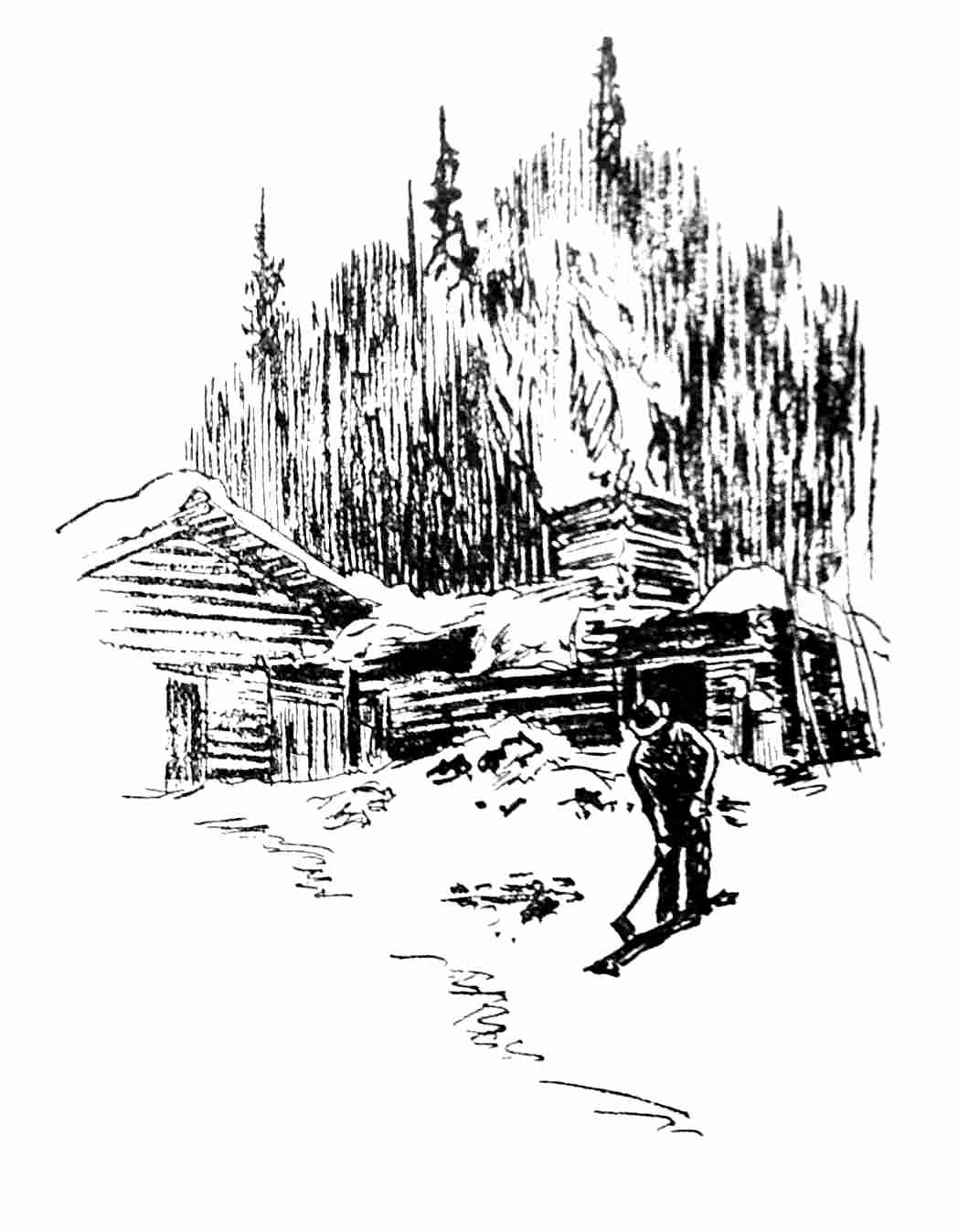
The business of the evening having been transacted to the satisfaction of all concerned, the colporteur put away his pack and established himself by the fire, his pipe in his mouth and a look of content on his face, for he was at peace with himself and all the world. Presently the buzz of conversation died down and silent expectancy filled the room.
Whereupon Bonhomme Bédard, as was customary and fitting, gave the word.
“It is always a great pleasure to see you, Cousin Pierre, with your pack of merchandise and your budget of news, and now we are ready for one of your famous stories. What have you for us this evening?”
“You flatter me, M’sieu mon cousin. But I like that, me. It soothes the spirit, releases the thought, and lifts one up above the sordid plane of merchandising. Well, what shall it be? A little story about one of the good neighbors?”
“Little Marie Bédard clapped her hands.
“Yes, yes, Cousin Pierre. A true story, is it not?”
“All my stories are true, ma petite cousine—or at least possible. If you think . . . .
“No, no! I do not think. I listen only, from the beginning to the very end. Please, Cousin Pierre.”
“Bon, Mamselle Marie, M’sieu Bédard, et toute la compagnie, you shall know that once upon a time, that is to say, on a fine evening in June thirty years ago, the mail driver drove up in his spring cart to the door of Bazile Dubois and there deposited a young man of perhaps twenty years of age, with his valise, his fishing rod, his gun and I know not what of other properties. Bazile was expecting him, it would seem, for he received him with more than ordinary courtesy, and gave him the two best rooms in the house, as though he were a grand seigneur.
“He was not to say distingué, with his great shock of red hair and his freckled face, though he was tall, broad shouldered and well set up, had a friendly disposition and an engaging smile.
“He was quite willing to answer questions and to talk about himself, and soon the family Dubois and all the neighbors knew that he was the son of a great merchant and ship owner of Montréal, and that he had been banished from home because of failure in his studies and because he wished to go to sea, instead of studying for the law, the church or some other learned profession. Yet he had a liberal allowance, no less than twenty-five dollars a month, which, after paying Bazile Dubois fifteen dollars for board and lodging, left him a considerable sum for pocket money—more than any young man of his age should have. Yes, a dollar was a dollar in those days and the young people had not yet learned to spend.
“Lucien Latour was no scholar, as we have seen, but he had his accomplishments just the same. He could catch trout en masse with little artificial flies when no one else could take them with worm or grasshopper. Also, he could shoot birds on the wing with his rifle—a miracle which one must see to believe. He could swim like a fish and dive like a loon; he could manage a canoe as well as any Indian or voyageur; and he could tramp all day in the forest and over mountains without fatigue. In the early days he would have been a coureur des bois, but now he was a good-for-nothing, a vaurien—in the city, at least.
“As you may imagine, Lucien amused himself quite well in Laval during the summer, for there was good fishing in the Montmorency, and he never tired of wandering in the forest, climbing the mountains, and exploring the distant streams and lakes. At other times he took pleasure in working on the farm, especially in the haying season, when the help of his sturdy guest was most welcome to Bazile Dubois. Even Madame Dubois and her daughter Perrine assisted in the field at this time, which rejoiced the heart of Lucien, accustomed as he was to the delicate and useless ladies of the city.
“This Perrine was one of the most lovely and accomplished créatures in the parish and much desired by all the young men of suitable age and prospects. It was not that she was so perfect in form and features, a brunette of best Canadian type, but that she was so gay and joyous and had the carriage and air of a fairy princess, who would say no to all men until the right one came—the prince, the conqueror. Meanwhile she was the dutiful daughter at home and, when her mother was too busy, would wait on their guest and even entertain him with her sprightly conversation while he consumed the good meals which Madame Dubois provided.
“Now and then she would consent to go for a stroll with Lucien, and once she went fishing with him—a day long to be remembered. Clad in brown blouse, short skirt, high boots, jaunty hat with a hawk’s feather, panier on shoulder, and rod in hand, she would go skipping over the stones or wading in the stream, deftly casting her flies in the pool, and every now and then pulling a fine trout from the clear water. It was a pretty picture, and many a good fish did Lucien lose because his gaze wandered from his own angling to this Diana of the Montmorency.
“Perrine, on the contrary, seemed to forget the very existence of Lucien, as though he were a stone or a log in the river, and gave such close attention to her angling that, at the end of the day, there were more trout in her panier than in his. Is it possible that she had been angling, not for speckled trout alone, but for the heart of one of the jeunesse dorée? Who can tell?
“However that may be, before the summer was over, Lucien was deep in love with this charming créature, and, if there had been any rivals among the maidens of Montréal, they were quite forgotten. Also, under the spell of summer and the witchery of Perrine, the life of the parish was seen by Lucien as through a golden mist—a desirable existence in happy fields, where he would gladly live and die.
“But, alas, he had no land, nor house, nor horses, nor cattle, nor equipment of any kind not to mention experience, of which he had not even thought. So he wrote a long letter of repentance and humiliation to his stern father, telling of his plans for the future, of the beauty and accomplishments of Perrine, and begging for money with which to set himself up as a cultivator in the parish of Laval. Imagine the consternation of the honorable Henri Latour as he read this extraordinary epistle.
“Lucien waited for some days like a soul hovering between the gate of heaven and the mouth of the pit, until at last the following letter arrived:
“ ‘If my son Lucien wishes to become a habitant, he is advised to learn the business, as others do, from the bottom. His allowance of twenty-five dollars per month will now cease, in order that he may be thrown upon his own resources. But if he still wishes to go to sea, he may accept a berth as cabin boy on the Marianne, sailing from Québec in ten days for Rio, the Cape, and the South Seas.’
“ ‘This was a mortal blow,’ you will say, ‘and Lucien was crushed.’ But no, he only laughed aloud, as he used to do when his terrible father would beat him with the cat.
“ ‘Aha!’ he cried, ‘my dear father is giving me the discipline again, and presently I shall crawl to his feet and lick his boots. But no! Jamais de la vie! I will die first. But before that I will see about this habitant business.’
“With that he marched out to the field, where Bazile Dubois was digging potatoes, explained to him the situation and demanded his advice.
“ ‘Well, my friend,’ said Bazile, with a smile of sympathy and encouragement, ‘it is a bad case, but not hopeless at all. You have not improved your opportunities, perhaps, but that is not altogether your fault. It is hard for the son of a rich man to enter the kingdom. A little tribulation is required—a species of purgatory. M’sieu your father is probably right, as you will see later. One must begin at the bottom, enter by the cellar door, so to speak. C’est ça.’
“ ‘But yes, M’sieu Dubois, my good father is right. Purgatory is the place for me. Strange to say, we love each other very much, my father and I, and one day there will be a happy reconciliation. But at present I must earn my bread. I could sell my watch, my gun, and all that, but I will not. No, I will keep them as souvenirs. What to do, then?’
“Bazile reflected a long time and then offered his advice.
“ ‘I have considered your case, M’sieu Lucien, and this is what I think. By way of swabbing the decks one becomes a captain of a ship, in the course of time. But you will not. And it is the same with us cultivators—one begins as a hired man. But there is no chance for that at this season. No, the only place is in the shanties. You can use the axe, of course? No? Too bad. But you can cook, possibly? Yes? Lucky for you. Only yesterday the bourgeois, M’sieu Bruneau, was looking for an assistant to the cook at Beaver Meadows, one who can boil potatoes, bake pork and beans, and make flap-jacks now and then. You can do all that? Bon! You are qualified. Good pay, too: ten dollars a month with board and bunk—the beginning of a fortune, we will hope. I will speak to M’sieu Bruneau this very day.’
“In all of this nothing was said of Perrine, nor did Lucien see her again during the day. And when he sat down to breakfast on the following morning it was Madame Dubois who waited upon him, because Perrine had gone away with her father at the point of dawn—to complete her education at the convent of L’Ange Gardien. And without a word of farewell. Except that among the flowers on the table Lucien found a sprig of forget-me-not, which he treasured for many a day.
“Thus Lucien obtained entrance to the lumber business by way of the back door. He could cook, quite as well as the chef himself, but that privilege was not for him. No, for there were many other duties connected with his office. There was the great three-decker stove, for example, in which a roaring fire had to be kept at all times. There was wood to cut, by which Lucien soon learned the use of the saw and the axe. There was the water barrel to fill from the river, and a hole to be kept open in the ice—no light task, that, in cold weather, with ice three feet thick. There were meals to be served, dishes to be washed, the floor to sweep, snow to shovel, hay to be placed for the horses, the stable to be cleaned—but why mention all the activities of the assistant cook of the camp at Beaver Meadows? No wonder that Lucien was glad to climb into his bunk at night and that his couch of straw was softer than the downy bed of his old home in Montréal.
“But one so strong and capable as Lucien could not long be kept at menial tasks, so after Christmas he was promoted to the regular force as bûcheron, and his pay was raised to fifteen dollars a month. Soon he could wield the axe as well as any of the older men and many a tall pine fell before his blows. Often, too, when the piqueurs were too busy, he would cut away the limbs from the fallen tree, leaving the long trunk to be sawn into logs ready for the teamsters to haul to the bank of the ice-bound river.
“When spring came at last, and the ice was almost gone, then the drive began, the shanty was closed, and the gang followed the logs down the river. Lucien did his part with the rest, now paddling a canoe, now running along the shore, now wading in the cold water, pike-pole in hand, pulling and pushing the logs along, as they floated down the stream. It was hard work and not without danger, but a welcome change from the routine of the winter camp.
“Welcome especially to Lucien when the gang was camping for a night on the Dubois farm and he could call at the home where he had spent so many happy days during the previous summer. M’sieu and Madame Dubois were glad to see him and amazed to find him so much changed in a single winter. No longer a half-baked city youth, but a full grown man: sturdy, rugged, hardened, erect in bearing, of a fine color, self-confident, and determined—in all respects a seasoned lumberman. Yes, M’sieu Lucien had made a fine beginning and would be a great boss in the lumber business some day.
“Perrine? Oh, it was a pity that she had not yet returned from the convent. She would be sorry not to have seen M’sieu Lucien. If he would drop in again in the autumn on his way back to camp she might be at home or she might not—it was hard to say. So Lucien returned to the tents of the drive-gang, disappointed in the hope which had sustained him during the long winter.
“In the month of October, when he called again after working all summer at the mill, it was the same story. Perrine had been at home for a time, but had returned to the convent for another year. Evidently, M’sieu and Madame Dubois had plans for their lovely daughter, with which no mere bûcheron would be allowed to interfere.
“And so it was. Simon Nadeau, cultivator and son of a cultivator, proprietor of a fine farm and of a sawmill on La Branche, was the favored one. Not so young as Lucien, nor so tall and strong, but of pleasing appearance and suave address, a good worker, frugal, shrewd, and destined, it would seem, to be one of the great men of the parish. Perrine had been well disposed toward him before the arrival of Lucien, but now she seemed indifferent, if not actually averse to his attentions. At any rate, she was much occupied with her studies at the convent and it was whispered that she might even take the veil.
“In the autumn both Lucien and Simon returned to the camp at Beaver Meadows, Lucien, because there was nothing else for him to do; while Simon, like many other cultivators, was glad to earn a few extra dollars during the slack season.
“Naturally, there was no love lost between the young men, although they were very polite to each other, so that none of their associates could perceive, by word or sign, that they were not the best of friends. And when bad rumors about Lucien began to spread in the camp, it was always Simon who openly defended him, on the ground that, however worthless he may have been in the past, he should be given a chance to turn over a new leaf.
“Not only was Lucien in danger of losing his reputation, but on several occasions he almost lost his life. One evening, on the river, Simon stumbled against him so that he fell into an air-hole and was almost carried under. But Simon helped him out and was very sorry for his carelessness.
“Another time, when they were felling pines on the mountain, Simon’s tree fell directly over the spot where Lucien was working, and it was a miracle that he was not crushed to death. Simon rushed to his aid and pulled him from under a mass of branches, with many excuses and explanations. But when Lucien examined the stump and the fallen pine, he wondered at Simon’s stupidity.
“Once more, on a Sunday evening in December, as they were hunting caribou, a bullet sang past the head of Lucien and buried itself in a tree. Presently Simon arrived looking for his game.
“ ‘Bon Dieu, Lucien,’ he exclaimed, ‘but where is the caribou?’
“Lucien laughed. ‘I am the caribou, as you see. A good shot that—almost too good for me. I begin to have fear of you, Simon. But don’t blame yourself—no harm was done. It is easy to make a mistake like that in the bad light.’
“After this Lucien was more wary of his rival, but there were no more accidents, and his suspicions were soon removed by the friendliness of Simon and his willingness to teach him all that he knew of woodlore and logging. Besides, the work was going well and Lucien was becoming master of his craft. He began to see light ahead and to make plans for the future.
“Visions of a log cabin of his own building filled his thought. Simple but sufficient furniture he would make by hand, also a barn and most of the implements. As for the rest, his savings during two or, at most, three years would provide everything needful, and the establishment would be complete—all but the guardian angel.
“And then? What would Hélène de Martigny of Montréal think of all that? Strange that the thought of her should come to his mind in that connection. Accustomed to every luxury! It was to laugh!
“But Perrine? A habitant girl. True, but more beautiful and desirable than any city maiden. Accustomed to comfort, also, if not luxury. Would she be willing to leave her pleasant home for a cabin in the wilderness? And what of M’sieu and Madame Dubois? And Simon Nadeau—what of him? Rich, proprietor of a farm, a mill, with money in the bank. No, there was no hope, or very little. But what if Perrine should love, or learn to love? Ah, that would be different.
“In the meantime a piece of good luck came to Lucien, when, the foreman of the camp having been transferred to Lac des Neiges, Lucien was put in charge at a salary of twenty-five dollars per month—the very sum which he had previously received from his father—with board and lodging as well. It was a fortune to Lucien; his future was assured.
“The sudden promotion of the young man came as a shock to his associates and they were disposed to resent it. It must be, they thought, by favor of the bourgeois, M’sieu Bruneau, who had noticed Lucien during his last visit and even conversed with him. If so, it might be well to stand in with the new boss, and thus please the bourgeois himself. So the men forgot their former doubts and jealousies, and soon were working under Lucien with harmony and diligence. Even Simon Nadeau did homage to the new chief and promised to help him to the best of his ability.
“Thus all went well with the winter’s work, so that, when spring came again and the ice had gone out, the largest cut of logs in the history of the camp filled the deep waters of Beaver Meadows. They were held back, as usual, by a double boom of logs and chains until the high water should come and the whole cut could be floated down the river to the mill above the falls.
“If all the logs could thus be delivered in safety, it would mean great praise and sure promotion for the new foreman. But if not, it would be disaster to the bourgeois, and to Lucien the ruin of all his hopes. Well, Lucien was hoping for the best. Meanwhile, there was nothing to do but to watch and wait.
“They waited, but the watch at the boom must have slept, for early one morning he came running to the camp in great excitement, calling out that the boom had been cut in the night and that all the logs were going down the river. At this everybody rushed to the boom in time to save most of the logs, though many had escaped.
“Thus, with serious disaster, the drive began, and when the gang arrived at the Crooked Hole, several miles from the camp, they found, as expected, a great jam, with hundreds of logs piled in wild confusion. A mad torrent of water was foaming through and all around, while in the pool below a strong current swept along in great waves toward the next rapids, a hundred yards down the river.
“It was a place to which one could go at the risk of one’s life, and when Lucien called for volunteers, only Simon Nadeau responded.
“ ‘Bravo, Simon!’ said Lucien. ‘We can do it. The others have their wives and children, but not so with us. No, we cannot blame them. Let us go. Shall we take the boat?’
“ ‘The boat, certainly,’ replied Simon, leading the way to the north-shore canoe moored on the sandy beach below the chute. A strong boat it was, of good planks, high at both ends to stand bumps from rocks and logs and to go without swamping in the rough water. It was completely equipped, also, with paddles, oars, rope, and all that was needed for such a time as this.
“They could not approach the jam in the center of the stream, because of the current and the great waves, but at the side there was a back eddy which carried them up to the jam, where they jumped out, tied the boat and set to work.
“It was not very difficult, at first, to loosen many of the logs with the long pole and send them down the stream, but after a time no more could be pried loose, while the main channel was still filled by the jam, which, as it settled, might establish itself there for the whole summer and thus block the drive.
“However, there were in one place, below and in front, a few logs on which the whole structure seemed to rest. If they could be removed, everything would go. It was the key to the jam.
“ ‘There, Simon,’ shouted Lucien, ‘you see it? Shall we go down?’
“ ‘Not I, M’sieu Latour. Not for any bourgeois, not for a thousand dollars. I will take some risk, me, but not certain death.’
“ ‘Well, I do not blame you, Simon. It is my affair. Be ready with the boat, then. But where is that boat? Sacré tonnerre! You tied it, Simon?’
“ ‘Yes, I tied it and it has escaped, as intended.’
“ ‘Escaped! Intended! What do you mean, sacré fou?’
“ ‘Sacré fou, yourself, Lucien Latour. Sacré vaurien from the city! You think you can come to Laval, to the shanties, to lord it over us others. Make love to our girls, too—steal them from us. But I will show you.’
“ ‘What girls, Simon?’
“ ‘Perrine, of course.’
“ ‘But she is for you, as I have been told.’
“ ‘For me? Yes! No! She will not look at me any more. And all because of you—sacré vaurien! Cochon! Canaille!’
“A sudden light illuminated the soul of Lucien as though all the clouds of the sky had turned their silver lining.
“ ‘A thousand thanks, Simon!’ he cried. ‘That is good news indeed. Now you may get off the jam. At once! Get off, I say!’
“ ‘But no, Lucien, I will stay with you. No matter whether I live or die. I was mad. Forgive!’
“ ‘Forgive? Certainly, but you must go all the same. I do not trust you any more, Simon.’
“At that Simon slunk away, mounted a big log which he had held in reserve, and, balancing himself with the long pole, which he also used as a paddle, managed to reach the shore. There he stood with the rest of the gang, waiting for the dénouement.
“Without further delay Lucien descended the face of the jam from log to log, until he stood at the very bottom, where the water boiled and raged, and the logs trembled and tightened their hold on the rocks below.
“There Lucien found a few more loose logs, which he sent down the stream, and presently discovered the very key-log of all, the crux of the great pile. He speared it with his pole and was glad to find it tremble, as though balanced upon some rock or under-pinning of other logs.
“It was not too late to climb back to safety, call for help, and report that nothing could be done. But Lucien did not even think of that. With a prayer to Notre Dame des Victoires, in which the thought of Perrine was by no means absent, he set his spiked boots firmly in place, and, with the long pike, gave a strong push to the key-log. Then a great pull, then push and pull, push and pull, until the log was loose. Suddenly the jam trembled through and through, sank into the water and went down the stream.
“At the same moment Lucien, dropping his pole, dived headlong into the river, as deep as he could, while the logs surged and bumped overhead and the strong current carried him swiftly toward the white water below. But he made for the side, and when at last he rose to the surface, he found himself at the end of the pool, where the descent began—also the back eddy setting toward the head of the pool and the chute above.
“Then, with long, powerful strokes, Lucien swam up with the eddy as though in a race, and finished in grand style at the edge of the rocks where stood the river gang and the neighbors assembled from far and near, including the bourgeois himself, who had just arrived.
“Strange to say, it was Simon Nadeau who, half laughing, half crying, rushed to pull him from the river and present him, all wet and dripping, to the watchers on the shore.
“ ‘There, my friends,’ cried Simon, holding Lucien with one hand, with the other waving in the air, ‘there is our boss, our comrade, our hero, once a vaurien of the city but now one of our own. I say: hurrah for Lucien Latour! Hurrah! Hurrah!’
“It was with hearty good will that everybody joined in the cheer, after which the bourgeois, M’sieu Bruneau, expressed his pleasure and gratitude, and M’sieu Dubois insisted on taking him to his home to have a change of clothing and a good dinner. Madame Dubois and Perrine would be glad to see him and he could have his lodging again, so long as he might wish.
“It was certainly pleasant for Lucien to be in his old quarters again, to have Perrine herself wait upon him and to have a good chat with her about all that had happened since they had parted, so long ago. It was as though they had been friends for years. After a while they went for a walk by the light of the stars and talked of many things, new and old.
“ ‘But why Perrine,’ said Lucien, at last, ‘why did you go away so suddenly, and without a word?’
“ ‘You know very well,’ replied Perrine, much embarrassed.
“ ‘Why then, Perrine?’
“ ‘It was because of a certain young citizen of Montréal.’
“ ‘A vaurien, Perrine?’
“ ‘I never thought you that, M’sieu Latour.’
“ ‘Say Lucien, Perrine.’
“ ‘Lucien,’ murmured Perrine, looking down.
“ ‘The vaurien loves you, Perrine.
“ ‘But how to prove it, Lucien?’ said Perrine, looking up with a roguish smile. ‘What of that little sprig of forget-me-not?’
“ ‘Here it is, Perrine, I carry it always near my heart. It has saved my life, I think.’
“ ‘Then it has done its duty, Lucien. But you will not need it any more.’
“ ‘No, for you shall take its place, Perrine, said Lucien, tenderly embracing his bien aimée.
“A pretty story,” murmured little Marie Bédard, “but not quite finished—no. There are several questions, Cousin Pierre.”
“What are they, Marie?”
“Well, in the first place, what of the stern father?”
“The Honorable Henri Latour came to the wedding and there was a joyful reunion. He was very proud of Lucien and Perrine and wished to take them home to Montréal. But Laval was good enough for them.”
“And all the rich relations?”
“Now, Marie, why speak of them? They were not in the picture. But if you must know, I will tell you that they sent wedding presents, en masse.”
“And Simon Nadeau—what had he really done?”
“That was revealed to his father confessor, and to God.”
“Pardon me, Cousin Pierre—I should not have asked. But one more, please. La belle Hélène de Martigny . . .?”
“How should I know, ma petite cousine? She consoled herself, no doubt. As the proverb has it, there are always good fish in the sea.”
“So I have heard,” said little Marie, with a sigh.
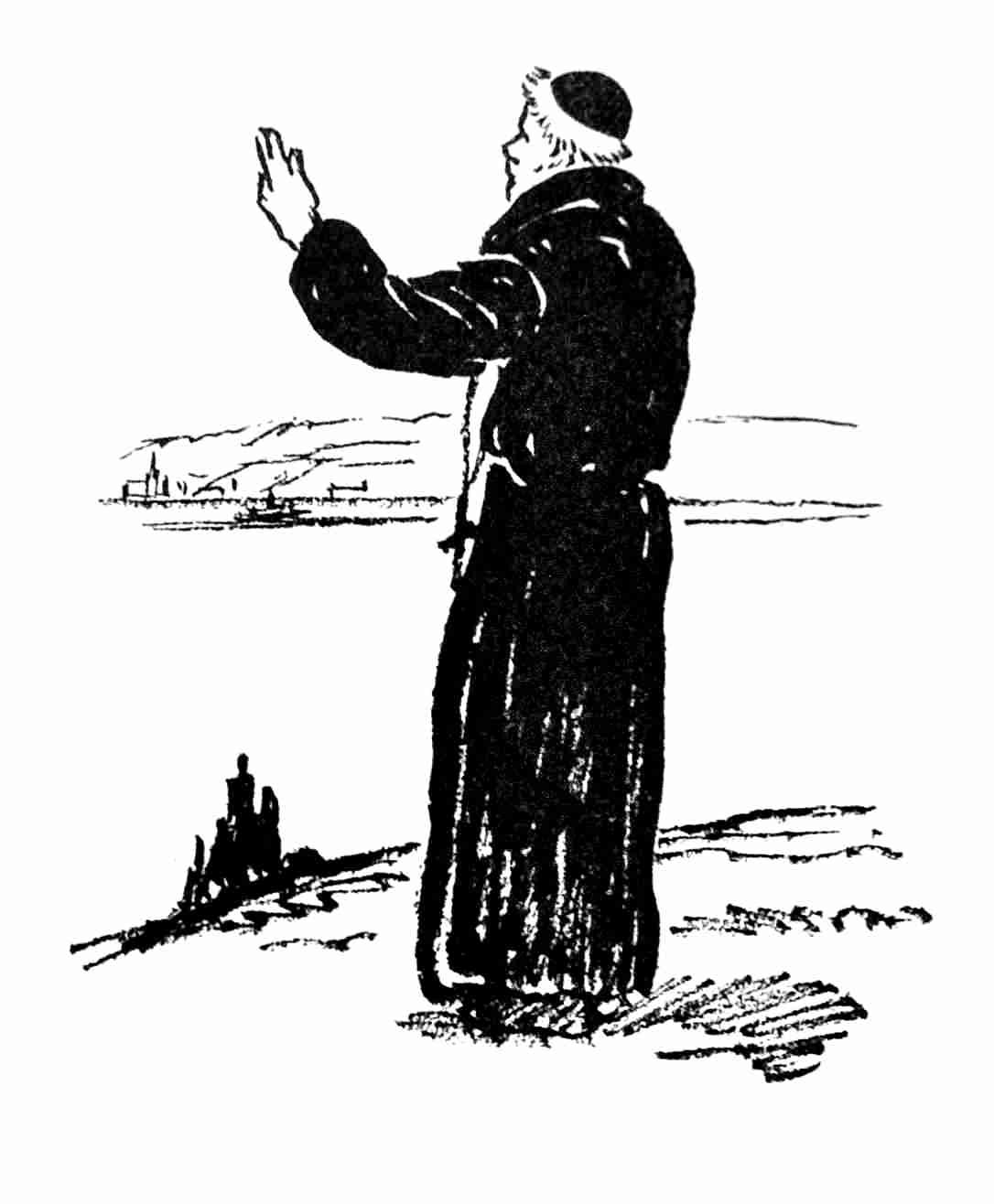
“It is a pity, Cousin Pierre,” said Bonhomme Bédard, “that we have had such a bad storm at the time of your visit. The thunder and lightning would not alarm the good neighbors, but the rain has made great holes in the roads and may have taken the bridge away. See how it beats against the windows. And the wind, no doubt, has thrown trees across the road. We shall have a small company to-night. Bad for business—eh?”
“Colporteur’s luck,” responded Pierre Thibault, with a shrug of the shoulders. “No matter. We can at least smoke and talk.”
“Yes. And you will tell us a story as usual, will you not?”
“Why that, mon cousin? You will surely excuse me on a night like this.”
“But no, Cousin Pierre, the storm is passing. Besides, we have been looking forward to this ever since your last visit—three months ago. It is a rare privilege that we enjoy. Little Marie here will be desolated if you refuse. N’est-ce pas, Marie?”
“Mais oui, pépère. It is one of the pleasures of life to listen to M’sieu. Please, Cousin Pierre.”
“You flatter me, Marie—M’sieu Bédard. Well, what shall it be?”
“We have often wondered, Cousin Pierre, why you became a colporteur—you who should have been a priest—with your talents, your learning.”
“But you know, do you not?”
“In part only. We have heard rumors, of course, but not the whole truth. That is what we want to hear.”
“You have heard, no doubt, that I was expelled from the Seminary.”
“Yes, Cousin Pierre, but we have never believed it. Will you not tell us the whole story?”
“A very personal matter, mon cousin.”
“True, and much to ask. But there are no strangers here to-night. It shall be strictly en famille, entre nous—under the seal of confession, so to speak.”
“You are very persuasive, M ’sieu Bédard—as good as any colporteur that ever was. You beat me at my own game. I throw up my hands. I surrender. I cease to smoke, even, for your benefit.”
“Bon, mes cousins et cousines,” continued Pierre, “I was to have been a priest, as you know. That was settled, it appears, before I was born—without my knowledge or consent. Yes, and I grew up to think myself different from other boys—one dedicated to a holy vocation. All occupations are holy, as you know, but the priesthood is something special—a vocation apart.
“I had my doubts, you must know, as soon as I was able to think, but they were not sufficient to change the purpose of my parents, nor my own compliance. Moreover, it was, as I thought, a fine thing to be a priest: to wear a black gown and hat, to have everybody bow to you on the street, to preside at marriages and funerals, to hear confessions, to stand at the altar between God and man, clad in magnificent vestments, to offer the holy sacrifice of the Mass, to pronounce the absolution while all the congregation kneel in humble reverence.
“But what I admired most of all was the priest in the pulpit, clad in soutane, surplice, and stole, discoursing of the mysteries of religion, telling of the lives of the saints, pointing out the sins of the people, and showing them how to lead a better life. I used to listen attentively to the preacher, and often at home I would repeat the sermon word for word to my little brothers and sisters, listening with open mouth.
“However, they were not quite so respectful when I began to add remarks of my own, mentioning their sins, and ordering penance for every one. They admitted that I would be a priest some day, but until then they refused to submit to my authority. Yet, as I was big and strong, I did not hesitate to reinforce the word of the spirit with the arm of flesh, which procured submission, if not respect and affection.
“So also among my schoolfellows. I remember one Saturday afternoon, when I was a bluecoat at the Little Seminary, how some half dozen of us were roaming in the Cove Fields—contrary to rule, of course. After a while we sat down in a little glade to eat the food that we had collected in one way and another. When hunger had been appeased they demanded to hear a sermon from me, Pierre Thibault. Gratified at the compliment, I rose in my place and began to preach in my best style. I remember the sermon to this day. Here it is:
“ ‘Mes amis! You have probably forgotten all that M’sieu l’abbé de Gaspé said in his excellent sermon of last Sunday, so I will repeat it, with some changes, for the benefit of your souls.’
“ ‘Mes amis! The subject of my discourse on this occasion is the blessed influence of your patron saints, under whose protection you have been placed by the pious zeal of your parents and sponsors. Le Bon Dieu may seem far away, at times, although such is not the case; and La Sainte-Vierge, you might think, is queen of heaven, rather than of earth. Even your guardian angels are not easy to imagine, as they are heavenly spirits, who have not often appeared in mortal form.’
“ ‘But your patron saints, my friends, were once boys like you. They remember their youthful days on earth, take a special interest in those to whom their names have been given, and desire them to give up all their sins and lead a sober, righteous, and godly life.’
“ ‘You, François Xavier Boucher, are under the protection of a great missionary to the heathen, and yet you are nothing but a heathen yourself, for you have not been to confession nor to the Mass for more than a year. Take care, or you will change some fine night into a loup garou.’
“ ‘You, Jean Baptiste Laroche, bear the name of the patron saint of Canada, and yet you do not fear to lie and steal. Did you not tell the good Abbé Jérôme that you would spend the afternoon with your grandfather at Petite Rivière? And did you not steal those excellent galettes from your poor aunt Marthe, who baked them for Sunday dinner?’
“ ‘You Napoléon Le Sauvage—you—you—. Sapré tonnerre! Have you no other name?’
“ ‘But yes,’ responded ’Poléon, with a sneer. ‘I have two others. Listen! Napoléon César Hannibal Le Sauvage. What do you say to that? Continue.’
“ ‘But no, you are not even a Christian. We will pass to Chrysostome—.’
“ ‘No, we will not,’ replied ’Poléon, rising to his feet.
“He was head and shoulders over me and strong as a bear.
“ ‘It is my turn now, little preacher, little sacrilegious one. You think to make fun of everything. You a priest! I slap you in the face!’
“With that ’Poléon gave me a stinging blow in the mouth with the back of his hand.
“Furious with rage and wounded pride, I precipitated myself, head down, against the enemy, struck him in the pit of the stomach and brought him to the ground. In a moment he was up, charging like a mad bull. For me, I stepped aside and struck him a blow in the corner of the jaw, which brought him down again. You see, I had learned to box from one of the Irish boys, so the battle was not so unequal as it seemed.
“But why tell of this struggle of bear and wildcat, which continued for some time, without advantage on either side, as in the combat of the paladins, Roland and Oliver? Finally, battered, bloody, and exhausted, we stood glaring at each other, and the battle ceased.
“As you may imagine, there was judgment for me at home, and when I returned to the Seminary on Monday morning it was to suffer punishment from the school and penance from the church. Worst of all, I was obliged to ask pardon of ’Poléon, although, as I contended, he had begun the quarrel.
“ ‘Napoléon Le Sauvage,’ I said to him, in presence of the master, ‘I ask your pardon for preaching to you, though I thought, and still do, that you needed it.’
“ ‘Pierre Thibault,’ he replied, ‘I ask pardon for striking you, but wish that I could have hit you a little harder.’
“The good abbé, strange to say, let us go without amending our apologies.
“The episode was ended, so far as ’Poléon was concerned, for we have been good friends to this day. As for me, there were wounds on my soul which were not healed for a long time.
“After this, the doubts as to my vocation grew day by day and year by year, until I was certain that I was quite unworthy to become a priest. It was not for the glory of God that I desired the office, but for the prestige which it would give me over others, the right to command, and the power of the keys to open and close the doors of the kingdom of heaven.
“I am not confessing all my sins at this time, but I will tell you, in confidence, that it was always my friends whom I would admit within the gates, and my enemies—for I had a few—whom I would keep out.
“I had my religion, of course, said many prayers, went regularly to confession, and assisted at all the services of the church. Yet le Bon Dieu seemed to me a terrible Being, and very far away, whom I worshipped with more fear than love. I was devoted to la Sainte-Vierge, yet when I knelt at her shrine and said her litany, it was always the sweet face of my mother which I saw, looking down at me with love and pity, as though to assure me that, however many and deadly my sins, she would intercede for me with my stern Father and save me in the end.
“It was, in fact, because of my mother that I did not give up the career on which she had set her heart, but drifted on from year to year until I was a student in the Grand Seminary and the time was approaching when I should take the first holy orders.
“I consulted my confessor, Père de Gaspé, from time to time, but he counselled me to continue. When I spoke of my spiritual pride and love of power, he told me that even the best priests, including himself, had some of that, though it should be diminished, as far as possible, by contemplation and prayer. When I confessed that I loved to debate and even to fight, he said that I would be a good soldier of the Cross. And when I declared myself unworthy, he assured me that I was in the proper state of mind, for no man was worthy for so noble a calling except through the merit of our crucified Redeemer.
“I could not answer Père de Gaspé, though I felt in my heart that I must one day break away, with or without sufficient reason.
“On a fine afternoon in the month of May we were out for our daily walk, some fifty of us, going two by two, with Abbé Demers and Abbé Nolin in front and two of our other professors as rear guard. We went, as I remember, along the rue Fabrique to the rue St. Jean, and out to the country by the chemin de la Sainte Foy, then across by the chemin Belvedère to the chemin St. Louis and thus back to the city.
“It was a fine walk, most refreshing and beneficial to young men who had spent the day in study and prayer within stone walls. For me, I greatly enjoyed the exercise, the fresh air, the green foliage, the flowers of spring, and the beautiful scenery all around.
“Regretfully we were returning to the Seminary when, at the corner of the rue Ste. Ursule, we met a procession of pupils from the convent, with the usual black-robed sisters in front and rear. According to the rule, we kept as much as possible the guardianship of the eyes, yet I could not but notice, as she passed close to me, a demoiselle with hair of reddish gold, like a sunset cloud, and eyes blue as the sky—the most lovely girl I had ever seen. And when she smiled at me, as I thought she did, it was as though an angel from heaven had appeared, a vision of beauty that filled the eyes, gladdened the heart, and glorified the very dust of the city street.
“But when she passed on, it was as though the sun had gone behind a cloud and the light of my life had gone out—for the love of woman was not for me.
“I will not tell you, my friends, of my thoughts and feelings during the following days. Enough to say that all my doubts and fears were multiplied and reinforced, and that the call of the world became so strong that I could and would resist no more.
“For all that, I went again to consult my dear friend and confessor, Père de Gaspé, whom I found at the usual hour in his stall in the Basilica. To him I told the whole story, without omission or excuse. Then he said:
“ ‘My son, is it that you have finally decided to return to the world?’
“ ‘Oui, mon père.’
“ ‘And nothing that I could say would change your intention?’
“ ‘Non, mon père.’
“ ‘I am sorry, Pierre, my son, for I had my plans of you. But for some time I have feared that you had no vocation. Some of the marks you have, but not all. I have encouraged you in the past, but will do so no longer. It is not a mortal sin that you are committing. No, for you are not resisting a clear call. For your venial sins you shall do penance and receive absolution. Peace be with you, my son. But remember that although Satan is permitted to rule the world, for a time, there is a much greater power. Be on His side, my son, and call upon Him in every time of need.’
“After this the good father pronounced the absolution, and I went away with a clear conscience and happier than I had been for a long time.
“So I left the Seminary—of my own free will, as you see—and returned to my home in the faubourg St. Jean, there to suffer the tears of my mother and the anger of my father. Their pride was wounded, their hopes broken, and they feared that I would be a sad failure in this world and the next. But they did not try to make me change my mind, for they saw that it would be in vain.
“At last my mother said:
“ ‘Well, Pierre, I am disappointed in you, for I had great hopes. You would have been curé of a parish in a few years and, perhaps, in the course of time, a bishop. Think of it. What a noble office, that—for the glory of God, the good of man, and your own salvation! And what an honor to the family! I should have been so proud of you, Pierre. But never mind—it is all over now. Your father will take you into the business, no doubt.’
“ ‘But no,’ responded my father, in a stern voice. ‘Nothing so easy. If the church will not inflict penance, I will. He shall go on the road—yes, as a colporteur. Good exercise, that, and fine training for a merchant—if he can live through it. Perhaps he will change his mind before the end of the summer—who can tell?’
“Strange to say, I was not at all sorry to be sent away from the city, nor humiliated at the thought of carrying a pack of merchandise from door to door. On the contrary, I felt like a bird whose cage had been opened, a prisoner set free to wander in the open air, under the roof of the sky. True, there might be hardship at times: heat and dust, rain and muddy roads, cold weather and drifts of snow, unfriendly looks and cruel words, and danger, even, now and then. But with it all was freedom, adventure, and participation in the life and struggle of the world. No more protection for me. No, I would make my way, find my place, or perish in the fight.
“In this resolve I was much encouraged by my former enemy, ’Poléon Le Sauvage, now second in command of a fishing schooner, whom I met on the quay the day after my release.
“ ‘Bonjour, little priest,’ he cried, giving me a friendly slap on the back. ‘But you are not so little any more. Cré tonnerre! I should be afraid to fight with you now. But why are you so gay, so joyous? What is the matter?’
“ ‘Nothing, ’Poléon. I have left the Seminary.’
“ ‘Left the Seminary? Cré mille tonnerres! But I am glad of it. You were a miserable little hypocrite. Now you can be an honest man. My respectful felicitations. There are many good priests, no doubt, but not of your sort. And what now? What to do?’
“ ‘I am to be a colporteur, ’Poléon.’
“ ‘A colporteur—hein? Species of voyageur. Not so bad, if you are a good one. But there is something better yet—the fishing. We catch marsouins down the river, near Isle aux Coudres. A respectable occupation, that, and not unprofitable, especially when one can do a little contraband on the side. Come with us, Pierre, and be an honest man.’
“ ‘Merci beaucoup,’ I replied, ‘but I hope to be an honest colporteur.’
“ ‘That will be difficult, Pierre, but possible. Now I must go, for our ship is ready to sail. Au revoir, mon vieux. Bonne chance!’
“ ‘Au revoir, ’Poléon,’ I replied with a warm grasp of the hand, you have been a good friend to me.’
“A few days later all was arranged, my adieux were said, and I left Québec by the Hope Gate, a pack on my back and a stout stick in my hand, not so much for aid in walking as to keep off the dogs, who have no liking for colporteurs or beggars.
“I had not seen my Angèle again, although I had watched the procession of convent pupils every afternoon, hoping to catch a glimpse of her before setting out on my long tour. There were some pretty demoiselles, no doubt, but not the one of my dreams.
“But as I stood at the gate of the bridge over the St. Charles, waiting my turn, there was a calèche with a driver in front, paying his toll, and two passengers in the back seat: a sister of the Ursulines and a young demoiselle in a white frock and blue bonnet, from which escaped wayward tresses of ruddy golden hair. It was my Angèle, more lovely than ever, and smiling at me, or at the gate-keeper—it was hard to say which.
“There I stood like a big fool, my heart in my throat, staring at her without a word. Then the calèche drove on and she was carried away. But as I gazed, desolated, a little gloved hand appeared, waving a white handkerchief, which fluttered to the bridge and was picked up by me, while the calèche disappeared around the bend of the Beauport Road.
“After this the road seemed less dusty and the pack lighter as I marched along. The day had begun well and I was hoping that before its close I should know at least the name of my Angèle and the place where she lived. To that end I called at every house, while watching the road for the return of the calèche, intending to obtain the desired information from the driver. I did not sell much, as you may imagine, because of my inexperience and inattention. Besides, as you know, a colporteur is not greatly needed in a large parish like Beauport, so close to the great city.
“At last, early in the afternoon, resting by the wayside, I was gladdened by the sight of a calèche coming slowly up the hill. Leaving my pack, I hailed the driver.
“ ‘Un moment, M’sieu, if you please. Be so good as to give me a little information.’
“ ‘What then?’ said the driver, in a rough voice, regarding me with suspicion, as though I were a beggar or a highway robber.
“ ‘You were driving two ladies this morning, were you not?’
“ ‘What is that to you?’
“ ‘Nothing at all, my friend, but that I wish to return something which the demoiselle has lost.’
“ ‘Give it to me.’
“ ‘But no.’
“ ‘Then you may send it to Soeur Marie at the convent of the Ursulines. It will be remitted.’
“ ‘But I wish to give it to the owner.’
“ ‘You do—hein? I see—affaire d’amour. Ah, ah! It is to laugh. Well, my friend, you may find her also at the Ursulines before long. She is going to take the veil. Get out of my way, you. Tchk! Tchk! Marche, Violette! Marche, donc!’
“The cavale, feeling the sting of the whip, dashed along the road, leaving me standing there, enraged at the insolence of the man, wishing that I had dragged him from his seat and rolled him in the dust until he had listened to reason. But he was beyond my reach and I could only curse my stupidity. Possibly a shilling might have turned the trick—why had I not thought of that?
“Toward evening, tired and discouraged, I found food and lodging with a good habitant family, not far from the church, and thus ended my first day as colporteur.
“On the following morning, as I was going forth, much refreshed by sleep and two good meals, I asked Mère Josephte whether by chance she knew a Soeur Marie of the Ursulines.
“ ‘But certainly,’ she replied, laughing. ‘I know several of those: at least five simple Soeurs Marie, besides Soeur Marie Adèle, Soeur Marie-Celeste, Soeur Marie du Sacré Coeur, and several others. You see, many of the sisters are of our parish. They are much beloved among us. Which Soeur Marie does M’sieu have in mind?’
“I was obliged to confess, with some chagrin, that I knew of only one sister of that name. Which Mère Josephte found very drôle. She laughed to split her sides, and has often reminded me of the pleasantry, from that day to this.
“After that I had not the courage to enquire about a beautiful blonde who had driven from Québec in a calèche with a certain Soeur Marie on the previous day. I wish now that I had done so, for Mère Josephte could have saved me much anxiety and sorrow.
“But why tell of my vain quest throughout the parish of Beauport and along the Côte de Beaupré as far as Ste. Anne? After that I ceased to hope, for the calèche could not possibly have driven so far, and back, in little more than half a day. No, the home of Angèle was somewhere between Québec and Château Richer, and probably nearer to the former than the latter.
“But what matter, if she were about to enter the convent as Soeur Marie Angélique du Sacré Coeur? In that case I could wish once more to renounce the world—or to forget the little one altogether.
“But you must not think that I went mourning from house to house like a lost soul, because of a pair of blue eyes and a few curls of red hair. On the contrary, as I proceeded along the way I gradually recovered my spirits, and when I left the shrine of Sainte Anne I was a well man—almost. I would have left my stick there as token of recovery, but that I needed it in the business.
“That same business, I will say, with all respect to Bonne Sainte Anne, did me as much good as anything else, for it required all my force, and left me little time for vain regrets. I became accustomed to the pack, which, of course, became lighter as I went along. I began, also, to take an interest in my customers and to enjoy supplying their many wants. Besided, as there was profit to be earned, I loved to make a good bargain and rejoiced to see the merchandise diminish and the money augment.
“I was also beginning once more, you will say, to take notice of the demoiselles. Well yes. I had never paid much attention to them before I saw my Angèle, but now that my eyes had been opened I perceived that they had their charms, the little créatures, and that here and there was one far surpassing the rest. Not equal to Angèle, by any means, but one with whom a lover desolated might console himself, upon occasion, with gay causerie and innocent persiflage. Often I found myself humming the little song, which you know well:
‘Papillon, tu est volage!
Tu ressembl’ à mon amant.
L’amour est un badinage,
L’amour est un passe-temps;
Quand j’ai mon amant
J’ai le coeur content.’
“Moreover, was it not the créatures, old and young, who examined my merchandise and who bought, if it pleased them, pins and needles, thread and yarn, holy pictures, laces, ribbons, jewelry, and articles de Paris of every kind? Why not then be friendly with my customers—talk and laugh, tell stories, and exchange the gossip of the parishes? One who would not be amiable could not long ply the trade of a colporteur.
“In the course of six weeks I visited almost every house in the Côte de Beaupré, from Beauport to St. Joachim. Thence I crossed by boat to the Isle d’Orléans and spent two weeks more in the six parishes, where I disposed of all my merchandise, returning to Québec with an empty pack and a bag of money. My father seemed pleased to see me and immediately sent me on another tour along the south shore.
“After that winter came, when I continued my tours on snowshoes, at first, but later with horse and berlot, carrying, of course, a larger stock of merchandise. And in the following summer I had a horse and a fine charette, with springs, so that I was no longer a colporteur, but a travelling merchant, a man of affairs, almost as much respected as an artisan or a habitant.
“More than once a prosperous habitant has said to me, in effect:
“ ‘M’sieu Pierre, I am curious to know why you do not quit your vagabond life and establish yourself on the land, like us others. There is no occupation equal to that of a habitant—so secure, so independent, so salutary for himself and his family.’
“ ‘But I have no family, Joseph,’ I would say.
“ ‘Bah, M’sieu Pierre,’ he replies. ‘That will arrange itself very easily. There are marriageable girls en masse, among whom are many charming créatures. Regard my daughter Anne, for example—so strong, so capable, so beautiful. There would be a fine wife for you. Or Geneviève, if you prefer—educated at the convent, accomplished in every way. There is not their equal in all the Province. With either I will give fifty arpents of land with frontage on the river, a house, a barn, two horses, three cows, ten sheep, four pigs, and all the poultry you desire, with tools, furniture, and all that.
“ ‘Consider, M’sieu Pierre. With your money, your talents, a fine farm, a beautiful wife, relations everywhere, you would be a great man in the parish—a marguiller very soon, then a justice of the peace, and in the end, perhaps, a member of parliament. As good as any seigneur. Think of it, Pierre, my friend.’
“I think, I consider, I am tempted, but before the decision is attained and before the notary and the priest are called, a vision of a certain pupil of the Ursulines comes back to me, her radiant smile touches my heart, love awakens, courage revives, and I determine to find her if she is still in this world and outside of the convent walls.
“Thus two summers passed and two winters, until it was springtime again and I was driving in my little charette along the Beauport Road, where apple trees and hawthorns were in flower and their perfume filled the morning air.
“Not far from the church I noticed for the first time a lane running down toward the river between walls of stone—an entrance, apparently, to the old seigniorial mill. I turned in, curious to see whither it led, and presently came to a stone cottage set in the wall, with two windows looking on the lane and an oaken door in the middle on which was a great brass knocker.
“Not a likely place for small merchandising, but I descended just the same and knocked—all too loudly—at the door. No one came. I knocked again, more loudly than before, but there was no response. Waiting for a moment, I was about to knock for the third and last time, when I heard a light footfall within and the door was opened by a young girl dressed all in white, who smiled in polite surprise, and then, as I thought, with a flash of recognition in her sparkling blue eyes.
“As you have already guessed, it was Angèle herself, but more lovely than ever, surpassing all my dreams—the same, yet different, as when a rosebud opens into a full-blown rose.
“For an instant I was speechless. Then, lifting my hat, I said, simply:
“ ‘Bonjour, Mademoiselle.’
“ ‘Bonjour, Monsieur,’ she replied, sweetly, a gleam of mischief in her eyes. ‘Is there anything you wish?’
“ ‘But yes, Mademoiselle,’ I replied, ‘that is why I am here. Would you care to look at some merchandise? I have pins and needles, thread of cotton, linen, and silk, scissors, pen-knives, ribbons, gloves, laces, perfumery, jewelry, and all other articles de Paris. Holy pictures also—I had forgotten them, Mademoiselle, in looking at you.’
“The blue eyes flashed and the smile vanished.
“ ‘You are a little too personal. Monsieur le colporteur. Is that what you say to all your customers?’
“ ‘But no, Mademoiselle. It escaped me, all at once. It was not intended, I assure you. Pardon the impertinence, I pray you.’
“ ‘I will try to pardon you, Monsieur, if you will not do it again. But as to the merchandise, we have no need of any. You see, we buy all those things in Québec. Unless, by chance, you have any lace handkerchiefs.’
“At this I had to take a long breath, to keep back the tears.
“ ‘You know me, then,’ I murmured.
“ ‘But yes, Monsieur. I have seen you twice, I think—two years ago.’
“ ‘And I, Mademoiselle,’ I exclaimed, ‘I have seen you ever since, day and night, in my dreams.’
“ ‘You must not say that, Monsieur,’ she chided gently. ‘You do not know me, nor I you. But enter, if you wish, and I will show you my garden. Sorry that my grandmother is away—she would be glad to see you.’
“A moment later we were walking in a walled garden, through which a clear, pebbly brook flowed, bordered with iris, honeysuckles, columbines, and other flowers of early June. There were roses, too, in well-kept beds and climbing on the wall, where also was the purple clematis—the virgin’s bower.
“It was as though I were at the journey’s end—in Paradise. It was felicity inexpressible. Finally she broke the silence.
“ ‘You do not speak, Monsieur. Is it that you do not like my garden?’
“ ‘Yes—no, Mademoiselle. It is because I have no words. It is the realization of all my dreams. Can it be true that I am here—with you?’
“She laughed—a gay, silvery ripple—like that of the little brook.
“ ‘A pleasant retreat, is it not? At least better, I will say, than the dusty road. But what of the merchandise, Monsieur le colporteur?’
“ ‘Why mention it, Mademoiselle? You do not want any of that.’
“ ‘But those lace handkerchiefs?’
“ ‘There is only one, Mademoiselle, and here it is. See, I have kept it all the time—as a souvenir. Will you not give it to me?’
“ ‘No, no! I must have my property. Or is it that you wish to sell the handkerchief?’
“ ‘To sell it, certainly, Mademoiselle, but at a great price.’
“ ‘At what price, then, Monsieur le marchand?’
“ ‘A rose from your garden, Mademoiselle—nothing less.’
“ ‘Too dear, Monsieur, far too dear. Yet it is a handkerchief of real lace—point de Valencienne. Well, you shall have your rose. What color do you prefer—white, pink, red, yellow?’
“ ‘Red, Mademoiselle, if you please, couleur d’amour.’
“The lovely angel of the garden, blushing like a rose, plucked a half-opened bud from the bush and pinned it to my coat.
“ ‘There, Monsieur, is your reward for finding my handkerchief, which, I perceive, you have not returned.’
“ ‘Permit, Mademoiselle, that I keep it for a little while. I will return it, later, if you wish.’
“ ‘And demand payment, as before?’
“ ‘Assuredly. The merchandise is of great value. Should I not have some further payment in advance?’
“ ‘You are very bold, Monsieur. How much you must have learned since you left the Seminary!’
“ ‘And you, Mademoiselle? They told me you were going to take the veil.’
“ ‘An error, Monsieur. I have no vocation.’
“ ‘Dieu merci! I am glad to have become a colporteur. But shall I not have that payment in advance?’
“ ‘But no, Monsieur le marchand. You charge so much and give so little in return. But come again when you pass this way. Au revoir, Monsieur. Bonne chance!’
The story was ended. Cousin Pierre resumed his pipe, leaned back in his chair, and was blowing smoke rings toward the ceiling, as though there was nothing more to say.
But the company thought otherwise, for they waited in silence for some time, until little Marie spoke for them:
“Is that all, Cousin Pierre?”
“Certainly, Cousin Marie—the end of the first chapter.”
“But it is so unfinished, uncertain. I fear that you may have lost her in the end.”
“There was danger of that, I assure you. But you would not have had me carry her away bodily?”
“No, but you might have been more audacious, I think.”
“True, Cousin Marie. I have always been far too timid. That is one of my greatest faults. Anything more, Marie?”
“And we do not even know her name.”
“That will appear in the wedding invitation which you shall receive next week. Can you wait so long, my dear little cousin?”
“Yes, Cousin Pierre,” responded little Marie.
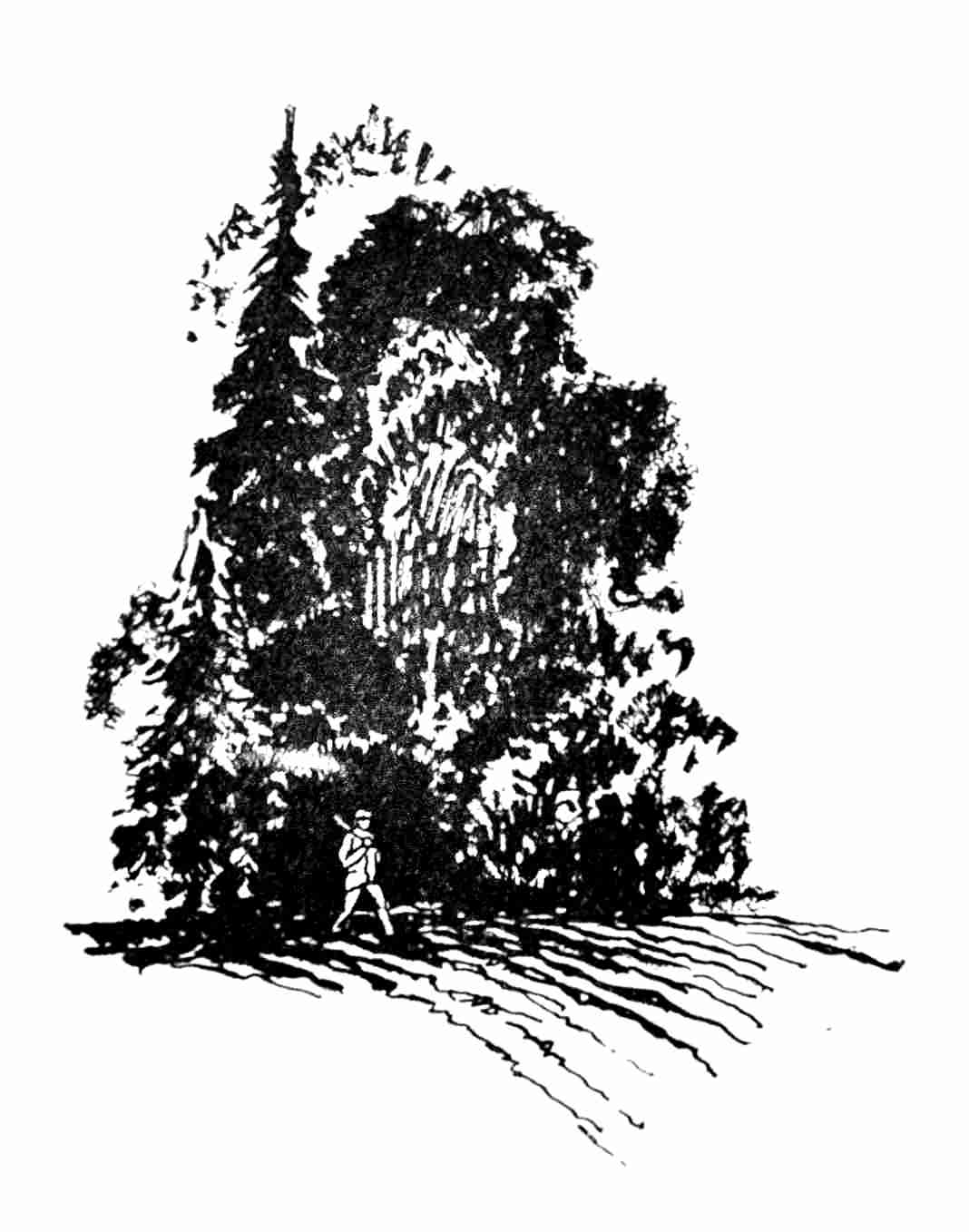
It was on a Sunday morning in May—the first after Pentecost—when Abbé Paradis was preaching a sermon on charity, in the course of which he said:
“There are no rich in our parish, as you know, and not many poor—Dieu merci—so we are not often asked for this species of contribution, except in aid of those in other parishes or in foreign lands. All the more reason, my friends, why we should be generous upon occasion and share with our brother parishioners in the true spirit of Christian charity. Foeneratur Domini qui miseretur pauperis—he who gives to the poor lends to the Lord, who keeps a just account and repays with interest in this world and the next.”
“Nor are there many wandering beggars in our valley. They do not like our long, sandy hills, those poor fellows, but prefer the good roads of the Côte de Beaupré from Québec to St. Joachim, where the hills begin again. But when, by chance, one comes this way, let us receive him with open, arms and give him of our best. Remember the words of Saint Paul: hospitalitatem nolite oblivisci—forget not hospitality to strangers, for thereby some have received angels unaware.”
The congregation listened to this good advice, but one young pioneer, at least, François Leroux, did not give much heed, for he lived at the very end of the valley, where beggars never came. Besides, he was more interested in little Claire Duval, who occupied a bench in front of him, and who, apparently, was most attentive to the sermon, as to every other part of the service.
Which led François to believe that she was charitably disposed, and made him wish that he were a stranger, a beggar, demanding alms at the door of Bonhomme Duval, which should be opened wide by Mamselle Claire herself. But what species of alms would he then request, pour l’amour de Dieu? Merely the privilege of calling her sa blonde, and the right to hope for further charity when he should have cleared a few more arpents of his forest lot and prepared a suitable home for the daughter of a prosperous habitant. Pleasing thoughts, which consoled and sustained him through the long service, and after Mass, as he marched up the valley road—two leagues and more—to his cabin in the wilderness.
What wonder, then, that François was up at the point of day on Monday morning, and that he was still joyously working as the evening twilight was coming on, cutting branches and roots with his sharp axe, piling brush, and preparing the ground with mattock and spade for the first crop of oats and potatoes in the new-made field? At last, shouldering his tools, he prepared to go, though pausing a moment to view the work accomplished and to admire the beauty of the world around.
There was the rough clearing on which he stood, with stumps of trees and piles of brushwood here and there, backed by the forest wall, but gently sloping toward the south and opening into a natural meadow, where a clear river flowed along in a succession of rapids and pools that gleamed in the soft light of rosy clouds. On this side was a log cabin, the frame of a barn, and the beginnings of a garden. Beyond was the forest, rising into hills and billowing mountains, robed in garments of many colors and crowned by the last rays of the setting sun.
It was a view to fill the eyes and rejoice the heart of any pioneer. The little homestead was not much, as yet, but what might it not become in future years? And what a setting was there for the precious jewel of domestic peace and love!
The crackle of a dry twig roused François from his revery. Turning, he perceived a stranger coming slowly from the forest, as though tired to death. His clothes were torn, he was covered with mud, and he had the furtive look of the hunted in his face. Yet when he saw François he approached with some confidence and smiled as though his troubles were over.
“Bon soir, Monsieur,” he said, with an air and accent which marked him as a city man.
“Bon soir, mon ami,” replied François, in a friendly though watchful manner. “You have come from afar, as I see.”
“Oui, monsieur, you may say so. Wandering in these blessed woods for some time. But in the end I found a species of road, which led me here.”
“The old colonization road, of course. Yes, a good road in its day, but nobody uses it now. The bridges are down, the corduroy is rotten, and there are bog-holes in many places.”
“So I have found,” said the stranger, with a wry smile. “I shall not go that way again very soon. No, five days are quite enough.”
“Bon Dieu!” exclaimed François. “Five days in the woods! Quelle misère! But you must be tired—and hungry.”
“Slightly fatigued, I will admit. But hungry? No—not now. The leaves of some trees, as I have found, are tender and nourishing. I like especially those of the birch and the elm. There are certain roots and ground nuts, also, which are not bad. Oh, there is food enough. One can exist in the forest for some days, if one knows a little woodcraft. But yes. The birds and beasts do it . . .”
The stranger staggered and would have fallen to the ground if François had not taken him by the arm.
“Ah, mon ami,” he cried, in great distress. “Say no more. Leaves! Roots! Ground nuts! Mon Dieu! Mon Dieu! What food for a strong man! Come with me. You shall eat; you shall sleep; and soon you will be yourself again. Come then.”
Half an hour later the stranger was consuming with great appetite the good supper which his host had prepared: a bowl of hot soupe aux pois, followed by boiled potatoes, salt pork, pain du pays, and some cups of tea—the best and most satisfying meal of his life, as he averred again and again.
“You must excuse me,” he said in the end, “if I have eaten like a wolf. I was more hungry than I thought. But I am all right now: refreshed, strengthened, civilized—almost. It was a famous meal. If only—”
“You smoke, then,” said François, with a smile of encouragement.
“But yes, monsieur mon hôte. I have my pipe, as you see—a real bruyère de Corse. But what is the good of that? My pouch is empty.”
“Console yourself, mon ami. You shall have some of mine—good tabac Canayen—home cured. There is nothing like it. Strong, if you will, but satisfying. There—fill it up.”
“Merci beaucoup,” said the stranger, with a sigh of great content. Now there is nothing more to be desired, except, possibly a good sleep after a while. “You are too good to me, Monsieur, Monsieur—”
“Leroux—François Leroux. And you, mon ami?”
“Marcel Raymond, late of Montréal—now of your parish, if you will.”
“You wish to stay with us, M’sieu Raymond?”
“Yes, if you permit. I am in trouble, as you may imagine—else why should I be wandering in these woods? But now all is well. You are kind and charitable, Monsieur Leroux. You will not betray me.”
“Betray you, M’sieu Raymond?”
“Yes, that is the word. I am telling you a secret—under the seal of confession. A little fault which I have committed. No crime at all, I assure you. But if the officers of the law were to find me they might think otherwise. You understand, Monsieur Leroux?”
“Call me François, mon ami.”
“Merci, François. And I am Marcel, you know. So it is all right, is it not?”
“Quite all right, M’sieu—Marcel. Fear nothing. We are not informers, we others. You will be safe here—as long as you wish to stay. Stay with me, Marcel—I shall be glad of your company.”
It had been somewhat lonely for François on his forest lot—more than a league from the nearest neighbor—but after the coming of Marcel the case was different. With a good companion to help and encourage, the young habitant took a keener interest in life than ever before, so that even the hardest work seemed to him like a species of play. Besides, he had the pleasure of observing the city man at close quarters, of guessing about his doings in the past, and wondering how long he would be satisfied with the life of a défricheur.
But it was surprising how he took to it, that sprig of the jeunesse dorée, who had never done any real work in all his life, though his muscles had been hardened by every kind of athletics and he had often played the voyageur for the mere love of outdoor life. So he was quick to learn, and soon he could wield the axe, the mattock, and the other implements of the défricheur almost as well as François himself, and there was no work about the place which he was unwilling to do.
His special duty and pleasure was the care of the cavale, Charbonne, a fine specimen of Canadian pony—black as a crow, with a white spot on the forehead and four white feet. Formerly a lean, untidy beast, under the attention of Marcel she became fat and sleek, with well-trimmed mane and tail, a coat that shone like a mirror, and a spirit that lent wings to her legs.
Another task in which Marcel took particular interest was the completion of the log cabin, already a snug dwelling with a good roof of hollowed logs placed edge to groove, and all well calked with moss to keep out both rain and snow, heat and cold, according to the season.
There was no furniture but a big stove in the middle of the single room, and a few rough benches which served for table and chairs. And no beds, for François slept on a pile of buffalo robes and bearskins in one corner, and Marcel had similar accommodations in another.
So Marcel, under the direction of François, set himself to the construction of suitable furniture, the first of which was a long table of solid planks and four strong legs—large enough for a gang of bûcherons, or, if that should be, par grace de Dieu, an ordinary habitant family.
“One must think of the future,” said François, as he prescribed dimensions that seemed out of all reason to the short-sighted city man. But he did not insist on many stools or chairs—they could be supplied at any time.
After that they built a huge four-poster bed of seasoned maple, and gave much time to shaping, polishing, and fitting all the parts, including the frame for the canopy and, finally, the cross slats, on which was placed the usual paillasse, filled with hay—no straw being as yet available, nor, of course, any feather bed. However, when the structure was finished, it was too formidable for François and Marcel, who preferred their simpler accommodations on the floor.
François did not think it worth while to make any separate rooms, but Marcel insisted on it, so that in the end they had a partition and a ceiling of pine boards, making two large rooms below and a spacious attic above, accessible by steps from the kitchen.
Altogether, it was a splendid habitation for a défricheur—almost equal to that of pépère and mémère Leroux, and certainly far superior to the little hut in which they had begun housekeeping thirty years before. But, as Marcel said, the younger generation must have some luxuries.
Then there was the combination of barn and stable to finish, the frame of which had been raised by corvée in the early spring. And after that there were vehicles and implements to make: a stout hay-cart, the frame of a plough, wooden rakes and forks, spare axe handles, a stone-boat for summer hauling, a bob-sled, and, finally, a berlot for driving in winter to Mass or market.
But why tell of all the buildings and equipment created by François and Marcel during the slack season between seed-time and harvest? Enough to say that before the summer was over François had property, apart from animals, of which a long-established cultivator might well be proud. But no woman was there, as yet, to preside over the ménage and to convert the habitation into a home.
In fact, the two friends were doing very well by themselves and at times were tempted to think the little créatures much over-estimated and not at all necessary to human happiness.
True, François himself was no master of cookery, but Marcel had accomplishments in that direction. For example, he could make the finest crêpes in the world, and it was a pleasure to watch him do it, especially when one was ready to turn. He would give it a shake, then throw it up to make a half turn in the air and come down in the pan without break or splash, to be browned on the other side. When the hot cakes were served to him with sirop or sucre d’érable, François blessed the day which had brought him the stranger from the city, an angel chef such as St. Placide had never seen before.
But that did not exhaust the resources of Marcel, for often he would catch trout in the river, which he knew how to cook to perfection and which added much to the daily menu and the joy of life.
On Sundays, too, when François had gone to Mass, Marcel, taking the gun, would spend the day along the river, around a lake, or in the depths of the forest, and never returned without game of some kind: partridge, duck, brant, or deer. At times, lacking more noble game, he would content himself with the agile squirrel or the humble marmot. But there was always something which, during the week, lent itself to delicious roast or savory ragout. Which caused François to fear for his future happiness, when he should be asking his beloved for roasts and ragouts and crêpes such as Marcel used to make.
It was, in brief, a bachelor’s paradise, wherein two friends lived and worked together for common ends, sharing everything, and with no woman to come between them. No, for in spite of doubts and fears, François was always thinking of Claire Duval, whom he hoped to win, and Marcel of one whom he had loved and lost.
On a Sunday afternoon in August Marcel found himself on the bare summit of a mountain, a brûlé where the fire had run, but where nature was doing her best to repair the damage with a second growth of birches, aspens, and wild cherry trees. Great bosses and ribs of naked rock were there, with many tall rampikes and fallen pines, but the hollows were richly carpeted with moss, blueberry bushes, and late summer flowers. A wonderful mélange of color: the variegated hues of ancient granite and dead timber mingled with green mosses, pearly lichens, purple asters, fireweed, and flaming goldenrod, with here and there a yellow aspen leaf or a splash of red on the maples to show that summer was almost gone.
It was a wild and beautiful place, but best of all was the panorama revealed to Marcel as he stood on the topmost ledge and looked out upon the valley with the river winding along a thousand feet below. Beyond was forest and a sea of wooded hills. On this side were clumps of trees, green pastures, meadows, and cultivated fields, with pleasant homesteads at intervals along the valley road from the upland settlements on the left to the hamlet about the church and the presbytery, far to the right. It was a bird’s eye view of the peaceful parish of St. Placide, where Marcel had found, as he thought, a safe retreat.
Yet the outer world reminded him of its existence, for beyond the church was a gap in the hills, through which Marcel could see gleams of sunlight on the fleuve and on the roofs and spires of old Québec. Was it possible, he thought, that the busy city and harbor were so close to this remote and silent place?
All at once the silence was broken by the sharp cry of one in mortal fear. Turning quickly Marcel saw a young girl dash across the open as though to throw herself from the rocks.
“Hé, there!” he cried. “Arrête! Arrête! Quelle fou de créature! Another second you would have been dashed to bits. There, you are all right now. But what was the matter Mademoiselle? And how did you get up here? I thought I was all alone.”
The young girl stared at Marcel in relief not unmixed with fear, as though in escaping one danger she had rushed into another.
“Oh, M’sieu!” she panted. “What a fright I have had! It was terrible! Oh, oh! But you will protect me, will you not?”
“But certainly, Mademoiselle. Fear nothing. What was it, then?”
“A bear, M’sieu! A great black beast that was eating my bluets. And when I came he stood up on his hind legs—just like a man—and growled at me. And then I cried—and ran. Pardon me, M’sieu, for making so much noise. But I was afraid. Mon Dieu! Mon Dieu!”
“Calm yourself, Mademoiselle. There is no danger any more. Monsieur l’ours also is scared, no doubt. Let us see about it.”
“No, no, M’sieu! Let him alone. Let him have the berries. There are plenty more. But the bucket—I don’t like to lose it. A new one, too. He cannot eat it, can he?”
“Certainly not, Mademoiselle. Let us see. Where was it?”
“Just beyond that big rock, M’sieu. But take care—he may be there still. Mon Dieu! If anything should happen to you! Do not risk your life—and mine—for the sake of a bucket.”
“You want it, Mademoiselle?”
“Yes, but . . .”
“Then you shall have it, Mademoiselle, if there are ten bears to chase.”
After this heroic boast Marcel advanced cautiously, gun in hand, peering about on every side to make sure that the bear was not lurking behind some rock or rampike. Presently he found, as expected, the empty bucket, lying on the moss, and no bear in sight, though there were tracks to show that he had indeed been there. Marcel retrieved the pail and brought it to the owner in triumph.
“Here is your bucket, Mademoiselle. M’sieu l’ours has gone for the day, I think. Now you shall have berries en masse—more than ever. Let us begin.”
“But no, M’sieu, I must be going home. It is growing late. They will be expecting me. Please!”
“No, Mademoiselle, it is early yet. You must have the berries. I insist. Come along.”
With that Marcel led the way to a fresh place, where the ground was covered with blueberry bushes and the ripe fruit hung in tempting clusters, almost like grapes. It was no task at all to gather them by handfuls. Marcel with the pail and the young girl with her cassot of birch bark, they went from patch to patch, taking only the largest clusters of the finest berries, and gathered so diligently that in a couple of hours both vessels were full and it was time to go.
High time indeed, for the sun was sinking behind the trees and the evening twilight was coming on. Yet they lingered wistfully on the rocky crest, as though loath to descend to the common world below.
For a happy moment they stood there side by side, in the mellow light of the setting sun, as though neither were willing to break the spell and give the word to depart. Then from the distant church came the sound of the Angelus, calling to evening prayer.
“Prions nous!” said Marcel. Whereupon, with bended head, man and maid recited together the ancient litany:
“Angelus Domini nuntiavit Mariae et concepit de Spiritu sanctu.
“Ave, Maria, gratia plena, Dominus tecum . . .”
The Angelus was not finished on this occasion, for the suppliants were startled by calls from the forest, to which they responded, though with some misgivings, knowing that the wayward one had been missed and that friends and neighbors were out to find her before nightfall. Presently, François himself appeared, scaling the rocks, waving his hand to those above and calling back to those below that the lost had been found.
“Oh Claire!” he panted, as he reached the summit. “Oh Claire! How glad I am to find you! We thought you lost in the forest, or hurt by a fall, or killed by a bear, or—. But who is this? Marcel! M’sieu Raymond! What are you doing here?”
Marcel was silent, not knowing what to say. It was Claire who spoke for him.
“Is it really M’sieu Raymond, then? I did not know. But no matter. He saved me from a bear, and after that he helped me to gather bluets. Thank him, François, as I do. Merci beaucoup, M’sieu—M’sieu Raymond—for my life, for the berries, for everything.”
“Not at all, Mademoiselle Claire. It was a great pleasure to be of service to you. I hope that we shall meet again. Meanwhile, you will be all right with François. For me, I will return to our place. Au revoir, Mademoiselle. Au revoir, François.”
François made no reply. He was occupied with the blueberries and offering to help Claire Duval down the mountain. But the young girl seemed disposed to be independent on this occasion.
When François returned to the cabin, late in the evening, he found Marcel sitting on the doorstep smoking his pipe and, apparently, enjoying the cool air and the light of the harvest moon.
But there was no light in the soul of François, which was filled with suspicion, jealousy, and baffled rage. For he had had a quarrel with Claire, who would answer none of his questions and was highly indignant that he should ask any. Moreover, the little vixen seemed to take pleasure in his pain and to be glad that a new cavalier had come into the field.
So they parted in anger; whereupon François marched away along the forest road, determined to have it out with his former friend. Strange friend, that, to whom he had given food, shelter, clothing, protection, and who would now ask for the love of his blonde as well, if indeed he had not already taken it. Soon he would be demanding the little farm, the cabin, and all that. That was charity with a vengeance, such as M’sieu le curé had advised. Silly old curé! Entertaining strangers! Angels also! It was to laugh. Species of horned angel. Yes, that was it. But the horned angel should not stay much longer in St. Placide. No, that much would be settled that very night.
After such a tempest of anger it was somewhat disconcerting to find Marcel quietly smoking, as though nothing had happened.
“Bon soir, François,” said Marcel, in his usual gay and cheerful voice. “A fine evening, is it not? Just look at the full moon up there, the silver light that bathes everything, the shining river, and the dark fringe of forest all around. Fairy moonlight, I call it.”
“Call it what you like, Marcel Raymond, if that is your name.”
“My name, François?”
“Yes, your name. Look at that!”
Whereupon François took from his pocket a poster, which he had removed that very evening from the door of the parish church, and thrust it under the nose of his former partner and friend.
Marcel lit a match, by the light of which he surveyed his own picture and the following notice:
“Reward of $1000 for information leading to the arrest of Pierre Saintonge, late of Montréal, who was last seen on May 15 at Notre Dame d’Hébertville, wearing a brown hunting suit, but carrying no gun. Information may be placed in person or by letter with the Commissary of Police at Québec, where the reward will be promptly paid.”
Marcel confessed with a sad smile.
“So you have seen it at last. I was expecting that. This is the second time for me. The first was at Hébertville, which was the reason why I took to the road.”
François stared.
“Bon Dieu, Marcel,” he said, forgetting his anger, “you don’t say that you came by that road all the way from Lac St. Jean?”
“But yes. There was no choice.”
“Forty leagues at the very least.”
“In five days. Not bad going, eh? If only I had not left my gun behind I should have had more to eat. But there was no time to lose. They had recognized me, you see.”
“Mon Dieu! Mon Dieu! But why run away like that? What had you done?”
“Nothing at all. Shielding a robber, merely—receiving stolen goods. Particeps criminis, we call it.”
“A criminal—you?”
“No, not I—the other one. He who had borrowed some property from the bank—intending to return it, of course. But it was missed too soon. Me, I had to run.”
“But why that?”
“Batêche! Don’t you see? To throw them off the scent.”
“And make yourself a fugitive, a criminal?”
“Even so. There was nothing else to do. He would have been arrested, imprisoned—for life, perhaps.”
“Who, then?”
“A friend.”
“Cré nom de nom! Sacré tonnerre! You shall tell me. What species of friend?”
“Well, if you must know, it was the brother of my fiancée.”
“Bon Dieu! You save the brother and you lose the sister—is that it?”
“Apparently.”
“Tiens donc! Sacré fou! I could not do it, me. No, I would let the brother hang first.”
“No, you would not—not if you knew him—and her. He was director of the bank and I a simple cadet. No, it would not do. Think of the disgrace, the humiliation—to the family—to her—to me. Besides, he is an honorable man and will make it all right—some day.”
“But when, Marcel?”
“Who knows?”
“And in the meantime?”
“In the meantime I am here. No one will know me in these clothes, this beard. My name, even is not the same.”
“Your name, Marcel?”
“It was Pierre Marcel Raymond Saintonge—a veritable tombstone for my ancestors. But I have cut it down, as you know. No, I am not the person of the picture—not at all. Unless you send me away, François.”
“Send you away, Marcel?”
“Yes, you were thinking of that, were you not?”
“Forgive me, Marcel. I was mad. It was on account of Claire, you know.”
“Yes, I know. A little jealousy. But there is no occasion for that. Mademoiselle Claire has no thought for anybody but her François. As for me, I have not yet forgotten Marguérite Dorion.”
After this the life of François and Marcel went on much as before—yet not quite the same. No, for the little brown-eyed maid had come between them, and François perceived that he had a rival, try as he would to believe that Claire was his and his alone.
True, Marcel seemed devoted to Marguérite Dorion, and often spoke of her golden hair, her blue eyes, and her radiant smile. A real blonde, she, quite different from the gay brunettes of the parish. Capable they were, no doubt; charming, even, in their way, but Marguérite was a being of another sphere—a veritable angel.
Evidently, Marcel was making comparison, for he knew only one of the gay brunettes of St. Placide. And what if he should choose to remain in the parish? Would he dare to bring an angel from the city to share the hardships of a défricheur? And if not, what then? In such a case would not a gay, capable, charming brunette seem more desirable than any demoiselle of the city?
Moreover, Claire herself was not altogether indifferent to the stranger, and the fact that no one knew who or what he was gave him an air of mystery fascinating to the young country girl.
So, at least, François thought. No wonder that Claire seemed cold and distrait as they walked home together on Sunday after Mass. And in the evening, also, as they sat on the gallery of her home or strolled along the forest road—a veritable lovers’ lane—she was distant, unapproachable, never giving him a chance to talk about the future nor to make the grand request.
So François was unhappy and often angry with Marcel, Claire, and himself. Yet not once did he think of denouncing his friend, nor of obtaining the reward of treachery. No, but he did wish that he had not been quite so hospitable to a perfect stranger, giving him of his best—even to the love of his bien aimée. Did the Bon Dieu demand so much?
As to Marcel, his affairs also were in a tangled coil. Banished from home and friends, a fugitive from justice, fearing to declare his name, far from the girl he loved—surely here was a man in the depths of despair. But, strange to say, he was as gay and debonair as ever, courageous and buoyant of heart—an adventurer from the bottom, to whom the game was always worth the candle, win or lose, live or die.
It had been interesting, certainly, his life during the past summer, and it would be interesting to see what would come of it. Surely something good, sooner or later, if there were justice in the world.
Meanwhile, the summer passed, until September came and with it the early frost. By this time the partners had harvested their little crop of hay, oats, and potatoes, after which there was a second slack season, during which François planned to make several journeys to Québec to sell his produce and to lay in supplies for the coming winter.
He had neither hay nor oats for sale—they were for Charbonne—but he had a surplus of the finest potatoes, some barrels of potash, and a number of valuable furs, which he had trapped during the preceding winter. Later on, when the snows came, he would be hauling cord-wood to market—another important source of revenue to the industrious défricheur.
Altogether, François was counting on several hundred dollars from his year’s work, and always dreaming of the time when he might ask little Claire Duval to share his forest home.
What then would become of his city guest? Or what if Marcel himself should choose to become défricheur and habitant? François could find no answer to these questions—he could only hope and wait.
One evening all was ready for the first journey to Québec. Charbonne and the loaded hay-cart stood before the door with François in his place holding the reins, while Marcel stood by to bid him au revoir.
“Well, Marcel,” said François, for the last time, “you will not go to the city, then?”
“No François, no city for me. I have done with that.”
“Is there no hope, Marcel?”
“Very little, François. No one looks for me—neither friend nor enemy.”
“They are looking, perhaps, but how should they find you in a place like this? Is it that you wish to be found?”
“No! Yes! At least, to know that somebody cares. I will go out, perhaps, after a while to see for myself. But not yet. Au revoir, mon vieux. Bonne chance.”
“Merci, Marcel. And now we must be off. It will be a long drive over those hills—six hours at the very least. No trotting by night with such a load. But we shall arrive early and get a good place in the market. That is important, you know. Au revoir, Marcel. Tchk! Tchk! Marche, Charbonne! Marche, donc!”
For a long time Marcel wandered about the place, surveying the cabin, the barn, the little garden, the clearing, and the dark forest that encircled all. Presently, as he stood by the river, the moon came up over the eastern ridge, casting a golden shimmer on the long pool and a veil of misty light over all, through which the place looked like fairyland, where one might well wish to live and die. Only, the fairy herself was lacking, to complete the picture!
Strange to say, Marcel was not thinking of Marguerite at that moment, but of the wood nymph he had met on the mountain, who had smiled so prettily as she thanked him for protection, and whose sweet voice had mingled with his own at the sound of the Angelus. Certainly, she belonged to the picture.
If only, by some miracle, she could come . . .
The miracle was accomplished. As though expecting someone, Marcel turned toward the cabin, and there was Claire, standing bareheaded in the moonlight, like a timid fawn in a forest glade, on the point of vanishing into the shadows.
“Oh, is it you, Claire? Is it really you?”
“Oui, M’sieu. But, I was on the point of going.”
“So I feared. Do not go, Claire. It is good to see you here. I was thinking of you.”
“Of me, M’sieu?”
“Even so. I was wishing that I had a place like this for my very own.”
“It is a lovely place, certainly.”
“Yes, if only one had the guardian angel also.”
“What species of angel, M’sieu?”
“Ah, that is not hard to tell. Let me see. A young girl of dainty figure, sparkling eyes, lovely smile, and dark hair that shines in the moonlight with a gleam of gold.”
Claire laughed.
“Oh, M’sieu Raymond, you amuse me. I had no idea that the moonlight could do so much. Dainty figure and golden hair—it is to laugh. Evidently you are thinking of someone else. Who is she, M’sieu?”
“You are a witch, Claire. There was another, as you have said. But she is not here. No, she does not belong here.”
“Nor you, M’sieu.”
“But yes, Claire. I have a mind to stay, to obtain a place like this. If only you will say the word. Say it, Claire.”
“Non, M’sieu.”
“You will not, Claire?”
“Non, M’sieu.”
“You would not, in any case.”
“But no. Certainly not.”
“Then why did you come, Claire?”
“Do not ask me, M’sieu. I am going now.”
“Why did you come?”
“I came—I came. Oh, I do not know how to say it.”
“But why, Claire? Tell me, little one.”
“Do not be offended, M’sieu Raymond—please. I came to ask you to go away.”
“To go away, Claire—but why?”
“Oh, don’t you see. It is because of François, of yourself, of me.”
“You love him, Claire.”
“But certainly.”
“And you could never love anyone else?”
“I would not.”
“Could not, Claire?”
The little habitante stamped her foot.
“There, that will do, M’sieu Raymond. You have no right to ask those questions. What am I to you, or you to me? We are of different worlds. But I do not wish to offend. Please to think well of us. Adieu, M’sieu.”
“You are a good girl, Claire, and I will do as you say. Now I will take you home. It is a long way through the forest.”
“Oh, that is nothing. We are accustomed to that, we others. I will go alone, if you please.”
“Claire!”
“M’sieu?”
“I have a favor to ask.”
“And that—?”
“You will not forget me?”
“But no. How could I?”
“And another, Claire.”
“What is it, M’sieu?”
“I shall never see you again, Claire.”
“Non, M’sieu.”
“Then, Claire, you will surely give me a souvenir—a kiss, a single kiss, dear.”
A rosy blush, spread over the face of Claire as she stood irresolute in the moonlight. Then, with a roguish smile, she said:
“Non, M’sieu. That is too much. I could not. And yet, for the first and last time, if you wished to take—”
Marcel took the little maid in his strong arms and kissed her once—and again. Then she broke from him and ran away down the road.
Two days later, when François returned from market, he found Marcel in his brown hunting suit, now well cleaned and mended, a light pack on his back, and on his head a jaunty green hat with a hawk’s feather. In fact, he was ready to go, waiting only to say good-bye to his kind host and friend.
“Hein, Marcel!” exclaimed François, in great surprise. “What now?”
“I am going, François.”
“Going?”
“But yes, certainly. I have stayed already too long.”
“Not at all, Marcel. But where would you go?”
“Back to Notre Dame d’Hébertville.”
“By the old road?”
“But yes. I should like to try it again.”
“It is dangerous, Marcel.”
“Not at this season. The streams will be low and the marshes dry.”
“You have no food.”
“But yes. I have taken some of your bread and bacon. A fishing line, also. If you will lend me your gun and a blanket, I shall be well equipped. I shall arrive at Hébertville, no doubt.”
“And after that?”
“Bah, François! Why look so far ahead? We shall cross that bridge when we come to it.”
“Do not go, Marcel. Do not leave me. Stay at least during the winter. After that, perhaps, if you must . . .”
“Merci beaucoup, François. You are too good to me. I have not deserved your generosity. Say no more. It is decided—”
“I am sorry, Marcel. You have been a good friend to me—a great help, also. We have had a good summer and profitable, as well. You will at least take your share.”
“But no, François, not a sou. I owe you far more than that. I shall never forget your hospitality—never.”
“You will have breakfast with me—for the last time.”
“It is too bad, François, but I have already breakfasted. Adieu, mon vieux.”
“But the gun . . .”
“Oh, I was forgetting. Give it to me, if you please, with the shot bag and powder horn.”
“There is something else, Marcel.”
“What is it?”
“I was in Québec.”
“Of course.”
“And there were none of those posters any more.”
“Bon! That is encouraging.”
“But people were talking—in the market—on the street—in the tavern.”
“Of what then? Out with it!”
“Of a great loss to the Bank of Hochelaga in the month of May—valuable papers which disappeared, as though by magic.”
“Who took them, François?”
“They do not know. They do not wish to know. It will be enough if the papers are returned. See—a copy of Le Journal of September first.”
Marcel seized the paper and read aloud:
“Advertisement! Reward! If anyone has found the papers which disappeared from the Bank of Hochelaga in Montréal in the month of May, he is invited to return them to the Québec branch office, rue St. Pierre, where he will immediately receive a reward of $1000. No questions asked.”
“What do you make of that, François?”
“How should I know, Marcel?”
“Yet you bring it to me.”
François smiled.
“You know many things, Marcel, of which we habitants are ignorant.”
“Merci, François. Merci du compliment. So you think I know something? Well, you are right. See what I have in my pocket. Take it, François.”
“What is it, Marcel?” demanded François, staring at a fat, official envelope.
“Ask no questions, François—not one. Take that to the manager of the branch office of the Bank of Hochelaga, rue St. Pierre, and receive what he will give you.”
“I will take no reward, Marcel.”
“That is not for you to say, François. It is a rich bank, that. If you do not take the reward, someone else will. Don’t be foolish. Think of yourself—of Claire.”
“Will you not at least go with me, Marcel?”
“No, François, that will not be necessary. Besides, I have determined to go to Notre Dame d’Hébertville and by the old road. It will take a week perhaps. I shall arrive—never fear. And it is possible that someone will meet me there. I will give you a letter to post in Québec which may arrange that.”
Half an hour later François and Marcel stood together at the edge of the clearing, where the old road entered the forest. It was still early, and the sun was rising over Mount Ste. Anne, filling the valley with light and warmth, chasing the white mists, and revealing the forest in all the colors of autumn, with the river winding through like a silver thread. Above was the blue sky flecked with fleecy clouds, and at their feet the beginnings of the little farm and the log habitation soon to become a home.
Marcel could hardly tear himself away.
“Adieu, François,” he said at last, taking his friend by the shoulders and kissing him on both cheeks in the old-time way.
“Adieu, Marcel,” responded François. “It has been good to have you here.”
“Make my respects to Mademoiselle Claire. Say that I wish her all the happiness in the world—all of it.”
“The same to you, Marcel, and to Mamselle Marguérite. She will meet you at Hébertville no doubt.”
“I hope so. Adieu, mon ami. Bonne chance!”
François stood watching Marcel until he disappeared, with a last wave of the hand, behind the clump of birch whence he had emerged five months before. Then, with a full heart, he turned to his own place, repeating to himself the words of Abbé Paradis, the meaning of which he was just beginning to understand:
“Forget not hospitality to strangers, for thereby some have received angels unaware.”
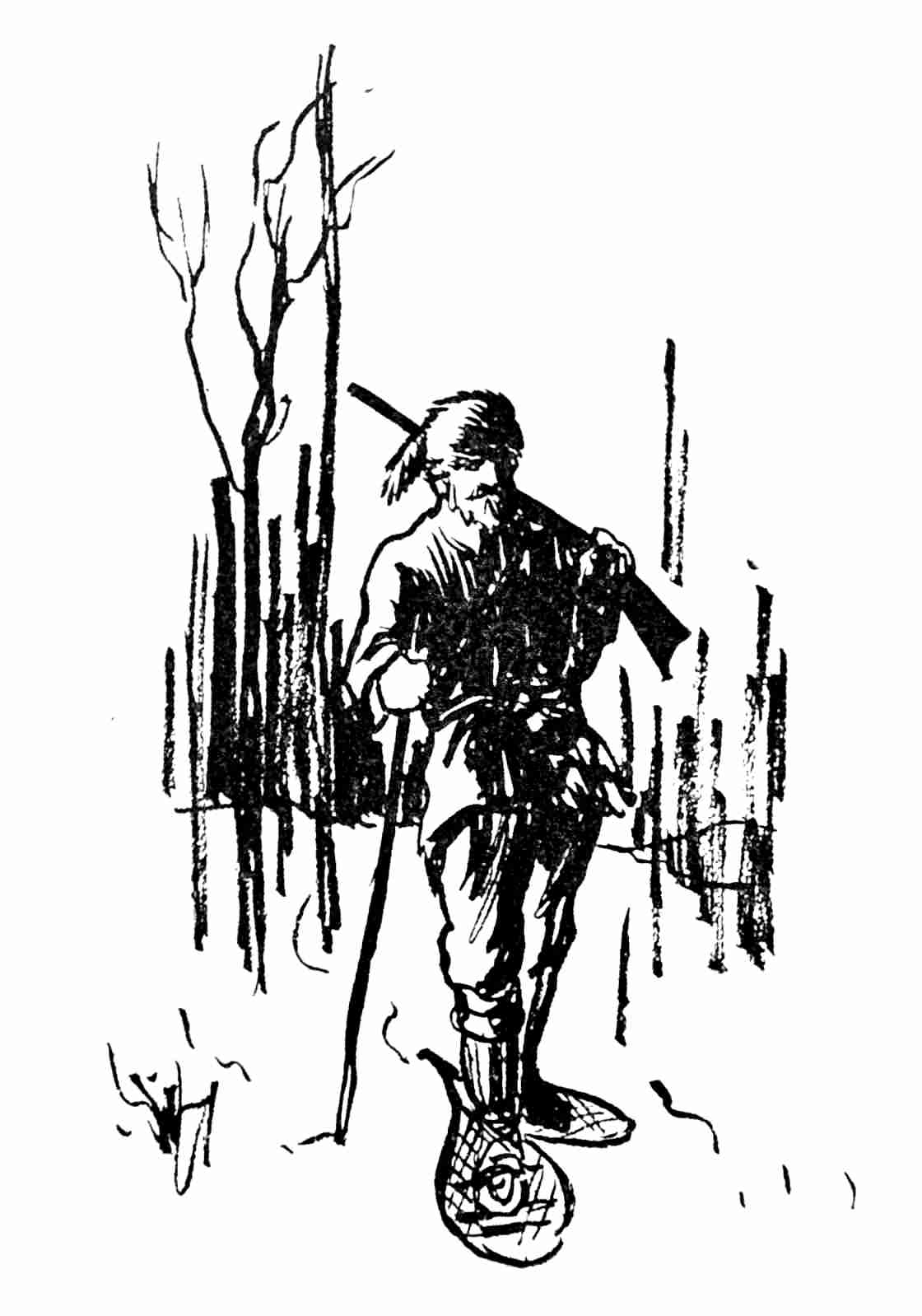
The tourist season was late that summer in Trois Pistoles, and as I was the only guest of the Chabots, we had supper en famille under the trees in a little terraced garden overlooking the St. Lawrence, which is there about twenty miles wide—really part of the Gulf. It was a beautiful view that extended before us, and added much to our enjoyment of the excellent meal which Madame Chabot had provided, and to which I had contributed by fishing all afternoon in the Rivière Trois Pistoles.
We had the most delicious trout, pataques à la Canadienne, pain du pays, wild strawberries and cream, a platter of golden croquignoles, and some good tea. It was a wonderful supper, and I did not hesitate to praise it in the highest terms.
“Madame Chabot,” I said, with deep appreciation, “never in my life have I eaten a more perfect meal. The Hotel St. Louis in Québec could not serve the like. Truly, it is equal to anything that my mother ever did.”
Madame Chabot fairly beamed upon me.
“Ah, M’sieu Thibault, I am pleased to hear you say that. Always have I tried to feed my guests well—especially the men. There is nothing that they love so much. I will do it, please God, until I die.”
“That will not be for many years yet, Madame. A young woman like you can count on forty more, at the very least.”
“Now you are laughing at me, M’sieu Gilles. But I will not tell you my age—that is my little secret.”
“No need to be sensitive about it, Madame. Many a grande dame of Québec would be glad to have your figure, your complexion, your—”
“Please, M’sieu Gilles, that will do. You make me blush. If you talk like that I will starve you after this. Now I must put away the things. Talk to pépère for a while. He will tell you a story, perhaps. But do not believe all he says—he is a grand jaseur.”
“Va t’en, Marie,” said Bonhomme Chabot, with a show of indignation. “You know very well that I always tell the truth—in part, at least. But I am not telling stories this evening—I prefer to smoke.”
“Take some of my tobacco, M’sieu Chabot,” I suggested, offering my pouch.
“Merci beaucoup, M’sieur Gilles,” he replied. “Excuse me, but I prefer the old tabac Canayen. I find it more satisfying, more consoling.”
“Everyone to his taste,” I replied, filling up and striking a match on the stone wall. “We shall have a good smoke all the same. But what a wonderful view!”
“Not bad, M’sieu Gilles.”
“More than that,” I replied, impressively. “It is magnificent, superb.”
“I am glad that you like it, M’sieu Gilles. Me, I never tire of it. It is never twice the same. There, to the left, are our little islands—Ile aux Basque and Ile aux Pommes. Farther on is Notre Dame de l’Ile Verte, and beyond, on the north shore, are the mountains, the Laurentides, from Pointe au Bouleau, on the left, to Pointe Paradis, on the right—one hundred miles, at the least. It is very clear this evening.”
“And where is the mouth of the Saguenay, M’sieu Chabot?”
“There, directly to the east—between those two hills. On the right is Tadousac—you can see the gleam of light on the church steeple. Across there, east by north, just below the sun, is the Rivière des Petites Bergeronnes. I have caught many fine salmon there, and trout en masse. It is a fine river, that. It descends from Lac des Sables, Lac des Petites Bergeronnes, and many other lakes. There is big game in those parts—moose, caribou, bear. A hunter’s paradise, you would call it. Yes, I have hunted in that region, many times, when I was young. And I should like to go again. I often dream of it. Too bad to be growing old, is it not?”
I made no reply, and we sat there in silence, watching the red disk of the sun as it sank toward the rim of the mountains. The tide was high, and a shining path led from the Rivière des Petites Bergeronnes to the shelving beach of Trois Pistoles, to which, as I fancied, the little shepherdesses came tripping on fairy feet. Soon the sun went down, but the river still gleamed in colors of blue, red, and gold, reflecting the sky and the clouds above. Presently the bright colors faded and the mellow twilight came stealing on. Then we began to talk again.
“That was glorious, M’sieur Chabot,” I murmured, feebly.
“Call me Jean, if you please,” he responded. “Those city titles do not fit me well.”
“Bon!” I replied. “And to my friends I am always Gilles.”
“Well, M’sieu Thibault—Gilles—that was a fine sunset, as you have said. We have them often. I have seen many in the past seventy years.”
“Seventy years, Jean?”
“But yes. And a few more.”
“That does not seem possible. You are still so tall and straight—strong, too, no doubt.”
“Not so bad for an old man, but not what I was fifty years ago.”
“That is a long time, Jean.”
“It does not seem long to me—like yesterday.”
“There have been many changes in that time, I dare say?”
“But certainly. There were not half the people here in those days, and the forest was very close.”
“There was plenty of game then?”
“En masse. One could live by hunting. I have seen deer come down to drink at that little stream—not a hundred yards from the house. There were moose, also, in the forest, and bear, wolves, lynx, and all that.”
“Birds, too?”
“Of course. Partridges, snipe, geese, and ducks of many kinds. But the most abundant were the pigeons.”
“Oh, I have heard of them—les pigeons voyageurs.”
“Yes. We called them tourtes. But you should have seen them. They came in clouds, to darken the sun, and when they descended they filled the trees and covered the ground. I have seen large trees broken to pieces, and fields of oats and wheat completely eaten up. Yes, they were a veritable plague, and we killed all we could, with guns, nets, and sticks, even—far more than we could eat. The wild beasts and birds, also, had their share. What a massacre!”
“But now there are none left—I have not seen one in ten years. Too bad, Gilles, that you have never eaten a pâté de tourte. You would have enjoyed it. Yes, we had some good things in those days.”
“No doubt, Jean. But what a marvelous tale!”
“Marvelous, indeed, but true just the same. If you don’t believe me ask any of the old men. Ask Marie, even.”
“Certainly, I believe you, Jean. But it is astonishing, just the same. And what of the fishing at that time?”
“Well, all the streams were full of trout, and there were salmon, also, in great numbers. We caught them in the fisheries, with eels and sturgeon en masse. Often have I seen a sturgeon of six—yes, seven feet in length. We sold what we could to the fishing vessels, and we smoked and salted many for the winter. Yes, we had plenty of fish for fast days, I assure you.”
“Then there were the marsouins—porpoises, the English call them—which came often to the traps. And seals, even.”
“Seals, Jean?”
“But certainly—les loups marins. One sees them still, now and then, near the islands and along the north shore, but in those days they were common everywhere, which reminds me of Noël le Chasseur.”
“Who was he, Jean?”
“A hunter, of course, of this parish—a trapper, rather. But it is a long story.”
“No matter, Jean. We have nothing else to do. Tell me of this Noël, if you please.”
“Well, Gilles, if you wish to know, it was a young man who did not love to cultivate the ground, to raise cows, sheep, pigs, to stay in one place—in fine, to be a habitant. No, for he was always wandering in the woods, fishing, hunting, trapping, and when he had become a man he was a veritable coureur des bois.
“Noël was not very tall—about six feet, I should say—but of broad shoulders, thick body, and muscles of iron. He could carry a sixteen-foot canoe over the longest portage, and a pack of two hundred pounds was nothing to him. He was not of a quarrelsome disposition, I will say, but he was always ready to fight, for the pleasure of it, and there was not a young man in the parish who could stand up to him for ten minutes—that is to say, only one.
“At first he contented himself with short excursions in the forest, not more than a few days at a time, but after a while he built him a cabane at the north end of Lac Temiscouata, about thirty miles from his home, as the crow flies, but about twice as far by the river.
“As you may know, the Trois Pistoles is a rapid river, with many portages, and a long one at the end, where you cross the height of land. It would take Noël and his Indian from three to five days to go up with canoe and baggage, but only one to come down, if they had good luck in the rapids. However, in winter one could make the journey on raquettes in a single day, in case of need.
“During the summer Noël would stay at home most of the time to help his father on the farm. It is the season, as you know, when the furs are poor, and when the woods are full of mosquitoes, black flies, and brûlots. They burn, those brûlots, I can tell you. But about the middle of September, when the crops were all in, and the frost had finished those pests of the forest, he would load his canoe with flour, potatoes, pork, salt, ammunition, traps, blankets, and all that, and set out with Chariot the Bear for their lodge in the wilderness.
“There they occupied themselves for several weeks killing and curing fish and venison, cutting firewood, mending traps, blazing trails, and in many other ways preparing for the winter.
“Soon the snows came, covering everything, revealing the tracks of the wild animals, and showing where to set the traps. The snows continued, the days became very short and cold, but every morning Noël and Chariot would go out on their raquettes to make their circuits—each one his own. Not often did they return without some good pelts—beaver, otter, mink, marten, weasel, or fox. They took no muskrat in those days—they were not worth skinning.
“In the evening, after dinner, they would sit about the fire for a time, talking of the adventures of the day, planning for the morning, throwing dice, or telling stories. But very soon they would pile great logs on the fire and go to bed.
“No, there were no feather beds in that cabane, but something just as good: bunks covered with moss and balsam tips, with plenty of blankets and bearskins above and below. No trouble at all to sleep until the fire was low or daylight came.
“A lonely life, that? Noël did not find it so, as he has told me many times. Me, I have been there and I know. This Chariot was good company in the evening—he did not talk too much. And by day there was always something to do. It was very interesting to make the circuit of the traps, expecting to find something good—an otter, a mink, or a marten—and always hoping for a great prize—a white beaver or a black fox.
“Terribly cold, you say? Yes, it was cold, but what of that? They had their pantaloons of bouragan, their moccasins, their capots of étoffe du pays, their capuchons, their mittens—why then should they fear the cold? It was like whiskey blanc, making the blood to tingle, the feet to dance, and the courage to rise, so that one could do anything—tramp all day, carry any load, face any danger. No, the cold was not to be feared, unless one should fall and break a leg, or be lost in a storm. But there are dangers everywhere, even at home, as you shall see.
“Too much snow, you think? But how could one set a line of traps without the snow to guide? Or how take a bear or a moose to camp without snow for the traîneau? Or how cross the swamps, the rivers, the lakes? No, the snow is the trapper’s best friend.
“And how beautiful it is, as it falls in great flakes through the air, covering everything with a robe of white! And how it decorates the trees! Gilles, have you ever seen a forest of fir trees, like church steeples, all covered with snow? By sunlight they shine with millions of diamonds, and by night, when the moon rises between the spires, it is like fairyland, or heaven—I do not know which. Oh, que c’est belle, la neige!
“Best of all, the snow made it possible for Noël to go down to the parish once or twice during the winter, to take a pack of furs, to obtain supplies, to see his family, and to visit his blonde, Simonne Tiberge.
“Simonne, I assure you, was all that a habitant girl could be—beautiful, capable, diligent, good-tempered, religious. But she did by no means admit that she was the blonde of Noël or of any other man. On the contrary, she held herself aloof from all the garçons, although she was desired by many, especially Noël le Chasseur and a young habitant, one Maxime Fortier.
“This Maxime, I will tell you, was a veritable giant, head and shoulders over all the men of the parish, and so strong that he could carry a full grown marsouin on his back or bend a horseshoe in one hand. Moreover, he was a great boaster and scared everybody by telling of his strength and courage. He had killed a bear with an axe; he had thrown a bull in the pasture; and he had carried a dugout canoe over the long portage. On another occasion, as he said, he had assisted an ox to plough his field of pataques, and when the beast was tired he had continued the work himself.
“He was, in brief, the Samson of the parish, and when it was known that he was paying court chez Tiberge, all the young men of the parish were afraid to go there. That is to say, all but Noël, who came so seldom and was such a vagabond that Maxime thought him beneath his notice. As for Noël, he did not fear Maxime—not enough perhaps—thinking him less brave than strong.
“Noël had intended to remain in camp until the end of January, but as the fêtes approached he grew restless, desiring more and more to spend Christmas with his parents and friends, especially as it was his own jour de fête. So one fine morning, by starlight, he said au revoir to Chariot the Bear, and with his traîneau well packed with furs and provisions, he took the trail for home.
“The weather was cold and the snow hard, so he made good time up the Madawaska for some three leagues and then across the height of land to the valley of the Trois Pistoles. As the sun rose over the mountains he was marching down the river, which, if all went well, would lead him within a league of his father’s house. It was a clear stretch of ice and snow between the forest walls, with hills on both sides, so he could not possibly lose his way.
“He was hoping to arrive at Trois Pistoles before night, but about the middle of the afternoon great clouds came up from the east and it began to snow. At first the snow came very gently, with big flakes floating down as though a great sack of white feathers had been opened in the sky.
“Soon the wind began to blow, the snow came down oblique, in finer grains, until a furious storm arrived—a veritable nordêt. The air was filled with fine white dust—la poudrerie, we call it—blowing and whirling all about and piling great drifts along the river, in which Noël, with broad raquettes on his feet, sank up to the knees. And, as you may imagine, it was not easy for him, strong as he was, to pull the traîneau over those hills of snow.
“He was looking for a place to camp for the night, when suddenly he came to an open space, like a lake, where the nordêt blew with more force than ever, so that he was almost beaten down. Then he knew that he had arrived at the mouth of the St. Jean de Dieu and that the cabane of the Abenaki chief, Louis Caribou, was not far away. Soon he found it, between a clump of sapins and a big rock, and was well received by Louis and his daughter Minou.
“Usually Minou spent the winter in the village, but now she was keeping house for her father in his hunting lodge and aiding him with the traps. She was a pretty little créature, of gracious figure, round face, and the largest brown eyes you ever saw—like those of a deer. In her hunting costume of buckskin, decorated with beads and porcupine quills, she was pleasant to regard. She seemed to be of the place—a veritable spirit of the forest in mortal form. Can you blame Noël if he thought that the little Indian maid would be a better wife for a trapper than any girl of the parish?
“The same thought seemed to come to Louis Caribou himself, for as they were smoking together after supper he told Noël that he needed a good wife to take care of him. And a little later he said that Minou would be obliged to marry Chariot the Bear unless some better man should come along. Little Minou heard this, of course, but said nothing. But once or twice she regarded Noël with her great, pensive eyes, as though he were not altogether displeasing to her.
“By morning the storm was over, the sky was clear, and although there was much snow on the river, Noël resumed his journey. As he was saying au revoir to his hosts, Louis asked if Minou could go with him to the village to spend the fête with her mother, and he could not refuse, so they set out together.
“Minou wished to haul the traîneau, but Noël could not permit that. He went on ahead, breaking the trail, while Minou followed in his tracks, and thus, about noon, they arrived in the parish of Trois Pistoles.
“In the evening as Noël was going toward the maison Tiberge, he met Maxime Fortier, and, naturally, they stopped to speak to each other, although they had never been great friends. On the contrary, Maxime, being older and bigger than Noël, had always played the bully toward him at the parish school. And now he thought to do the same again.
“ ‘Hé! Bon soir, my little hunter from the forest. So you have come down to see the world. Great pleasure to see you again—but yes. Give me your hand.’
“With a smile that might have been a warning to the giant, Noël extended his bare hand, which Maxime siezed as in a vise, intending to crush it, or at least to make Noël cry for mercy. But it was no inert horseshoe that he held in his great paw, but a hand of iron, which returned a grip as strong as his own. And when he tried to turn the wrist of Noël, he received a sudden wrench in the opposite direction which gave him a cramp in the arm and made him glad to let go.
“ ‘Bon Dieu! Little hunter of the desert, but you are strong! I was not expecting that. No matter. Next time you shall see. But where are you going this fine evening?’
“ ‘To visit my friends, Maxime. It is not often that I see them.’
“ ‘True, poor little coureur des bois. And are there no people up there?’
“ ‘Only Indians.’
“ ‘Bon! That is as it should be. Soon you will be an Indian yourself—a savage. Would you like some good counsel, mon vieux?’
“ ‘But certainly, Maxime. I am always willing to listen to the words of the wise—I find them helpful.’
“ ‘You do, little one? Then I will counsel you, very strongly, to make the court to no Canadian girl. An Indian, a squaw, is the créature for you. Understand?’
“ ‘Yes, I understand, Maxime. But I will tell you, my friend, that in this respect I will do exactly as I please.’
“At this Maxime became red in the face, clenched his hands and his teeth, pushed out his face, and glared at Noël like a wild beast. Then he began to bellow and the air was full of maledictions.
“ ‘You will, will you, little savage? Sacré bête! Animal! Sacré mille diables! Talk to me like that! For two sous I would strangle you. Cru-ru-ru de Dieu!’
“Noël stood there without moving, vigilant, regarding his adversary in the eye as he would an angry bull. For a moment Maxime seemed on the point of charging, head down—but he did not. On the contrary, he retreated a few steps, turned aside, and passed on, growling to himself, while Noël proceeded toward the maison Tiberge.
“The Tiberges were glad to see him, for he was an old friend, very gay and joyous in company, full of pleasantries, songs, and tales of every sort. Besides, he brought gifts from the forest: a great bearskin for Père Bonaventure, a fine pelt of loutre for Mère Catherine, and various articles of Indian manufacture for the children.
“It was an agreeable veillée in every way. Noël smoked and talked with Bonaventure for a long time, while the rest of the family listened with all their ears, scarcely daring to ask a question lest the flow of talk and jest should cease. After a time the children were sent to bed, and Bonaventure and Catherine also retired for the night, but not before inviting Noël to come again very soon—which he gladly promised to do.
“Thus Noël and Simonne were left to sit à deux by the foyer, where a great fire of logs was still burning, causing the lights and shadows to dance on the kitchen walls. The heart of Noël was dancing also, as he saw Simonne’s lovely face shining in the firelight and gleams of red and gold in her hair. It was time, as he thought, to make the grand demand. But, strange to say, he could find no words. It was Simonne’s gentle voice, then, which broke the silence.
“ ‘There was a strange noise down the road before you came in, Noël. I wonder what it was.’
“ ‘A little conversation, Simonne, between two old friends.’
“ ‘Is Maxime an old friend of yours, Noël? I did not know.’
“ ‘I did not mention his name, Simonne.’
“ ‘No, but it was he, just the same. I know his voice.’
“ ‘What did it sound like, Simonne?’
“ ‘How provoking you are, Noël! You were quarreling, I know.’
“ ‘Why ask, then, Simonne?’
“ ‘What were you quarreling about?’
“ ‘Nothing.’
“ ‘What was it, Noël?’
“ ‘Well, if you must know, it was about one Simonne Tiberge.’
“ ‘Me?’
“ ‘Yes, yourself, in effect. He forbade me to fall in love with any Canadian girl.’
“ ‘There are many of those, Noël.’
“ ‘No, Simonne, there is only one.’
“ ‘Great deceiver! What of the little Minou?’
“ ‘Cré tempête! who told you about her?’
“ ‘A little bird.’
“ ‘What little bird? I will wring its neck.’
“ ‘Then I will not tell you, no. But you came down with her this very morning.’
“ ‘Batêche! I knew that people would talk. It was Louis Caribou who asked me to bring her down for the fête.’
“ ‘No doubt. And she followed you like, like—’
“ ‘Like what, Simonne?’
“ ‘Oh, I do not wish to say it.’
“ ‘Like what, then? Out with it!’
“ ‘A squaw.’
“ ‘A squaw for me, Simonne? How could you think it?’
“ ‘That is what you need, is it not, back there in the forest?’
“ ‘Bon Dieu! Perhaps yes—perhaps yes. Well, I must go now. If you think that I prefer Minou—’
“ ‘It is not I who said it. But I saw—. And Maxime—.’
“ ‘Oh! It is Maxime, then, who is the little bird? I see. Bon! I will settle with him. Bon soir, Simonne.’
“ ‘Oh, Noël, do not go like that. I am sorry. Do not be angry with me. And do not touch Maxime—he would kill you.’
“ ‘Kill me—indeed? Why should you care? And if I kill him—what then? You might be sorry in that case.’
“Simonne rose to her feet, indignant.
“ ‘Noël, you are unjust, cruel. You do not understand. But promise me, all the same, that you will not fight with Maxime.’
“ ‘Well, if you love him so much—.’
“Simonne, pale with anger, stamped her little foot and went to the door.
“ ‘I do not love him—and never shall. Go, then! Go!’
“Noël laughed.
“ ‘Cré tempête! Tonnerre de Malbaie! But that is good news. In that case I will not touch him, no. But listen, little one. If you do not love that great ox, perhaps there is someone else?’
“ ‘No, there is not.’
“ ‘Bon! There is a chance, then?’
“ ‘Who can tell? Let us not speak of it to-night.’
“ ‘Agreed, Simonne. But you will at least accept a little gift from the forest—étrenne de Noël.’
“ ‘What is it, Noël?’
“ ‘A pair of silver-fox skins, Simonne—I will bring them tomorrow evening.’
“ ‘Oh, Noël! That is too much altogether. No. I could not.’
“ ‘But you will at least look at them, Simonne—they are pretty.’
“ ‘Well, I might do that.’
“ ‘That will be enough, I am sure. Bon soir, Simonne.’
“ ‘Bon soir, Noël. Venez encore.’
“The fleuve at Trois Pistoles never freezes over, as you may know—it is too wide and the water is salty, as in the sea. But at that time there was a great field of ice along the shore, which seemed to be established there for the winter.
“Bon! When the people looked out on the following morning, which was the day before la fête de Noël, they saw that great field of ice all swarming with black points, which crawled about, ran, and bumped into one another, as though they were lost. The people could hardly believe their eyes, for these black spots were seals, loups marins, thousands of them, the like of which the oldest habitant had never seen.
“As you may imagine, there was great joy in the parish. It was a wonderful gift of the Bon Dieu to the people of Trois Pistoles. Everybody ran down to the beach to take part in the chase.
“All the younger men went out on the ice with axes and clubs, killing the seals as fast as they could and hauling them to the shore. There the old men, the women, and the children, even, spent the day in skinning the seals and cutting them up—some for food and the rest for oil, which, as you may know, is very valuable.
“It was a terrible slaughter, and not without danger to the hunters, some of whom received wounds from the teeth of the furious beasts. By evening they had killed more than seven hundred loups marins, and were still pursuing when the disaster came.
“The hunters were dispersed all over the ice, and so occupied with the chase that they did not observe that night was coming on, nor that a strong wind was blowing from the land. Suddenly a great cry arose from the people on the beach, for the ice was moving out, and before anybody could escape there was a broad canal, a veritable gulf, between the ice and the shore.
“There was terrible distress and lamentation among the women and children and the old men, as they saw their husbands, fathers, and sons—all the strong men of the parish—carried away beyond their reach. They were sobbing, shouting, waving their arms in the air, calling on the Bon Dieu, la Sainte-Vierge, and all the saints, yet with little hope of deliverance from God or man. And on the ice, where the men were assembling in sight of their loved ones, there were terrible scenes of anguish and despair.
“Soon the curé of the parish, the Reverend Messire Pouliot, clad in surplice and stole, came running to the beach and stood there for a moment in silent prayer. Then, raising his arms, he cried to those on shore: ‘On your knees my children, I am going to give them the absolution.’ Turning to those on the ice, he cried: ‘On your knees, my brothers, I am going to absolve you from all your sins.’
“Then, with his hands extended in benediction, the old pastor pronounced the words of forgiveness:
“ ‘My sons, may the almighty God have mercy on you, and, forgiving your sins, bring you to life everlasting. I absolve you from your sins in the name of the Father, and of the Son, and of the Holy Spirit. So be it!’
“And all the people, on both sides of the gulf, repeated, between their sobs: ‘so be it!’
“Meanwhile, the ice on which the hunters knelt was breaking up, little by little, and drifting toward the mouth of the Saguenay.
“You may wonder, mon ami, why they did not swim to the shore. Ah, Gilles, I am ashamed to confess that very few of our men could swim, although they had passed their lives by the water. But what could even a strong swimmer do in icy water like that, with white-caps everywhere? No, it was wiser to take their chances on the ice.
“You ask why they did not run for the boats. Unfortunately, Gilles, they were all put away for the winter and far from the shore. They did go, but it was too late.
“However, in the midst of the noise and confusion, the little Indian girl, Minou, approached Simonne and said:
“ ‘Mamselle Simonne, listen to me. My canoe is cached back there in the bushes. We can go, if you wish.’
“ ‘Mon Dieu, Minou,’ Simonne replied, ‘that is the idea. Let us go at once. But it is a small canoe, is it not?’
“ ‘Yes—for three people. We can save one, perhaps.’
“They ran up to the bushes, pulled out the canoe and the paddles, carried them to the beach, waded out, embarked, and were off among the waves before anybody on the shore knew what had happened. They called them back, but they went on just the same, rising on top of the waves, sinking into the hollows, veering with the wind, and, altogether, managing the light canoe of birch as well as any voyageur.
“Very soon they arrived at a little cove, where two men ran to meet them and took them up! on the ice. They were Noël le Chasseur and Maxime Fortier.
“ ‘Bon Dieu!’ exclaimed Maxime. ‘You have come for me, Simonne. Brave girl! Well, let us go.’
“ ‘No, you will not,’ cried Minou. ‘We did not come for you.’
“ ‘Not for me? For whom, then? Ah, I see—for your little hunter. Brave little squaw! But never mind—you can return for him.’
“ ‘No. Go away!’
“ ‘Sacré mille diables! Soon it will be too late. Come Simonne—we will take the canoe and leave them here.’
“ ‘Bon Dieu, Maxime! Would you do it? Me, I will not.’
“ ‘But you came for me.’
“ ‘No!’
“ ‘No? Mon maudit! We will fight, then. Hein, Noël?’
“ ‘That would be suicide, Maxime,’ replied Noël.
“ ‘What then?’
“ ‘We might throw a sou.’
“ ‘Have you one?’
“ ‘But yes. Here it is.’
“ ‘Quick then—throw it.’
“ ‘Heads or tails, Maxime?’
“ ‘Heads.’
“ ‘It is heads, Maxime. You have it.’
“ ‘Aha! Come then, Simonne. Come along, Minou, if you wish.’
“ ‘I will not go,’ said Simonne.
“ ‘Nor I,’ said Minou. ‘I will stay with Simonne.’
“ ‘Sacrées diablesses! Well, drown if you will. Come, Noël—let us leave then.’
“ ‘Leave them? Chien maudit! Do you think I would?’
“ ‘For God’s sake, Noël! I cannot go alone.’
“ ‘What is that to me? Miserable coward! Drown if you will.’
“Without another word Maxime picked up the canoe, marched over to another place, took on two men, and paddled to the shore—now more than a mile away. They were married men, so one must excuse them, I suppose. Yet they have often wished that they had stayed on the ice.
“You wonder why? I will tell you. Suddenly the tide turned, the wind changed, and the ice drifted back. Not to the same beach as before, but down the river to be stranded on les Petites Razades, between Trois Pistoles and Saint Simon. Before long the lost ones, a few at a time, reached the shore. The search was continued all night, and all were saved.
“There was no midnight Mass that evening, for Messire Pouliot himself was aiding in the rescue. But in the morning the church was full and everybody assisted at the Mass with all their heart. And when, in his sermon, the curé spoke of the terror of the night, the joy of the morning, and the mercy of the Bon Dieu, he caused all the congregation to weep and pray and renew their vows.”
“A great deliverance, certainly,” I said, as Jean ceased to speak. “But is that the end of the story?”
“Why not, Gilles? They were all saved.”
“But what of Maxime Fortier?”
“Why think of him? He left the parish and has never returned. He had the grace to be ashamed of himself.”
“And little Minou?”
“Not long after that she was married to Chariot the Bear. They were very happy in the cabane on Lac Temiscouata.”
“The cabane?”
“But yes. We gave it to them.”
“We? Who then?”
“Simonne and I, of course.”
“Not Madame Chabot, surely? You call her Marie.”
“True. I may call her that, may I not. Marie! Marie! Come here for a moment, if you please.”
Madame Chabot came smiling into the garden, knitting industriously on a gray homespun stocking.
“What is it, Jean? Have you been telling M’sieu Gilles some more wild stories?”
“But no, Marie—nothing but the truth. Yet he does not believe me altogether.”
“No wonder, M’sieu Gilles. He is a grand jaseur, as I have said.”
“Marie,” broke in Jean, with a laugh, “you talk far too much. I wish to ask you one little question.”
“What is it, Jean?”
“What was your name in those days—your nom de vierge?”
“Don’t you know, Jean? What a memory! Well, I will tell you—it was Marie Simonne Tiberge.”
“Yes, little shepherdess. And mine?”
“You were Jean Noël Chabot dit le Chasseur—too many names for one poor man.”
“You see, Gilles, they will have the last word. But it is all clear now?”
“Perfectly,” I replied. “But what of those silver foxes, Madame Chabot—Simonne? You have them still?”
“But certainly, M’sieu Gilles. Come inside and I will show them to you. That was why I married him, you know.”
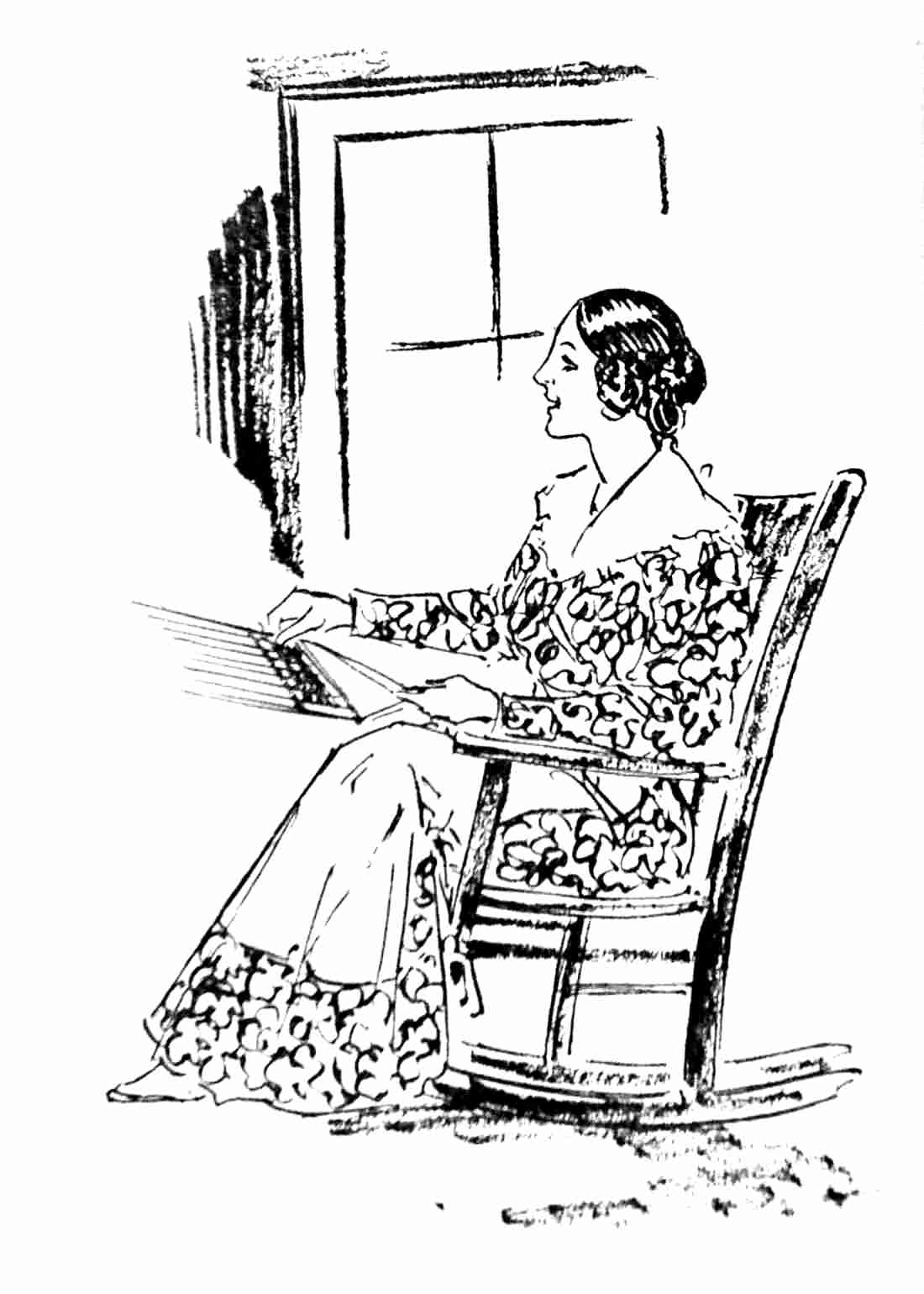
“Barbe!” said Nicholas Marette to his youngest daughter, who was seated in a low chair by the window, knitting a long red sash.
“What is it, Papa?” replied the young girl, looking up with a bright smile.
“It will be new moon to-night, little one.”
“Oui, Papa. We cannot see it, but it is there, just the same, behind the hill.”
“And the tide will be high—the spring tide, you know.”
“Oui, Papa. That we can see from the window. It covers already all the flats. It must be half a league, at least, from this side to the island. Oh, how lovely, that great stretch of water, so clear, so still—like a mirror. And the clouds—how beautiful, above and below!”
“Yes, it is very fine. It will bring many fishes to the trap.”
“Mais oui, Papa.”
“Well, Barbe, since all your brothers and sisters are married and gone away—well-married, I will say—we must depend on you. You like to go to the fishery, do you not?”
“But certainly, Papa.”
“Bon! You shall do it. Tomorrow morning, at dawn, you shall take Blanche and the charette and go down there to see what you find.”
“Oui, Papa. It will be a great pleasure for me.”
“You are a good girl, Barbe—good and capable. More so than any of your sisters, I will say, though they are not to be misprized.”
Barbe laughed gaily.
“It is quite possible, Papa. I have had the advantage of their example and precept, you know.”
“True, Barbe, and you have profited by all that. You will be equal to your mother some day. N’est-ce pas, sa mère?”
Mère Jeanne smiled with satisfaction, as she looked up from her wheel.
“It may well be, Nicolas. She can knit, as you see, with great facility. That sash will soon be finished. She can spin and weave, also, make clothes and hats, butter and cheese, soap and candles. She knows how to smoke meat and fish, and to make confitures of every kind. Yes, and she does not disdain to work in the field, upon occasion. Nor to go to the fishery, as you have seen. Yes, I have done my best. I have taught her all I know—almost.”
“Truly, you have done well Jeanne. She is intelligent, like me, and diligent, like you. She has all the arts, all the virtues. And not so bad looking, either. In that also she resembles me. In all, a model créature. A fine wife for some young habitant—n’est-ce-pas, Barbe?”
Barbe made a face at her tormentor.
“Let me alone, Papa. You must not talk like that. Me, I shall never marry. I will stay with you and Maman. Besides, there are no young habitants left—none worth while. I detest them all.”
“One will arrive—never fear. Your sisters have caught fine ones, but there are still good fish in the sea. Yes, you shall stay with us, but you shall have a home of your own as well. Look at this great, long house. How easy to divide it in two—this side for us, the other for you and that young habitant who is to arrive.”
“Let us not speak of him, Papa. He will stay away, I hope, for the present, at least. We are quite happy as we are.”
“We shall see, chérie. Who knows what tomorrow may bring? But there is the cannon from the citadel—half-past nine already. It will soon be dark. Put away your work, now, and go to bed. You must be up early, you know.”
“Yes, Papa. Just a few more rows and I will go. It is for you, this sash. You will be glad to have it when the winter comes.”
“True, Barbe. My old one is worn out. Bon soir, chérie. Sleep well. But do not forget the fishery.”
“But no. How could I? Bon soir, Papa. Bon soir, Maman.”
The rosy dawn was just beginning to paint the sky when Barbe, with the charette and the white cavale, drove down the farm road to the top of the great hill and then descended the steep, winding road toward the river. The tide was out, and the north channel was now a relatively narrow stream running swiftly between two long, broad marshes. On this side, as well as along the Island, the marsh was crossed at intervals by high fences of stakes and interlacing branches which ran from the shore to low water, where were great cages in which the fishes were caught as the tide ran out.
Approaching the Marette fishery, Barbe was surprised and alarmed to see on the farther side a small schooner careened in the marsh, and a sailorman standing by, barefooted, as though intending to rob the trap. However, Barbe showed neither timidity nor anger in meeting the situation.
“Bonjour, M’sieu,” she said in a firm but quiet voice.
“Bonjour, Mamselle,” replied the sailor, politely, touching his cap.
“You find the fishery interesting, M’sieu?”
“But yes, Mamselle. We have had no fresh fish for a long time.”
“That is sad,” responded Barbe, with a smile of mingled pity and amusement. “Perhaps I could give you some.”
“But no, Mamselle, we would buy them.”
“Yourself, M’sieu,—or the captain.”
“It is I, Mamselle, who am the captain, with your permission.”
“Pardon, M’sieu le capitaine. I did not know. But certainly, you shall have some fish, if there are any. Let us see.”
With that Barbe tucked up her skirt, and barefooted, like the captain, descended from the charette, went to the cage, and cautiously opened the gate. Whereupon a great heron, which had been feasting there, flew wildly against the bars and would have killed itself, had not the captain caught it deftly by beak and wings and gently set it free.
By which he established himself in the favor of Barbe, who loved all birds, even when they stole her fishes.
Then they gave attention to the pool within the trap, where they found a great number of eels, sturgeons and barres, which they took out with a hand-net and put in the charette, until it was half full. And, if the truth must be told, they did not hasten to finish the work.
“There,” said Barbe, at last, “that is done. Merci beaucoup, M’sieu, for helping me. It is a great catch—the best of the season. Will you not take a few of each kind for your table? The sturgeons and eels are good, but the barres are delicious. Take what you want, M’sieu.”
“But no, Mamselle. I am going to buy them. That was understood, was it not? How much for the lot?”
“Well, M’sieu le capitaine, if you wish to trade I become commerçante at once. You see there more than five hundred pounds of fish, which, at the low price of three sous the pound, are worth not less than fifteen dollars.”
“You count well, Mamselle.”
“Oui, M’sieu. I learned that in the convent and in the market at Québec.”
“Excellent schools, I will say, Mamselle, if I may be so bold. Me, I also count, and I find but five dollars in my purse. Québec is a bad place for us sailors—we spend too much.”
“For five dollars, M’sieu, you shall have a third part of the fish—but good measure, I assure you.”
“But I need them all, Mamselle.”
“Five hundred pounds, M’sieu le capitaine? And how many sailors to feed?”
“Two, Mamselle, and myself.”
“Is it possible? What appetites!”
“Now you are laughing at me, Mamselle. If I must explain, I will tell you, in confidence, that we shall eat some fresh, as many as possible, and salt the rest. But we really do need them for the voyage—all the way to Gaspé and Terre Neuve. We are tired of codfish.”
Barbe laughed gaily.
“Pardon, M’sieu. I was too curious. Well, as you are so hungry and so poor, I will cut the price. You shall have the fish, all of them, for ten dollars. That is the best I can do. You will not find such a bargain down the river.”
“I know that well, Mamselle. But wait a moment, if you please. I have something better than money.”
With that the skipper went over to his little ship, and presently returned with a parcel in his hand, which he carefully opened and displayed before the eyes of Barbe. It was a large and beautiful sash, the equal of which she had never seen before.
“There, Mamselle, there is something which will buy your fish, I am sure. La ceinture fléchée, manufactured by my grandmother, who knows the secret better than anyone else in the Province, or in the whole world. A work of art, that—an heirloom, I will say. I wear it myself, when I go hunting, but not in the month of June, you may be sure. Take it, Mamselle, with the five dollars, and let me have the fish. And if you wish, when I return, I will give you twenty dollars for it. But you will not. No, for you know what it is.”
Barbe’s eyes fairly danced with delight, for she had long desired to possess a real ceinture fléchée. Yet she was sorry for the poor captain, who was giving so much and receiving so little.
“No, no, M’sieu. I cannot. It is too much. It would be robbing you. Take half of the fish for five dollars and let me keep the rest.”
“But no, Mamselle. I offer you the ceinture of my own free will. It is for you and you only. Would you have me give it to some marsouin at Isle aux Coudres? Perhaps you will let me look at it on my return. If not, my grandmother shall make me another.”
“Well, M’sieu le capitaine, if you talk like that I may accept the ceinture. But no money—not one sou.”
“That pleases me much, Mamselle. There shall be no trading between us—only an exchange of gifts. Will you not take the ceinture on these terms?”
At this Barbe could resist no longer. She took the sash from the captain’s hand, gazed on it lovingly, wrapped it carefully in the oilskin cover, and placed it on the seat of the charette. Then she drove around to the little ship, where the sailors took the fish and stowed them away below the deck.
“Mamselle,” said the young skipper, as he walked along the shore beside the charette, “this has been a happy day for me.”
“How can that be, M’sieu, when you have lost your beautiful sash?”
“It is in good hands, Mamselle. Besides, I have the fish. What would you?”
“I feel like a robber, M’sieu.”
“No need, I assure you. Me, I am well satisfied. It is a fair bargain. We shall have other exchanges, I hope, on my return. Shall we not, Mamselle?”
“Who can tell? But look at the sunrise, M’sieu. It is lovely, is it not?”
It was indeed fine to see the sun rising over the Isle of Orléans, bathing everything in its cheerful light. The wooded cliffs and the long marshes were all green and gold, while across the river, as the tide was creeping in, was a golden pathway that quivered with every passing breeze. Along the fishery and where the little ship lay were shining pools of water, bordered with rushes, and even the black mud gleamed in the sunlight, as though glad that another summer day had come.
The captain was enchanted.
“It is indeed a beautiful view, Mamselle, and I am glad to have seen it. I shall be sorry when we sail away.”
“When do you go, M’sieu le capitaine?”
“When the tide comes in, Mamselle.”
“And then?”
“Then we sail down the river to my home in Gaspé. Then to Miquelon, Terre Neuve, and where not. We are traders, you know.”
“You do not often come this way?”
“This is the first time, Mamselle, but not the last, I hope.”
“You expect to return, M’sieu?”
“But certainly, Mamselle. Before the winter comes. About the day of my fête, if possible.”
“Your fête?”
“But yes, Mamselle. The fête of all the saints. That is my name.”
“Toussaint?”
“Oui. Toussaint Lecomte, at your service. And yours, Mamselle?”
“They call me Barbe, M’sieu Lecomte.”
“A pretty name. And your father lives up there on the hill, no doubt.”
“Yes, my father, Nicolas Marette. But what will he say when he sees the ceinture—and no fish? I must be going—immediately.”
“No fish and no money, Mamselle Barbe. That is bad. You must take the five dollars as well. Here it is.”
“But no. It is a bargain. Do not trouble about my father—I will make him understand. Au revoir, M’sieu.”
“Au revoir, Mamselle Marette—Barbe.”
“Au revoir, M’sieu Toussaint. Bon voyage.”
It was not so easy for Barbe to pacify her father, who was in a fine rage when she returned with an empty charette and nothing to show for the best catch of the season but a colored sash. To think of giving away all those fine fish, which one could have sold for fifteen or twenty dollars in the Champlain market! It was outrageous, maddening. And all for a foolish ceinture which nobody would ever wear. Not he, certainly. A plain red or blue sash was good enough for him.
Thus he stormed about for a while, until Mère Jeanne thought it high time to intervene.
“Nicholas,” she said, in a quiet but determined voice, “be silent for a moment. If you ask me, I will say that you don’t know what you are talking about. Eels, no doubt, you know well, also sturgeons and other species of fish. Money too, mon vieux. Yes, you like that above all. But a ceinture fléchée? Mon Dieu! That is beyond you, as though in another world. Perhaps in heaven, if you ever get there, you may be able to see the beauty of it.”
“Regard it now—fifteen feet long, with the fringe fourteen inches wide, and all of the finest wool. And the colors: white, red, blue, yellow—like a rainbow. And the design, it is marvelous. So many threads running up and down and on the bias, braided in strange fashion, and forming those lovely arrowheads. True point fléché. Is it possible that you have never heard of that? Me, I saw it once in winter, many years ago, worn by a rich bourgeois of Québec. But not equal to this. No, not in the same class. I tell you, Nicolas, it is a work of art—un chef d’oeuvre.”
“But, Jeanne,” murmured the poor man, “in that case—”
“Don’t interrupt me, Nicolas. You have had your say. It is my turn now. I know what you have in mind, old miser that you are. You would sell this beautiful ceinture to some young blood of Québec for ten, fifteen—yes, twenty dollars—and put the money away in your old stocking. And for what? To buy another cow, or a pig. But you shall not. No. Barbe shall have it for her own, and we shall make others like it, when we learn the secret. Those you may sell, if you wish, but this one—never.”
Nicolas was silenced, and the women for once had their own way in the family Marette. However, it was conceded that none but Nicolas could display the ceinture to advantage, and that he should wear it in winter, especially when he went to market at Québec. Which pleased him greatly, for he knew very well that no other habitant in the Côte de Beaupré had a sash like that.
As to Barbe, she spent hours and days studying the intricate design of the ceinture and wondering how it could be reproduced. It was not weaving, exactly, for there were no cross strands or weft. It was not knitting, for the threads ran in various directions. It was not lace work, even, for there were few knots. It was more like the plaiting or braiding of grass, rushes, or hair, though how the plan was worked out Barbe could not guess. She made several attempts to imitate the sash, but they were sad failures.
Then she visited all the best workers in wool of the parish, both men and women, but could find none who knew the secret and few who had ever seen an example of point fléché. Even the sisters in the convent, who were lost in admiration of the work, could not explain how it was done. They had heard, however, of a family in L’Assomption, near Montréal, who had handed down the mystery from generation to generation. Barbe should go there, if possible, and try to persuade the artisans to reveal the secret. But she could not arrange for so long and expensive a journey.
She did, however, make a pilgrimage to the shrine of Bonne Sainte Anne, on the day of the fête, the twenty-sixth of July, and while there made an offering of wax candles and a vow to give an embroidered altar cloth, if Sainte Anne would help her to solve the puzzle. After which she continued to work and dream and pray, but without result. Apparently, it was not the will of the Bon Dieu that she should ever make a ceinture fléchée.
In her concern about the ceinture Barbe did not altogether forget the young skipper of Gaspé who had given it to her, much as Esau of old sold his birthright. It was, apparently, his most precious possession, yet he had parted with it without a sigh for a few eels and sturgeon which he did not seem to need at all. Was it possible that he had done it merely to win a smile from a habitant girl? Strange beings, men, and hard to understand.
Not that she had ever troubled herself about any of them—not at all. All the desirable ones in the parish were married or had gone away, and only stupid fellows or mere boys were left. There had been one in particular, but he had turned voyageur and married an Indian girl—possibly several. And another—but he was a priest. But that young captain was in some respects better than either: tall and strong, sufficiently handsome, kind-hearted, courteous, and, no doubt, brave as a lion. Captain of a ship—and proprietor, possibly. But it was a dangerous life, that of a sailor—they sail away, but do not always return.
Toussaint had spoken of returning, but the summer passed, with no sign of his little ship—the Bras d’Or. September came, and with it frosty nights, red and yellow maples, and falling leaves. October, then, with cold rain, early snows, frazil ice floating down the river, and navigation about to close. But still no ship coming in with the tide.
At the very end of October a gracious wind came from the south, the frosts were no more, the days grew warm, a golden haze was in the sky, and everybody was glad because Indian summer had come. It was a brief reminder of the departed season and a promise of summer days to be, after winter should have passed away.
On the eve of All Saints, Barbe stood on the crest of the hill watching the sunset and the rising tide. A light breeze ruffled the surface, and far away, near the end of the island, the last rays of the sun gilded a white sail, which moved slowly from shore to shore as the navigator was tacking up the channel. Presently the sun was gone, twilight came, and with it a gray mist that covered the river and the little sail, though doubtless it was still coming on. Could it possibly be the Bras d’Or, and would it be lying by the fishery in the morning at low tide?
Reluctantly Barbe turned toward the house, and there, over her left shoulder, was the new moon—sure sign that she would see and speak with her lover before long. But she had no lover, nor desired any—so the augury could have no meaning for her.
Nevertheless, that very evening, long after Papa and Maman had gone to bed, Barbe selected from the apple barrel the finest red fameuse she could find, carefully peeled it in one piece, swung the peeling three times around her head, and let it fall gently behind her. Strange to say, it formed very distinctly the letter T, though whether that stood for Thomas, Théodore, Théophile, Telesphore, or Toussaint, it was hard to say.
After that Barbe stole to her father’s shot bag, abstracted several leaden bullets, put them in a long iron spoon, and set them in the fireplace over the glowing coals. By and by she poured the molten metal into a pail of water to see what sort of figures it would form. And when she took it out there was a little two-masted ship and some separate pieces, which might well be the captain and the crew.
Finally, as the clock struck twelve—the hour of fate—she took the mirror from the kitchen wall, slipped out to the court-yard, lifted the cover of the well, and peered wistfully into the glass and the water below to see whose face should be reflected there. Nothing could she see but a dim reflection of herself and a single faint star that presently vanished, as though covered by a dark cloud.
Barbe was up early in the morning, intending to visit the fishery, but was surprised to find the windows all covered with snow and a wild storm raging without. Nevertheless, she prepared to go, putting on her bottes sauvages, a warm coat and capuchon, and the ceinture fléchée wrapped around her waist and shoulders. Then she slipped quietly from the house, went to the stable, put the harness on Blanche, attached her to the charette, and drove out into the storm.
The air was full of snow, but Barbe was able to follow the fence along the field and the double line of trees bordering the road down the hill. It was harder going on the marsh in the full sweep of the wind, but they went on, and soon arrived at the fishery. The trap was inaccessible and hardly visible in a welter of waves and icy spray.
Nor was there any little ship alongside. Nothing but a waste of driving snow, and great waves rolling upon the marsh. Here Barbe should have turned homeward, but she pushed on down the shore, as though looking for something which she feared to find. One high fence after another loomed up in the storm and was passed, and then, between the fishery of Marois and that of Garneau, her fears were realized, for there, bottom up, lay a dismasted schooner, bruised and battered by the storm.
Barbe did not need to read the name to know that it was the Bras d’Or, for the golden arm with pointing hand was still at the prow. No trace of the crew was to be found, but there could be little doubt that they had perished in the storm and that the ebbing tide had carried them away.
When all hope was gone, Barbe burst into tears, realizing for the first time how much the young sea-captain was to her and what store she had set by the rendezvous which he had made. They had both kept the tryst, and only death could prevent their meeting on the day appointed.
The storm still raged without and in her heart as she drove homeward through the desolate waste, feeling as though she had not a friend in the world. Even the Bon Dieu, it seemed, had hidden His face behind the stormy clouds. But when she came to the foot of the long hill there was a lull in the storm and a rift in the clouds, and she was able to murmur, between her sobs, the requiem for the dead:
“Give unto them eternal rest, Lord, and may perpetual light shine upon them.”
“Bon Dieu, Barbe!” cried her father, as he met her coming up the hill. “But where have you been?”
“At the fishery, Papa. It was new moon last night, you know. Yes, the new moon and the high tide.”
“But was is the matter, Barbe? You are crying. What is it, chérie?”
“O, Papa! A wreck! A terrible wreck! O, the poor sailors! Mon Dieu! Mon Dieu!”
“Did you find any, Barbe?”
“No, but—”
“Do not mourn too soon, little one. It is quite possible that they may have escaped. They could swim, no doubt. Or they may have taken the chaloupe. The shore is not rocky in these parts, as you know. Console yourself, Barbe. Be very sure that no sailors were drowned on our shore this day—the day of all the saints. No, they would not permit it. But let us hasten, chérie. Breakfast is ready—and after that we must go to the Mass.”
Two hours later Barbe was in her usual place in the parish church, trying to follow the service, but thinking all the time of the wreck on the shore and the missing sailors, especially of one Toussaint, who had come a long way to celebrate his fête with her—the fête of all the saints. A great multitude—so read the epistle—which no one could number, standing before the throne of God. Surely some of these, if not all, must have prayed for Toussaint in his hour of need.
But why should one poor sailor demand the intercession of so many saints? Was it not too much to ask? Would it not have been better if he had borne the name of Peter or Paul or Jean Baptiste, whose special protection he might then have claimed?
Barbe could not answer these questions, but she could at least add her prayers to all that might have gone before, in the hope that they would be heard and answered before it was too late. So when the choir was chanting the Kyrie Eleison, she repeated it not thrice but many times: “Lord, have pity on us; Christ have pity on us; Lord, have pity on us.”
She prayed also to the Holy Virgin, to her guardian angel, and to Sainte Barbe herself, and always for the benefit of those in peril on the sea. And when, after the communion, special thanksgiving was offered for the fête of the day, Barbe repeated it with faith and hope, believing that her prayers had reached the throne of grace.
“Grant, Lord, to thy faithful people to celebrate always with joy the glory of all the saints, and to find continually in their prayers a strong support. Through our Lord Jesus Christ.”
During the long service there were many intervals when Barbe looked wistfully about to see whether there were any strangers present, but could find none. And when, after the Mass, the people met outside the church, only the usual neighbors and friends were there, gaily greeting one another, talking of the weather, and exchanging the gossip of the parish.
Strange to say, no one had as yet seen the wreck of the Bras d’Or, nor any shipwrecked sailors. A bad sign, that, unless they had been picked up by a passing vessel.
In the afternoon, the storm being over, everybody went down to the beach to see the wreck, to search for the bodies, and to talk about the calamity from every point of view, for it was a nine days’ wonder in the quiet parish of L’Ange Gardien.
Barbe remained alone at home, unwilling to join the curious throng, or to hear the careless talk and heartless laughter of people to whom the disaster was nothing but an occasion for a gay holiday and a pleasant conclusion to the fête. What did they care for the loss of life and property, or the hopes and fears of those who waited for the sailors’ return?
So Barbe sat alone by the window, hoping for the best, yet fearing the worst, and vaguely wondering what, in either case, the future had in store for her. As often, since the month of June, she had the ceinture fléchée on her lap, stroking the soft wool, admiring the gay colors, puzzling over the complicated pattern, and feeling, at times, as though the arrow points had pierced her heart.
Presently, the descending sun cast a beam of light through the western window, brightening the catalognes on the floor and making the ceinture glow with all the colors of the rainbow. Barbe had never seen it so lovely, and wished that, during the winter, it might often be worn by some stalwart man, felling trees in the forest, hauling wood along the Beauport Road, or meeting with his friends in the streets of Québec.
The young girl was awakened from her revery by a knock at the door. Trembling, she rose to her feet, as though fearing a blow. Another knock—not so loud, but prolonged, persistent. Courage returned. She went to the door, lifted the wooden latch, and opened wide. There was a tall man in sea boots, pea jacket, and oilskin hat. Lifting his hat, he simply said:
“Bonjour, Mamselle.”
“Bonjour, M’sieu,” responded Barbe, with a radiant smile.
They stood there for a moment, just looking at each other, without saying a word. Then the visitor broke the silence:
“Is one permitted to enter, Mamselle?”
“But certainly, M’sieu. Come in. Come in. Pardon my negligence, I pray you, I was startled, afraid.”
“Afraid of what, Mamselle?”
“That it might be someone else, M’sieu, with bad news. But where are the others?”
“All safe, Mamselle. They saw the crowd by the ship and went down. It will be great sport for them to explain, to enlarge. Me, I prefer to be here.”
“But you must be cold and hungry. How careless I am! Take off your capot, M’sieu. Place yourself by the fire. Me, I will get you something to eat.”
“But no, Mamselle. I have already dined—over there, on the island. The good habitants of St. Pierre were most kind to us.”
“A little glass of eau-de-vie, then, to warm you.”
“That I will take, with pleasure. It is cold out there, on the river. But how comfortable here. This is Paradise. A votre santé, Mamselle Barbe.”
“Merci, M’sieu.”
“Ah, the ceinture fléchée. You have it still, as I see.”
“But yes—I would not part with it, you may be sure. It is beautiful.”
“Not too beautiful for you, Barbe.”
“I like lovely things, me. And I wish that I could make another like it. But nobody knows how to do it.”
“I know, Barbe.”
“You know, M’sieu?”
“Toussaint—that is my name.”
“M’sieu Toussaint. You know, then, how to make a ceinture fléchée?”
“But certainly. I learned it from my grandmother herself. It is a secret in our family. But I will reveal it to you, Barbe.”
“Merci, mille fois, M’sieu—Toussaint. But how is it done?”
“Come, I will show you. You have the wool, yes? A couple of nails? Some strips of wood? Bon! We will begin at the window and see what we can do. But you must help me, Barbe—it is not so easy to do it alone.”
When Nicolas and Jeanne Marette returned to the house some time later they found their daughter and a strange sailor busily engaged in braiding yarn of many colors on a little bar attached to the west window—their heads very close together as they bent over the absorbing task. Already an inch or two of the fabric had been made and one could see the beginnings of arrowheads.
Mère Jeanne was astonished.
“Mon Dieu!” she cried. “What have we here? Point fléché, as I live! After all this time! But who is it, Barbe, who knows so much?”
“O, Maman!” cried Barbe, in great delight. “I am learning to do it.”
“So I see chérie. But who is the teacher, then?”
“Mille pardons—Maman—Papa! I am forgetting everything. This is M’sieu le capitaine, he who bought our fish—that is to say, to whom I gave them.”
“And who gave you the ceinture fléchée, Barbe?”
“But yes, Maman. And now he is showing me how to make another. Let us continue, M’sieu.”
At this Nicolas Marette burst out laughing.
“Ah! Ah! I see. Species of rendezvous, that—by the shore—in a snowstorm. Lucky that you were not drowned, M’sieu—M’sieu—”
“Lecomte—Toussaint Lecomte, at your service.”
“M’sieu Lecomte, I will say that all your saints were taking care of you. And on this very day. Dieu merci! Well, you are having your rendezvous just the same, chez nous. But do not let her make you work like that—a bad beginning, mon ami. We must keep these créatures in their place, you know. But come over here by the fire and let us talk—before dinner. You smoke, of course.”
“Oui, M’sieu. I have saved my pipe—Dieu merci!”
“Light up, then. Here is some good tabac du pays—our own, you know.”
“Merci beaucoup, M’sieu Marette. You are too kind. But I am glad to be here. Certainly, this is a good place for a shipwrecked sailor.”
“Glad to have you chez nous, M’sieu le capitaine. But how did you escape?”
“Not so easily, M’sieu Marette. There was wind—a terrible nordêt—and waves like mountains. The masts went, with the sails, and the ship was rolling like a log. So we took the chaloupe and made for the island, while the ship drifted over here. In the afternoon, when the wind diminished, we also made the passage—and here we are.”
“Bon Dieu! But you were lucky. Too bad, however, to lose the good ship.”
“She is not badly damaged, I think. We can replace the masts and the sails.”
“But the cargo, M’sieu le capitaine?”
“That should be all right. We had the hatches battened down before we left.”
“A valuable cargo, no doubt?”
“Not so bad, M’sieu.”
“Codfish, perhaps?”
“But no, M’sieu Marette. Some French wines and brandies, a few bales of silk, and the like. They should bring a good price in Québec.”
“A little fortune, possibly?”
“It may be so.”
“Enough to buy a little farm, perhaps?”
“That was my idea, M’sieu Marette.”
“Bon, M’sieu Toussaint! Correct! You have the right idea. There is nothing like the land—so solid, so permanent. One knows where it is all the time. But the sea, in a storm—where is it? And where is your ship, your property? Bon! We shall find you a good farm, mon ami Toussaint—never fear. And a nice little wife, if you need one. Not married yet, mon vieux?”
“But no, M’sieu Marette.”
“Bon! We must see about that, yes. Sorry that all my daughters are married—that is to say, all but one. Most beautiful girls they were, and capable as well—the best in the parish. Only one is left, but she, I will say, surpasses them all. Barbe, come here!”
But Barbe had flown when her father began to sing her praises in this outrageous way. It was Mère Jeanne who responded, with as much indignation as she could show before a stranger.
“Nicolas,” she said, “be quiet for a little. You talk too much—more than any woman in the parish. What will M’sieu le capitaine think of us? Say no more, Nicolas. But we are glad to see you, M’sieu Lecomte. You will at least take supper with us?”
“With great pleasure, Madame.”
“Come then, M’sieu Toussaint, the supper is served. Come Nicolas. You shall have something to eat, though you don’t deserve it. Come Barbe, all is ready.”
Presently they were standing in their places at one end of the great kitchen table, around which so many members of the family Marette had assembled in times past. But before partaking of the food which Mère Jeanne had provided, they made the sign of the cross, knelt on the floor by the table, as before an altar, and repeated with deep devotion the collect for the day of all the saints:
“Almighty God, who hast granted us the favor of honoring the merits of all thy saints in one solemnity, we beg of thee that in consideration of the great number of intercessors who pray for us, thou wilt shed upon us abundantly the riches of thy grace. Through Jesus Christ our Lord.”
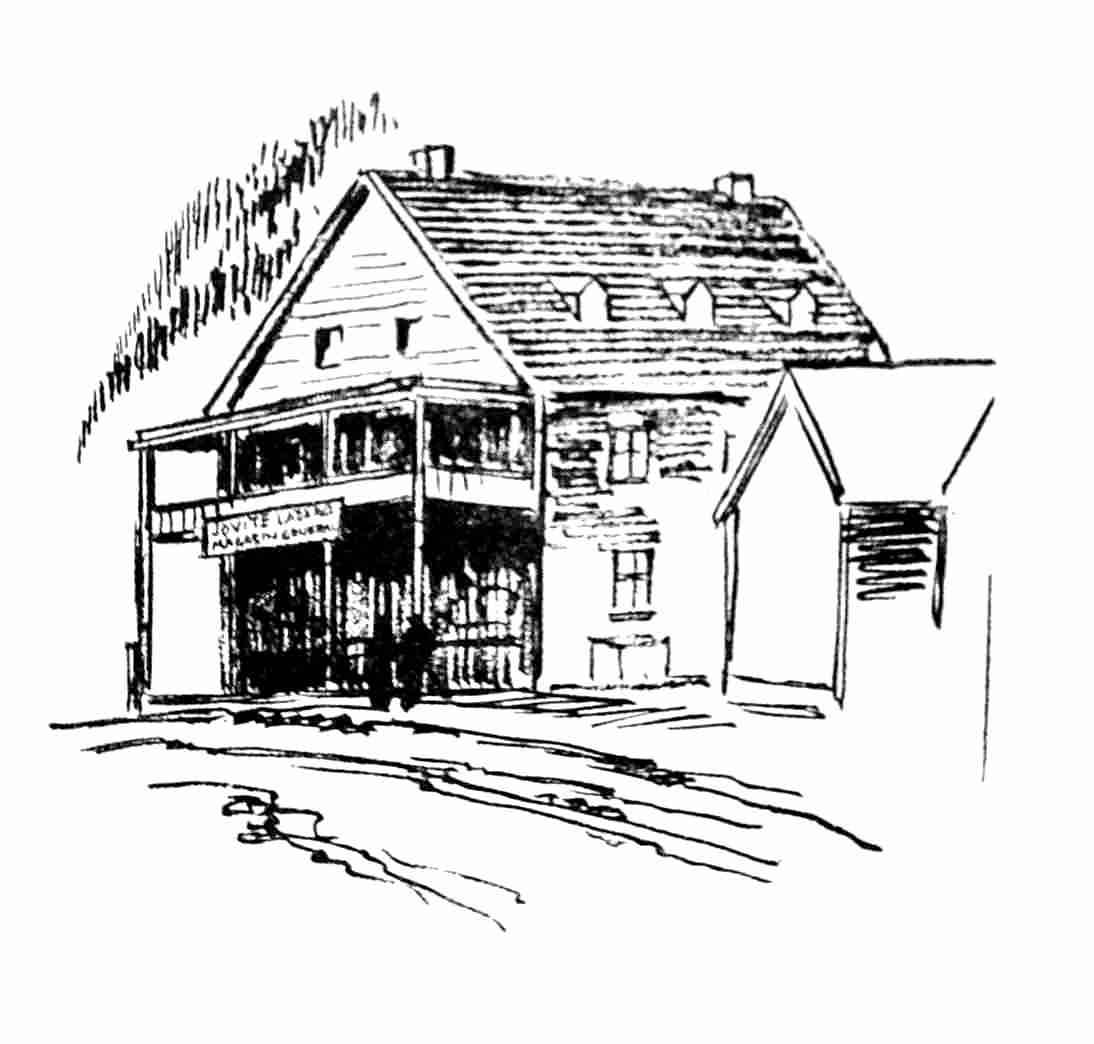
When traveling for a great wholesale house of Montréal, I arrived one fine morning in June at the general store of Jovite Laberge, in the rue St. Joseph, Québec, hoping to obtain a good order for imported woolens, dress goods, and trimmings, for which our house was, and still is, justly celebrated.
Early as it was—about seven o’clock—Jovite was there in his usual costume of homespun shirt and pantaloons, with bottes sauvages on his feet and a blue tuque on his head, like an old habitant, although he could not at that time have been more than fifty years of age.
He was a great old boy, tall and robust, with round face, twinkling eye, and frank—almost angelic—expression, although the strong lines of his mouth and jaw showed that he could be resolute and even ruthless upon occasion. He shaved often—at least twice a week—carefully leaving a grizzled fringe of beard running under his chin from ear to ear and serving in lieu of cravat. Evidently, Jovite was not conforming to city ways, even though he was one of the most prosperous merchants of St. Roch.
All his people were on duty when I came, arranging the stock and waiting for customers, while the patron amused himself in chiding one of his assistants—a boy from the country. I will not repeat his language word for word, for he had learned to swear like an Englishman:
“Listen to me, you, Théodule Garneau de l’Ange Gardien—good for nothing. How often must I tell you to have the door open every morning of the world before I come down? Yes, the door open, the shutters off, the windows washed, the trottoir swept, the floor scrubbed, the counters dusted, and everything in good order without and within? How shall we be ready for business if you do not do your work. Mardi!”
“I come down early, do I? Cré baguette! You answer me back, little crapaud of the country? What if I descend at six or five or four o’clock on a summer morning? What is that to you? That makes no difference—your duty is the same. Animal! Why do I give you bed and board and clothes and ten good dollars every year? Just for the pleasure of it? Or to look at your pretty face? But no. You want to be a merchant, you? Bon! You must begin at the bottom—there is no other way. If not, back you go to Maman, to L’Ange Gardien—to feed the pigs. Nom d’un sabot! Va, donc! Marche!”
With that Jovite turned to me in pretended surprise, although he had been watching me with the corner of his eye ever since I came in. He could see everything, that one, without looking.
“You there, M’sieu Marceau de Montréal? Cré matin! But you are early today—before I have put on my cravat or my best smile. You are the early bird, I will say, who catches the worm. Me, I am the early worm. Ah! Ah! But I have nothing for you today. No, business is bad, very bad. There are no customers, as you see.”
“But I am glad that you have come, just the same, for the sake of old times. Besides, I am in trouble and I need your advice. Because of health? No. Never was better in my life. Affairs of money? Not at all. I pay cash, as you know, and get all my little discounts. If not, I should be ruined—business is so bad. I am a good customer, me—one of your very best. No, that is not the malady. What is it then? Embarras de parents, I call it—superfluity of cousins, aunts, uncles, and all that. Batêche!”
“Listen, Edouard Marceau de Montréal, and I will tell you my troubles—in confidence, under the seal of confession, so to speak. That boy, there, whom I was censuring in a gentle way—he is cousin germain to me. Yes, the son of my defunct uncle, François Garneau de l’Ange Gardien, there below—the parish where I was born. Honor to the parish, you think? Not at all. Great privilege for me. Is it that I have relatives there? But certainly—en masse! Garneaus, Trudelles, Marettes, Vézinas, Lépines, Roussins, and who not? Cré mille noms!”
“A fine thing, you will say, to have so many friends—a great connection, that, excellent for business. Yes, if you don’t mind what you say. Fifty cousins, for example, who have made their first communion. Yes, and I shall take them into my store, and pay them good money, and they shall be great merchants in six months. And if not? Well, in that case I have no love for the family, the parish, the church, the Bon Dieu. No, and I do not wish for customers from those parts. That, mon ami Marceau, is one of my little troubles. Not the worst, by any means, but a difficulty at all times. Give me, if you please, your counsel on this point. What would you do if you were in my place?”
“What do you do, M’sieu Laberge?” I enquired, with deference. “I am sure that you know how to meet the difficulty far better than I.”
“You flatter me, mon vieux. Is it that you expect a good order for your merchandise? But no, there is no chance of that, as I have said. All the same, I will tell you my little plan. It is very simple. You might have thought of it yourself.”
“Listen, Edouard. I shall need only two or three good boys this year, you understand, and there will be many candidates—all cousins. What to do? Well, it is not I who know them, but M’sieu le curé. Yes, from the hour of baptism. He will send me the pick of the lot: Those who have good health, intelligence, esprit, who know how to read, to write, to count, who can recite the catechism from beginning to end, who go to confession, who assist at the Mass every Sunday—in fine, who have all the qualities, all the virtues.”
“As you see, mon ami, the responsibility is no longer mine—it rests upon M’sieu le curé, who can well bear it, with the help of the Bon Dieu. And if M’sieu le curé requires a new soutane, or a little dame-jeanne of Sauterne—he knows where to go.”
“But, M’sieu Laberge,” I enquired, “does M’sieu le curé never make a mistake?”
“Not often, mon ami. He knows his sheep. But when one comes like that Théodule there, he does not stay long with me. It is excellent discipline here for such as he—what you call a school of hard knocks. Soon he finds a place of less work and more pay—that is not so difficult as you might think—and departs with much regret and many thanks. Yes, thanks to me for valuable training and for having opened to him the door of the business world. I recommend him, you understand—he is quite good enough for other patrons. Now, mon ami, what do you advise?”
“Nothing, M’sieu Laberge—nothing at all. You are in command of the situation, I assure you.”
“Flattery again, Edouard. You still expect an order, I see.”
“Well, if you have time to look at my samples—.”
“But no. Forget about them. Listen to me, Edouard. I have not told you the worst, by any means. This Théodule is not only a cousin germain, son of my defunct uncle, but he is a godson as well. Yes, godson to me, Jovite Laberge. Ma foi! Think of it! One whom I vowed to protect and cherish, body and soul, when I stood by his father and mother at the baptism. And now that my defunct uncle is no longer there, he has no father but me. Ganache!”
“A great honor that, to be godfather to this Théodule. Yes, and it has cost me dear. It was a large company at the feast of compérage—all the parish, it would seem. And who paid for the drink on that occasion, do you think—the spruce beer, the wine, the genièvre, the whiskey blanc? Who but the godfather, myself, according to the ancient custom. Cré tonnerre!”
“Was that all? But no. There were the gifts also, at the time, as well as every New Year’s day in the past fourteen years, not to mention those that are to come. But, as I have said, Théodule will leave me, I expect, before long. May the Bon Dieu help him to please his future patron! If not, he will return to his dear godfather, and I shall have him on my hands for the rest of his life—or mine. Torrieu! You see, Edouard?”
“Yes, I see,” I responded, with sympathy in my voice. “But there are not many others, I suppose.”
“Not many god-children, you mean? No, not more than twenty. Not all in the business, I am happy to say, but the obligation and the expense are there just the same. Cré mille noms!”
“How has it happened, M’sieu Laberge.”
“Batêche! How do I know? My kind heart, I suppose. Besides, it is a veritable honor—one of the pleasures of life. One feels like a grand seigneur, you know. But no more of that for me. No more god-children, I tell you. They cost too much. The game is not worth the candle. Besides, I have my obligations in Québec: my own family, the business, the church of St. Roch, and those blessed religious ones who come in every day to ask for something. Potence! How can a poor man live with everybody eating him up? Mon maudit!”
At this point I was about to suggest the examination of my samples, when a cash girl came running up with a ten-dollar bill.
“What is that, Marie?” enquired Jovite, beaming upon her. “You wish to give me all that money? Someone paying a debt, perhaps? Or is it a sale that we have made?”
“A sale, M’sieu Laberge,” said the little girl, timidly. “It is M’sieu Tremblay who has sold a yard of ribbon to a lady for two shillings.”
“Two shillings—hein? Not a bad price for a yard of ribbon, but why does she give us ten dollars to change? We are not the Bank of Montréal. But she must have it, I suppose.”
Whereupon Jovite drew from his pocket a big wallet and counted out the change—for he was his own cash box. And after the lady had gone he marched down to the ribbon counter to talk to M’sieu Tremblay, making signs to me to follow.
“Cousin Hyacinthe,” he said to the apprehensive salesman, “it was all right to sell the ribbon at two shillings a yard—at that price there is a fair profit. It is a wonder that she did not beat you down. Cré petite vierge! But why the deuce did you not sell her the whole bolt? She may need it tomorrow and come back for more, wasting her time and ours. Time is money, my friend—remember that.”
“Or why did you not sell her something else—a hat, a kerchief, a pair of French shoes, or what you will? She needs our merchandise, no doubt, as much as we need her money. We are here to serve—to sell. Too bad to see so much money come into the store and then go out again. Remember that, Hyacinthe Tremblay, next time you see a ten-dollar bill.”
“Another cousin,” said Jovite to me, as we turned away, “but a good man just the same. However, he needs a little counsel now and then, as I do. Ah, mon ami Edouard, I thank you very much for all your advice, your sympathy. I feel better already. Come again some day.”
“But, M’sieu Laberge,” I demurred, “you have not yet seen my samples. We have wonderful things this season—imported woolens, silks, satins, and all that—goods that sell themselves, that go like hot cakes—”
“Not so fast, mon ami Marceau. How often do I tell you that I want nothing today? Nothing at all. When I say no it is no. Understand? Cré tonnerre! How can I sell imported goods to people who wear only homespun that lasts forever? Answer me that, Edouard Marceau de Montréal.”
At this point he was lost, for I had an answer to every argument. But before I could say a word he was off on another tack.
“Dieu merci! There is a good customer at last—one of the very best. Cré petite vierge! Come along, Edouard, and meet her at the door. See me sell her something. You may learn to be a merchant yourself after a while.”
“Bonjour, Madame Vézina de L’Ange Gardien. Great pleasure to see you once more, I assure you. Ma foi! You are in good health, as I see, ma belle cousine.”
“Passably, Cousin Jovite. And you?”
“Not so bad. Much better since you arrived, Cousin Séraphine. How fine you look—younger than ever, I will say. But how is the old man? And la tante Sophie? And all the children: Jean, Thomas, Polycarpe, Lucie, Gertrude, and the little Séraphine?”
“All are well, Jovite. Dieu merci!”
“And the baby that was to arrive?”
“Already arrived, Cousin Jovite.”
“Bon! What is the name?”
“Marie Angélique, if it please you.”
“Ma foi! A lovely name, that. My sincere felicitations! May she be as beautiful as her mother!”
“Old flatterer. Fi donc! You make me blush—and before a gentleman.”
“No gentleman, Séraphine. This is only Edouard Marceau de Montréal—a commercial traveler, as you see by his clothes.”
“Mon Yeu, Jovite, but you go too far with your pleasantry. You are outrageous, you. Pardon him, M’sieu Marceau. It is an enfant terrible.”
“True, Madame Vézina,” I replied, raising my shoulders, “but what would you? He shall pay me for that.”
“Don’t think so, Edouard,” protested the incorrigible one. “Jamais de la vie! It is you who shall pay. But you are wasting Madame Vézina’s time. Don’t talk so much. What was it, Séraphine, my dear?”
“Nothing at all, Jovite. I came to tell you about the baby.”
“Pleasure for me, I assure you. But you might have asked me to be the godfather.”
“Eh—what is that? You suggest it yourself? Bondance! Can I believe my ears? But you don’t mean it for a moment. Old deceiver! Think of what it would have cost you.”
“I should not have thought of that, Séraphine, in your case. I would have done my possible to provide every species of drink—plenty for everybody—and a good dinner as well. Never mind—let us think of the future. Remember—the next one is mine.”
“The very next one, Jovite?”
“But yes—if it is a boy. Jovite Laberge Vézina—that sounds good to me.”
“To me also. Do you mean that, Jovite?”
“But certainly. Do you doubt my word?”
“Non, non, mon cousin. I wish only to make sure. You are such a farceur. One never knows. But you shall have your way. Mon Yeu, yes—sooner than you think.”
“What is that, Séraphine? What do you mean?”
“Nothing. Now I must be going. I have business in town today. Au revoir, mon cousin.”
“Au revoir, Séraphine. Come again soon.”
“I will, Jovite. Au revoir, M’sieu Marceau. Make him pay all you can.”
“That is not so easy, Madame Vézina. He is a hard customer.”
“Too true. A hard nut to crack—eh? But it may be done. N’est-ce pas, Jovite?”
“Ah, Séraphine,” the old fellow murmured, “you could not be so cruel, with your pretty face and your sweet smile.”
“Oh, I don’t know, Jovite. That would depend. But I must go now. Sorry that I have not time to look around a little. What is that in the window?”
“Species of stove, ma cousine.”
“Curious stove, that. Of what good is it?”
“What good, Séraphine? It is the best stove in the world. It is everything that is most excellent: made all of steel; burns wood or coal equally well; has six holes on the deck and an oven which will cook to perfection for a family of ten—fifteen—twenty. Just what you need, ma chère cousine. There is a warming oven, also, and a hot water tank. Look at it, Séraphine. What more could one wish? It is the last word in stoves, I assure you.”
“No doubt, Jovite. But I have no need of it. My old double-decker does very well.”
“True, but if you wish to do fine cooking, that does not suffice. No, nor the old brick oven outside. They are passés, ma cousine, as you know. Good enough for poor habitants, but not for the family Vézina. No, the very best is not too good for you, Séraphine. Madame Roussin has one.”
“Hein? You don’t say so! But she is rich.”
“Potence! More rich than Madame Vézina? I did not know. And Madame Lépine will have one tomorrow. Madame Hébert also. They are going fast—only one left.”
“That is nothing to me. Well, I must leave you. Is Cousin Petronille upstairs?”
“But yes. She will be glad to see you. You know the way up, of course. But consider the stove, Séraphine—it is a bargain.”
“A bargain? No danger. You did not mention the price.”
“No? Very little for a stove like that—only sixty dollars.”
“Sixty dollars! Mon Yeu! You will never sell it to me at that price.”
“Less the usual discount to the family—ten per cent.—leaving fifty-four dollars only. Very cheap.”
“Still far too dear. My double-decker, when bran new, cost only forty dollars. There, I will give you that.”
“Impossible. Times have changed, as you know.”
“Not so much. It is only the merchants who wish to make more profit.”
“Madame Vézina, it is an insult that you are making to me. Now you shall pay more. The price is fifty-five dollars—not a sou less.”
“Pardon me. Cousin Jovite—I did not mean to displease you. But the stove is still too dear, as I know. Madame Roussin paid only fifty dollars for the same thing at your place two days ago.”
“You know that—hein? Cré petite vierge! But she paid cash.”
“Indeed, M’sieu Laberge! I also pay cash—always. No debts for me. Now I will go down the street to the Maison Brousseau. They will not insult me like that.”
“Perhaps not. Who can tell? But they will at least charge you sixty dollars for a stove not equal to this. When you buy from me you know what you buy. Consider, my dear cousin—it is a stove for a lifetime. You are very young still. If you make a mistake you will be sorry for fifty, sixty—yes, seventy years.”
“Do not worry so much, Cousin Jovite—I can take care of myself.”
“Cré petite vierge! So you can, so you can—none better. Well, my dear little merchandiser, you shall have the stove at fifty dollars—the same as Madame Roussin.”
“No, I will not. She would laugh at me. I will give you forty-five dollars—that is my very best. It is worth no more to me.”
“Non! Jamais de la vie! There would be no profit left. At that price I should have the whole parish coming for stoves. It would be ruin, bankruptcy. The more I sell the more I lose.”
“I will tell nobody, Cousin Jovite.”
“Mardi! The very words of Cousin Marie Roussin! And here you come. No! Fifty dollars is my very lowest—cash down.”
“But surely you will divide the difference.”
“But no.”
“Then I will give you forty-nine dollars—not a sou more.”
“That difference I will divide, Cousin Séraphine. Take the stove for forty-nine dollars and fifty sous, or leave it here.”
“Bon! I thought that you would be reasonable in the end. Here is your money. Have the stove put in my charette out there—at the door. But do not forget the pipes, the wire, the nails, the sheet of zinc for the floor, and another for the wall.”
“That other is extra, Cousin Séraphine—fifty sous more.”
“Fi! Do not speak of it. What are fifty sous to you? Console yourself, Cousin Jovite—you are not ruined yet. Me, I will now run up to chat with Cousin Petronille. By-by!”
“What do you think of that, M’sieu Marceau de Montréal?” growled Jovite, after Séraphine had disappeared. What a créature, that! Nom d’un Juif!
“But you made a fair profit after all, did you not?”
“Possibly. But at what a cost of time and effort! It wears me out. Soon I shall be dead—then what good will profit be to me? Masses for my soul, perhaps? Yes, I may need them. Holy smoke!”
“We are all sinners, M’sieu Laberge,” I responded, as though I were his father confessor. “But when we sell merchandise of the first class at the right price, it is no sin—only fair exchange. In that case the buyer always gets the worth of his money. It is the same with our imported woolens—.”
“Yes, yes, I know,” he broke in. “Do not preach to me. Tell me how to get the fair profit of which you talk so much. For that blessed stove, now, I paid twenty-five dollars, but when I count all my expenses—salaries, rent, heat, light, contributions to the church, gifts to god-children, and all that—there is very little left, perhaps not more than ten dollars net profit. Not enough to pay me for smiling at that little vixen as though she were my dearest friend. Mon maudit!”
“Yet she is a pretty little créature, after all, with much allure. A merchandiser of the first class, I will say. Such chic! Such esprit! If only I had a few like her in the store. She is persuasive—is she not, Edouard?”
“Truly she is, M’sieu Laberge. And you are to be godfather again. That is drôle.”
“You may say so. My kind heart once more. But it was only a chance I was taking. The next boy—perhaps he will never arrive. Who can tell? Let us hope for the best, mon ami. And meanwhile, for the present, consider the advantage. Madame Vézina—a personage in L’Ange Gardien—buys a stove, and what then? Every habitante in the parish will have one if she must sell the last pig. But that will not be necessary—there is always something in the old stocking.”
“Understand, Edouard? You can count, can you not? If I sell only twenty stoves before the end of the year at a net profit of ten dollars, how much is that? Two hundred dollars, you say? But yes. Enough to pay all the cost of the godfather’s feast, if it should come next year, or the year after. But if not, so much the better for me. Good business, that. Is it not, Edouard?”
“Not so bad, M’sieu Laberge,” I replied, encouragingly. “It is at least a chance worth taking. Nothing venture, nothing have, as the proverb has it. And now you have a little time for me, have you not?”
“No, no, Edouard—not now. Let me have a rest after all I have suffered this blessed morning. Come into the back room, mon vieux, and see what we can find—something to refresh, to cheer, to console. Come, then.”
“Willingly, M’sieu Laberge,” I responded. “But there is Madame Vézina who comes once more. A la garde, mon ami!”
“Cré tempête! What next? The stove is in the charette, the money in my pocket—what can it be? Stand by me, Edouard, I may need your help. There she is. A moi, Saint Jovite!”
“Well, my dear cousin, you were not long with Petronille. What is the matter? No gossip any more?”
“Plenty of that, Cousin Jovite, but no time at present. We have our affairs, we others—to prepare for the baptism, you know.”
“The baptism, Séraphine? I thought it was already celebrated.”
“No, no. Do you think we would have it without you? Jamais de la vie! It is to be tomorrow evening, chez nous. You will be there, I hope.”
“But certainly—to bless the little Marie Angélique.”
“That is no longer the name.”
“But you said—”
“A first thought, mon cousin. Now we have a better one.”
“What is it, then?”
“Marie Petronille.”
“Cré petite vierge! So we are in it after all.”
“Yes. It was the happy thought of Cousin Petronille herself. One whom I could not refuse. And the other one—”
“What other one?”
“The little boy—.”
“Little boy, Séraphine?”
“But certainly. Did I not tell you? They were twins.”
“Bondance! Cré mille tonnerres! And his name?”
“Jovite Laberge Vézina—that sounds well, as you have said. It was your own suggestion.”
For a moment Jovite glared at Séraphine in speechless rage, while she stood there smiling up at him with the serene confidence of a happy conqueror. Then his eyes gleamed, his face changed, and he exploded—in roars of laughter, until the tears ran down his cheeks. Finally, pulling himself together, he rose to the occasion in a fine way.
“Cré mille noms! But it has been a great day for me. Never have I been beaten up like this—destroyed, murdered. But it shall be good for my soul. I arise from the dust a new man. Godfather for the twenty-first time. Bon! We shall have a feast of compérage such as L’Ange Gardien has never seen.”
“Listen, Cousin Séraphine. Run up once more to Petronille and arrange for what you will, everything of the best—enough for the whole parish. Send the bills to me and I will pay—cash down. As to the drink, that is my affair. M’sieu Marceau, here, will help me to choose—he has good taste in that regard. Is it not so, Edouard?”
“I will do my possible, M’sieu Laberge. And after that you will look at my samples, will you not?”
“Cré mille tonnerres! Not on your life. No samples for me. Enfant de Juif! Take your little order book, put down what I need, and it will be all right. I am in the hands of my friends.”
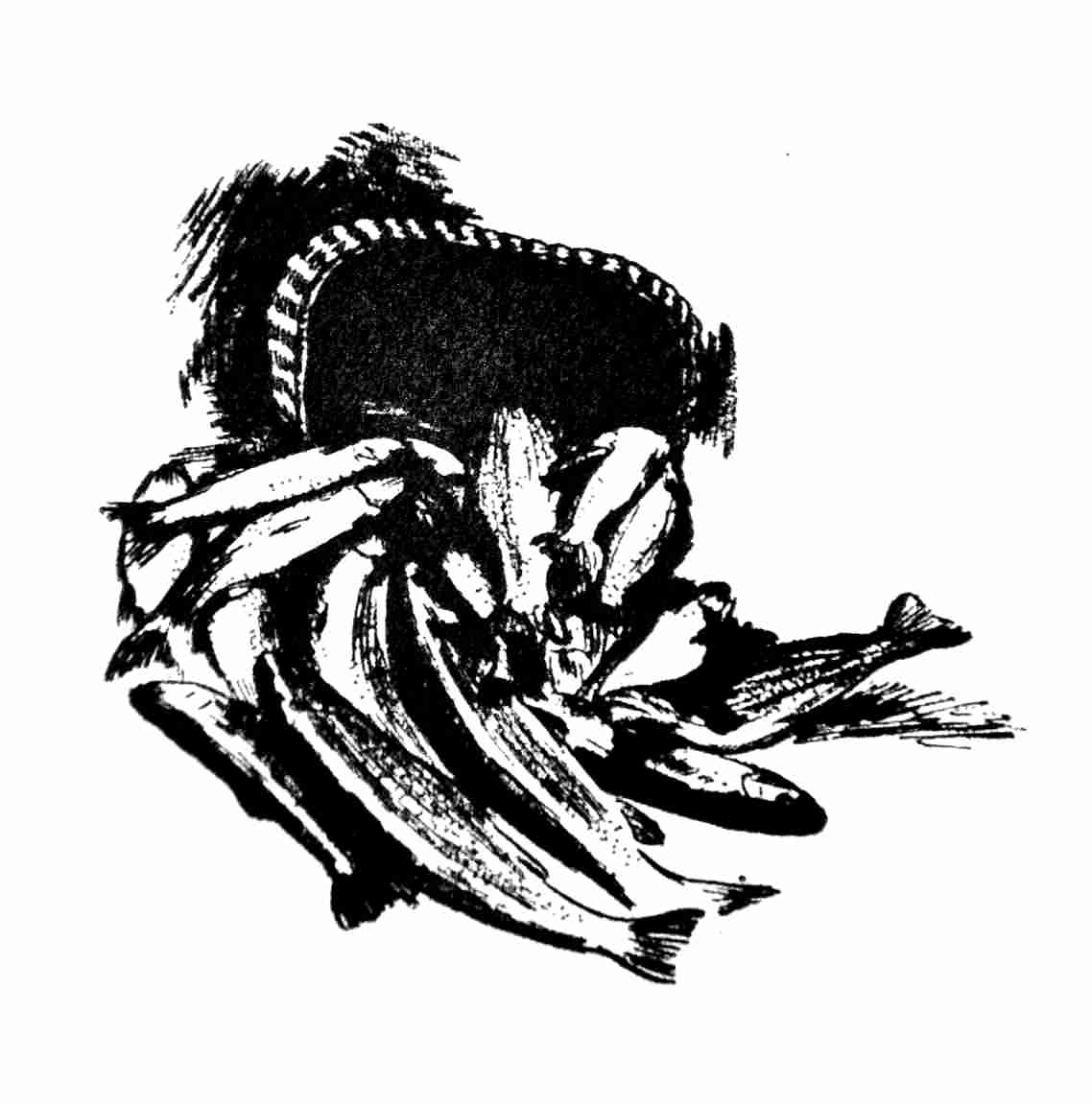
It was my first summer in Laval, now many years ago, and when they told me that there was a lake in the high valley beyond the river, I was very eager to go, hoping to find good fishing there and, in any case, to have the pleasure of exploring a new region. True, none of the family had ever seen the place, but one day in January, Cousin Etienne Thibault, while hunting the caribou, had come upon an open space between the mountains which could be no other than a small lake. It was the source, no doubt, of the brook which flowed into the Montmorency below the island, and, as there were trout in the stream, why not also in the lake above?
So I declared my intention to visit the lake, regardless of the protests of my too cautious cousins, who thought that one should not go so far in the forest alone. One might be drowned in crossing the river, as there was no good ford. One might meet a she bear with cubs—always dangerous. Or one might fall over a rock or a rampike and break a leg—and what then? But I could not alarm myself like that. One must take some chances.
On the very next morning I was up in good time, and as the sun was touching the mountain tops, I descended the long hill toward the river, crossed La Branche on the stones and took the winding path through the woods over the island. Before long I was fording the Montmorency where the river was broad and shallow, though in the deepest part I was almost carried away by the swift current.
On the other side was a bank of sand and stones, then a fringe of alders and a barrier of fallen trees, and after that a fine forest of birch, maple, and poplar, with the usual underbrush, and rich, black soil, in which grew various ferns and mosses and, here and there, the twin-flower, the pyrola, the gold thread, the wood sorrel, and other flowers of early summer. Not a beast nor a bird was to be seen, and no sound could be heard except the crackling of twigs under my feet and the murmur of the Montmorency, growing fainter until it died away. Strange silence of the Laurentian woods, where, no doubt, many living creatures were aware of my coming, but had slipped away on tiptoe or on muffled wings; while others, invisible, were peering from the leafage as I went along.
Passing thus a stretch of flat terrain, I came to the first rise, a steep escarpment of rocks and fallen trees, through and over which I climbed until I reached a sort of table-land, sloping gently up toward the mountain. There I heard the sound of the brook and, veering to the right, I soon found it, flowing, clear and cool, among moss-covered rocks, with here and there a waterfall and a limpid pool, where I was tempted to pause and cast a fly. But there was no time for that on this occasion. Some other day I would return to see what the brook might yield.
It was, of course, the outlet of the lake above, so I had only to follow it to reach my destination. Finding it slow going near the stream, I followed its course at some distance, keeping to the tall timber and making for the shoulder of the mountain, which, now and then, I could see between the trees. Presently I was climbing a rocky steep in a forest of pines and spruces, which had replaced the birches and maples of the slopes below.
I ascended the mountain for a thousand feet, perhaps, until I stood on the summit of a great rock that rose like a tower above the trees. At my feet were dark masses of pines and spruces; below was the lighter green of birch and maple, through which I could see, here and there, the gleaming waters of the Montmorency. On the other side were numerous clearings, with fields of hay, oats and potatoes—the farms of upper Laval—with their white-walled, black-roofed houses, their gray barns, and the main road winding through the valley from the steepled church on the left to the last habitation, far to the right. Beyond and embracing all was the forest, crowned and guarded on every side by pine-clad mountains. It was a wonderful panorama, well worth the climb, although I had not come for that.
From this point, which seemed to be on a level with the high valley, I made my way along the mountainside until I came to a flat place again, where the stream flowed sluggishly through a tamarack swamp, with occasional long, deep pools and old beaver dams. Underfoot was a thick carpet of moss, in which grew blueberries and cranberries, though not yet ripe, with the wintergreen, the Labrador tea, the sheep laurel, and other kinds of Canadian heather. There were pitcher plants, too, with their curious leaves, waiting with open mouth for unwary insects. There were treacherous bog-holes, also, but I gave them a wide berth, by keeping to the edge of the swamp, while pushing on toward the lake, which I expected to see at any moment.
But it was a long tramp, and I began to think that I had come on a fruitless quest, when suddenly I saw an open space ahead, the trees seemed to move to right and left, and, stepping through their thinning ranks, I stood upon a rocky ledge on the border of a lovely lake. It was quite calm, reflecting as in a mirror the blue sky, the fleecy clouds, the circle of the trees, and even the low bushes, rocks, and grasses along the shore. There was neither beast nor bird to be seen, and not a sound to break the silence of that summer morning. It was as though the world were asleep. For a long time I stood there motionless, fearing to break the spell.
But when I began to move along the shore, I found that it was not always thus, for in one place I discovered a runway by which deer came to drink, and in another I saw, with some trepidation, the track of a bear. Here and there were other signs of life, and when I reached the far end of the lake, two black ducks rose quacking from the reeds and flew away over the trees. Following the line of their flight I found another sluggish stream flowing out, by which I inferred that the lake had two outlets, the one flowing north into the Montmorency and the other south toward the St. Lawrence. It would be interesting, I thought, to follow the second stream to see whither it might lead.
But I had come for fishing, rather than exploration, so I set up my rod, with reel, line and leader, attached a couple of flies, and began to whip the stream, but with no result. Returning to the lake, I made my way around the farther shore, which was steep and densely wooded, casting my lure upon the water wherever possible, and finding nothing. Twice did I circle that blessed lake, but in vain. If the truth must be told, I even tried worms, which I had brought as a last resort, but with no better luck. Also a grasshopper, which I caught upon the shore. And a helgamite, which I found under a stone. None of these things elicited the slightest response from that empty, futile, placid pond, which, to me at least, could give no reason for its existence. Whereupon I understood, as never before, the parable of the barren fig tree.
It was now almost noon and, the chief end of life being unattainable, the pangs of hunger began to be felt. Then I remembered the luncheon which Cousin Marguerite had provided. So I sat me down under a shady spruce, where a cold spring came bubbling from the hillside, unpacked my panier, and found, to my great satisfaction, far more than I had expected.
All the resources of the house, it seemed, had been commanded for my refreshment and consolation. There were three great sandwiches of pain du pays with generous slices of roast pork—better than any chicken or turkey that ever was. There was a marvelous salad, also, of lettuce, young onions, and other ingredients, such as no chef in Québec could compose. Then, for dessert, there were some of Cousin Marguerite’s famous croquignoles, with a cassot of strawberry confiture, another of maple sugar, and a little bottle of wild cherry cordial to end it all. No, not the very end, for there was my pipe and good tobacco—Fleurs des Laurentides—to complete the most satisfactory repast of my life. I shall remember it till I die, with blessings on the dear little head and hands of Cousin Marguerite.
Is it any wonder that, after such a meal, I should lie down in the cool shade of the spruce tree and fall asleep? But what of the mosquitoes, you will say? There were none. Black flies, then? Yes, there were some of those, but my head and neck were well wrapped in a big red handkerchief and my hat was over my face. A few bites—what matter? At any rate, I slept well.
When I awoke it was late in the afternoon, the sun was setting behind the mountains, a cool shadow was creeping over the lake, and a light breeze ruffled the surface—ideal conditions for fishing, as every angler knows. Hope revived. I circled the lake once more, regardless of swamps, rocks and fallen trees, casting in all likely and possible places, but with no better luck than during the morning hours. I caught only yellow water lilies, snags, and the branches of overhanging trees, losing here a fly, there a leader, and one long section of good line, until I was almost despoiled of fishing tackle.
By the time I arrived at the rocky point where I had first viewed the lake I was completely discouraged. Not a dead fish had I found on the shore, not even a fragment of a fin. Not a living creature had I seen in the water but a long leech, a blood-sucker, that swam its slimy, snaky way over the muddy bottom. But why complain of the lake? It was a small sheet of water, a mere pond, which doubtless froze to the bottom during the long, cold winter. As to the trout, they were not to blame for avoiding a death trap like that. So I began to put up my rod, preparing to leave the place. It was high time, for the evening twilight, though long at that season, would soon be gone.
What was that? A faint sound of a pebble dropping in the water, and a circle of wavelets widening until they were swept away by the breeze. No pebble, of course. A bubble of marsh gas, rather. Or the nose of a muskrat. Or something else. There again! And again! No muskrat, that! No marsh gas! Nothing but the rising of trout that had begun to feed.
“Dieu merci!” I cried. “Grace à Marie! Courage, mon ami! Now we shall see what we shall see.”
Quickly replacing my casting line and two of my best flies—the Parmachene Belle and the Silver Doctor—I advanced to the very end of the rocky point and cast as far as possible toward the center of the lake—thirty feet, forty, fifty—but could not reach the place where the trout were rising, and where, apparently, they preferred to remain. Then I waded into the lake, all the time casting ahead and on both sides. Lucky for me that it was a rocky bottom just there, else I might have sunk in the mire and have gone to feed the leeches.
At last I arrived, I was there. And as my flies gently touched the surface of the water there was a rise, a strike, and I had him, a fine trout—ten inches—no, eleven at the very least—that pulled out the line, bent the rod, leaped from the water, and almost got away. But no, not quite. I played him for a while and then brought him to hand. A beauty he was, with his long, lithe body, his dark back, his red belly, his yellow fins, and his lovely spots—red, yellow, blue—like the colors of the rainbow. Nine inches only, by the mark on my rod, but what matter? Hope fulfilled and the promise of still better things.
And so it was. For an hour I stood there, waist deep in the water, catching now an eight inch fish, now one of nine, ten or eleven inches, occasionally two at a time, until my panier was full, with three dozen of the finest trout I had ever seen. There was a fine breakfast for the whole family and some to take to my friends in Québec. Enough! Plenty! Moreover, it was time to go, for the twilight was fading and it was not pleasant to be in the woods after dark.
But the trout did not give the signal to depart. On the contrary, they were rising all over the lake, and not far from me a big one was racing up with black back and dorsal fin cutting the water and actually leaving a wake behind. Chasing small fry, no doubt, and quite ready to take an attractive fly, en passant.
I gave him the chance, you may be sure, and he took it. Yes, and sailed along, as though nothing had happened, while I gave him line. But presently, feeling a check, he leaped from the water, shook himself in the air, and then raced back, almost to my feet, so fast that I could hardly take in the slack. Then out to the middle of the lake. Then another leap—and another. Then he went in circles, tugging this way and that, I keeping a taut line, as well as I could, while backing out toward the shelving rock, where I hoped to land my prize. There at last I stood, and my brave enemy came slowly up, exhausted, scarcely able to flop himself upon the rock at my feet. At last he was there, a magnificent fish of twenty-two inches in length and weighing at least five pounds. For a moment I gazed at him, rejoicing, exulting. But as I stooped to take him by the gills he gave a last struggle, broke the gut, and was gone.
As for me, I stood there looking into the water, speechless. Not an exclamation, not an oath, I do assure you. It was tragedy beyond words. After all my trouble, all my hope, to lose the prize like that. The best trout I had ever caught. If only I had seized him in the moment of victory. But, like a fool, I had paused to gloat, though for a second only, and I was suitably punished. But what a penalty for such a slight neglect! I saw my folly now, very clearly, when too late.
No, not altogether so, for the trout were still rising and racing as before, so I returned to my place, and was rewarded, if not altogether consoled, by the capture of seven splendid fish, ranging from thirteen to seventeen inches in length. But the big fellow did not come back, nor any like him, else I should have spent the night in the woods.
As it was, it was dusk when I left the lake and quite dark when I reached the foot of the last escarpment, beyond which was a good mile of bush, the river to ford, and a long hill to climb, with a heavy panier full of trout and my seven big fish on a forked willow branch. Fortunately, it was a cloudless night and the moon came up over the hill, so I was sure of my way and pushed on without fear. True, there were noises in the woods—the hoot of an owl, the call of a whippoorwill, and various cracklings of twigs, and once I saw a dark shadow and a pair of shining eyes—but I gave little heed. My chief concern was to thread my way through the maze of trees and underbrush, while keeping the moon over my left shoulder.
After a while, the pleasant murmur of the Montmorency rose on my ears and presently, pushing through the last barrier, I stood on the shingly beach, at the very place, it seemed, where I had crossed in the early morning. Full of confidence, I waded into the stream, feeling with my feet for safe footing among the stones until, waist deep in the water and swaying in the strong current, I realized that I had missed the ford. I could not safely turn, while before me was a broad stream shining in the moonlight and running like a millrace toward the rapids below.
Strange to say, I never once thought of saving the ship by throwing the cargo away. On the contrary, shifting my panier to a more secure position, holding my rod and the willow branch in one hand and leaving the other free, I took the next step, and the next, until my footing was gone and I was swimming in the moonlit water, making, as well as I could, for the other side. It was a perilous but happy venture, for, at the very head of the rapids, I found footing, and, a moment later, I was standing safely in the shallows, looking down at the white water which I and my fish had so narrowly escaped.
Half an hour later I arrived at the house, where the women and children were in tears, while the men were out with lanterns to find the lost one, or at least to give him light which should lead him home. I was sorry to have caused so much anxiety, though pleased to think that I should have been missed if I had not returned.
But now all was well and, after a change of clothing, I sat down to dinner, while the family gathered round to admire the trout and to receive a full account of the day’s adventures. Strange to say, they were more interested in the fish that got away than in all that I had caught and saved.
Which piqued me a little, especially when Cousin Alphonse questioned my estimate of length and weight. As though I could not tell within an inch or an ounce the size of a trout lying at my feet.
“Are you quite sure, Cousin Gilles,” he said, “That you do not magnify that fish? They look large, you know, when they come out of the water.”
“Not at all, Cousin Alphonse,” I replied. “Twenty-two inches and five pounds, at the very least. Yes, and possibly six pounds, for he was very thick—like a salmon.”
“But, Cousin Gilles,” he continued, “you must admit that brook trout of six, or even five pounds, are very rare. And in a small lake like that, a mere pond.”
“Do you doubt my word, Alphonse?” I responded.
“Not at all, Cousin Gilles, but, as you know, it is always the biggest fish that escape. And when one is aroused, excited . . .”
“Excited not at all, Alphonse,” I retorted. “I was as cool as a cucumber—much cooler than I am at present, I assure you.”
“No offense intended, Cousin Gilles,” the doubter replied, in a conciliatory tone. “But will you not go up there with me after the haying? With a good raft we should make a great catch. And the big one will surely come again.”
“Very sorry, Alphonse,” I replied, “but I must go to Québec tomorrow and cannot return for some time.”
“Then you will have no objection if I go myself,” persisted Alphonse.
“Go if you please,” I snapped back.
Whereupon Cousin Marguerite, with her usual tact, began to change the subject.
“You must have been hungry up there, Cousin Gilles, after the long morning.”
“Ah, Cousin Marguerite,” I replied, suddenly mollified, “I was hungry indeed, like a wolf. But that luncheon of yours, it was marvelous. I shall never forget it. The best meal of my life—that is, the best but one.”
“And that one, Cousin Gilles?”
“The dinner you have just set before me, Marguerite. Cold roast pork is wonderful, as I have said, but a ten inch trout, fresh from the water, fried with butter and eggs, by the hand of my lovely cousin—that is incomparable.”
“Take another trout, Cousin Gilles.”
“With great pleasure, my dear little cousin. You do indeed know the way to a man’s heart.”
Early in September I returned to Laval for the late fishing, and one evening, as we were all gathered about the fire in the great kitchen, with a few of the neighbors who had come in to smoke and talk, the subject of the lake and the lost trout was reopened by Cousin Alphonse, who never knows when disputation should cease.
“Well, Cousin Gilles,” he began, blowing a smoke ring in the air. “I went to your lake.”
“Indeed!” I replied, rather coldly, as though not at all interested.
“Yes, and I built a raft.”
“Naturally. You could not cast far with that pole of yours.”
“No. You have the advantage of me there. But I camped out for the night and had the evening and morning fishing.”
“That was brave of you. The bear did not get you, as I see.”
“No, but he came in the night and stole my fish. Mon Dieu, but I was annoyed.”
“Sapré tonnerre! What fish then?”
“Ten of the most beautiful trout I ever saw—from fifteen to eighteen inches in length—and your big one.”
“My big one! How do you know that?”
“Is that your fly, Cousin Gilles?”
“What was the length and weight of that trout?” I demanded.
“Is that your fly, Cousin? Silver Doctor, No. 10, with a foot of imported Irish gut. Is it yours?”
“It might be,” I admitted. “But what was the size of that fish?”
“The trout had your fly in his jaw, with the leader trailing.”
“A marvelous tale, Cousin Alphonse,” I replied, evasively, scenting a trap. “Too bad that you have no witnesses.”
“So it is. But my word is sufficient, is it not? The bear, as I have said . . .”
“Inconvenient bear,” I murmured. “But how large was that trout? Out with it?”
“I regret to report,” said Alphonse, with great deliberation, while everybody listened so that you could have heard a pin drop. “It grieves me to state that it measured just seventeen inches from nose to tail, and weighed exactly two pounds and one-quarter.”
“Then it was not my fish, Cousin Alphonse.”
“Not your fish? Grand menteur! What about the fly and the leader?”
I shrugged my shoulders.
“There is only one explanation—my flybook has been here all summer.”
Alphonse took his pipe from his mouth and glared at me.
“You insinuate that I am a thief, then?”
“No, not that, Cousin Alphonse. A practical joker only. But you called me a grand menteur.”
“I withdraw the expression. An angler, only.”
“Angler yourself, Cousin Alphonse!”
Whereupon all the company, seeing peace in sight, broke out into roars and peals of laughter, until Cousin Marguerite began to pass a great platter of croquignoles, cups of spruce beer, and little glasses of cherry cordial.
But we have not heard the last of the story from that day to this. And if you go to Laval you will hear it still, though by this time much exaggerated.
WARWICK
BROS. &
RUTTER
LIMITED
TORONTO
PRINTERS & BOOKBINDERS
Misspelled words and printer errors have been corrected. Where multiple spellings occur, majority use has been employed.
Punctuation has been maintained except where obvious printer errors occur.
[The end of The Flying Canoe by James Edward Le Rossignol]