* A Distributed Proofreaders Canada eBook *
This eBook is made available at no cost and with very few restrictions. These restrictions apply only if (1) you make a change in the eBook (other than alteration for different display devices), or (2) you are making commercial use of the eBook. If either of these conditions applies, please contact a https://www.fadedpage.com administrator before proceeding. Thousands more FREE eBooks are available at https://www.fadedpage.com.
This work is in the Canadian public domain, but may be under copyright in some countries. If you live outside Canada, check your country's copyright laws. IF THE BOOK IS UNDER COPYRIGHT IN YOUR COUNTRY, DO NOT DOWNLOAD OR REDISTRIBUTE THIS FILE.
Title: Canadian Frontiers of Settlement: A Review
Date of first publication: 1935
Author: Harold Adams Innis (1894-1952)
Date first posted: July 21, 2026
Date last updated: July 21, 2026
Faded Page eBook #20260745
This eBook was produced by: Hugh Dagg, John Routh, Brittany Jeans & the online Distributed Proofreaders Canada team at https://www.pgdpcanada.net
By Harold. A. Innis
The Geographical Review, Vol. XXV, No. 1, January, 1935
During the past fifteen years arable land has been regarded with heightened intensity and challenge from both the politico-social and the scientific standpoints. . . . Both points of view are illustrated in the homesteading and related immigration policies of governments that still have large acreages of virgin land which may be cultivated with varying degrees of difficulty.
These opening sentences from the preface to the first volume of “Canadian Frontiers of Settlement” may be taken as the text of the project whose work is here under review. The Canadian Pioneer Problems Committee had its inception in 1927 when the exceptional opportunities presented by the Canadian West for the study of pioneer settlement were urged before the Social Science Research Council.[2] The project had not only the advantage of an important select area but also the advantages of extensive work on the part of Canadian social scientists. The results of the research program are now in the course of publication. Three of the nine volumes of the series have already appeared.[3]
Professor W. A. Mackintosh, the director of the project, is the author of the first volume of the series. In his introduction he has outlined the peculiar characteristics of Canadian development. Lower costs of transportation, rising prices of wheat, improved technology in plows, milling, binders, grain elevators, dry-farming practices, and early maturing wheats, the disappearance of free land in the United States, and the displacement of population in highly industrialized regions were factors causing the rapid settlement of the prairie regions after the turn of the century. The effects of rapid settlement have been evident in the successes and failures of the Canadian West.
[The studies provide] an examination of the conditions and processes of settlement as exemplified in contemporary Canadian experience . . . [and contribute] toward the development of economic and social planning in a field where the costs of planless development are peculiarly heavy.
The first volume, “Prairie Settlement,” includes chapters on land and climate, with a description of the physiographic characteristics, crucial climatic features in wheat production such as temperature, rainfall, and frost, vegetation, and soils; on the important surveys of agricultural possibilities, beginning with Captain John Palliser’s; on the fundamental importance of the railway to settlement; on the spread of settlement as shown by census material, with a discussion of factors affecting population density; on various districts—the Red River Valley and the park belt, the prairie plains, the forest areas, and the Peace River Country; on climatic variability in relation to wheat yields; and on the probable limits of settlement. These chapters are supported by an extensive array of charts, photographs, tables, and footnotes, and there is a substantial appendix on soils.
The success of settlement is dependent on variability of climate and variability of prices.
. . . the reliability of the occurrence of rainfall and of frost is of the utmost importance.
. . . the area of more than 20 per cent. variability in precipitation is a “problem area” in the Prairie Provinces.
The district along the Alberta-Saskatchewan boundary which is characterized by a low percentage of land occupied, a low density of population, low crop yields, a high proportion of abandoned farms, and range densities of sheep and cattle is conditioned not only by a scanty rainfall but by a highly variable rainfall.
On the other hand, in the northern regions frost tends to replace drought as an agricultural handicap. The frost hazard is high where the drought hazard is low. Precipitation is a factor in variability of yield and frost in variability of grade. The range of variability of wheat production in the Prairie Provinces due to climatic factors is shown in Figure 1. The significance of widespread variability to the prosperity of the West and of Canada is evident
when it is considered that over the whole of the three provinces in 1925 the sale of cereals contributed more than 80 per cent. of the farm income, and that in the areas of highest variability of crop yields wheat represents 80 per cent. or more of the field crop acreage.
The wheat farmer in Western Canada is engaged in a business subject to unusually sharp fluctuations, imposed on it in greater or less degree by pronounced variations in rainfall and the other climatic conditions of wheat growing, and by the necessity of competing in a far distant world market for the sale of a raw material. In these facts of a commercial agriculture in which a high degree of variability is inherent will be found the centre of the economic problems of Western Canada. Much effort has been and will continue to be concentrated on reducing the degree of variability by restraining settlement in those areas subject to most violent variations, by extension of irrigation projects, by improved farming practice, and by the development of crops less susceptible to the hazards imposed by climate. On the other hand, agriculture in this region can never lose altogether its variable nature, and its economic institutions will tend in the future as in the past to turn to forms in which they can withstand the variations in income which they cannot avoid.
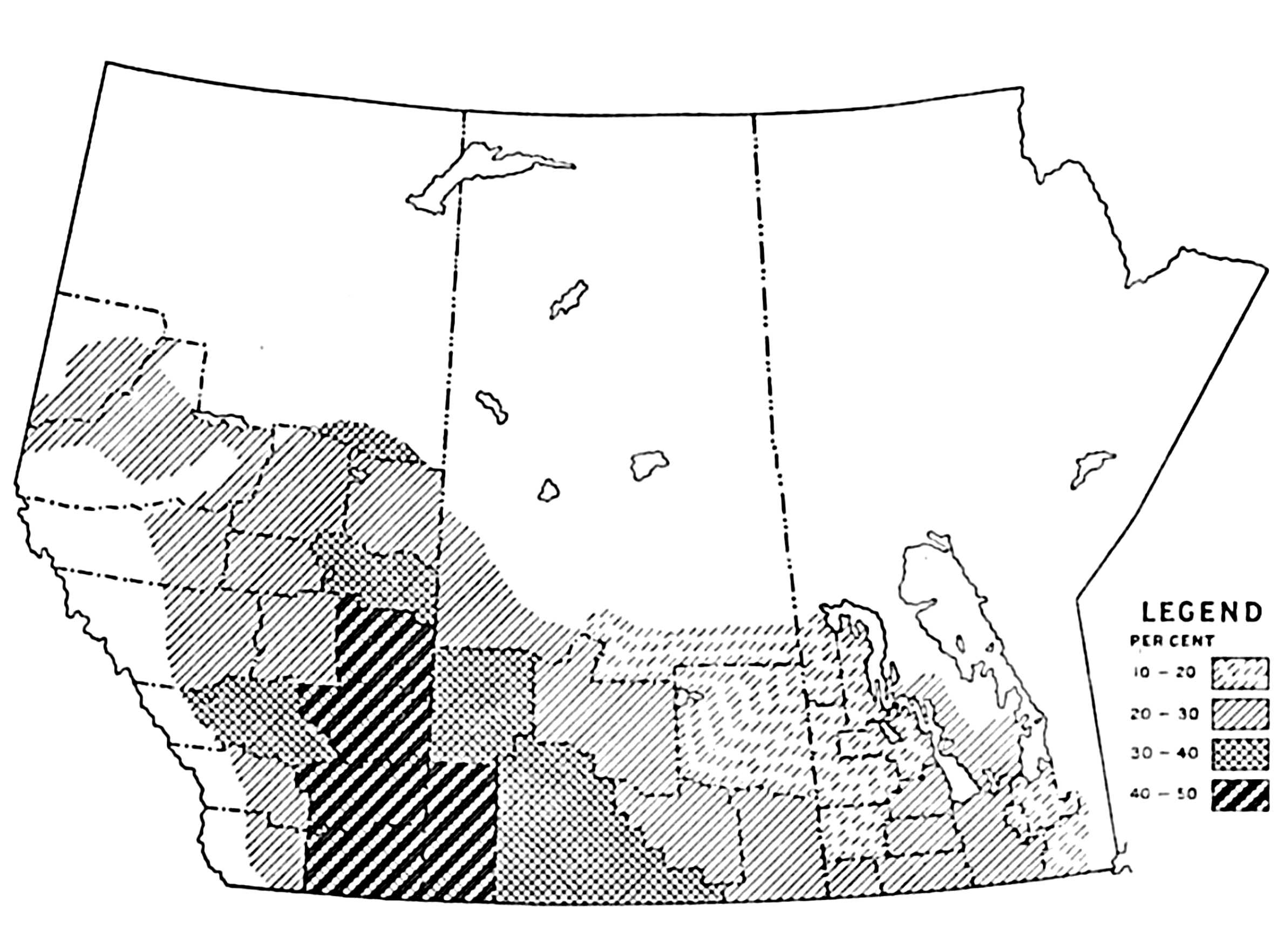
Fig. 1—Variability of wheat yields. For each territorial division the average variation from the mean is expressed as a percentage of the mean. (Fig. 149, p. 183.)
All the figures accompanying this review have been selected from “Prairie Settlement” (figure number and page in parentheses) as indicative of its wealth of illustrative material. (Blocks lent by the Macmillan Company of Canada.)
In the final chapter the probable limits of settlement are considered in relation to geographical obstacles—the short growing season and frost risks, the scarcity of favorable soils in many areas, and the cost of transportation—and the favorable conditions that may overcome them.
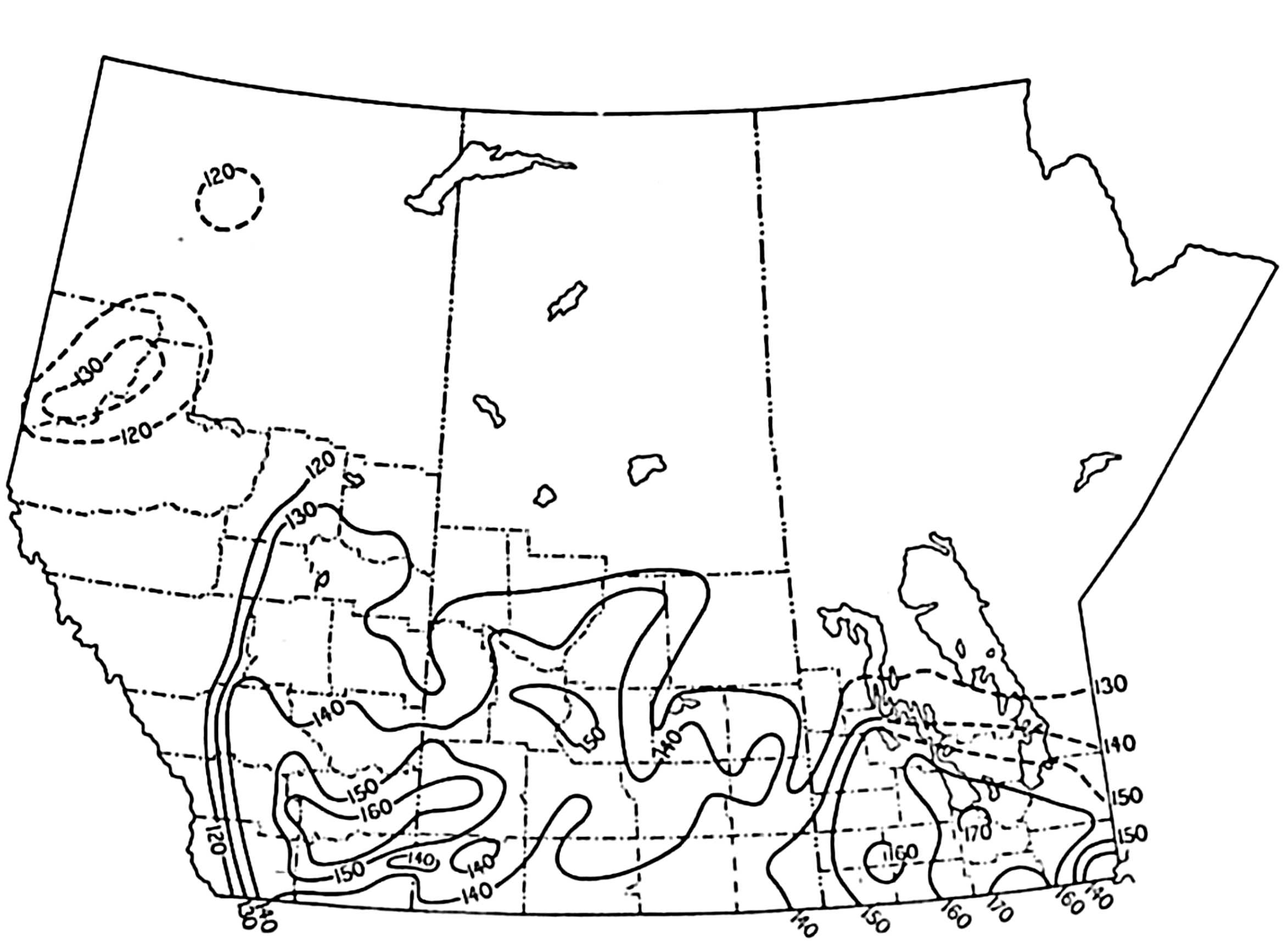
Fig. 2—Mean number of days between date when seeding becomes general and the date of first killing frost (29° F.) of fall. (Fig. 22, p. 21.)
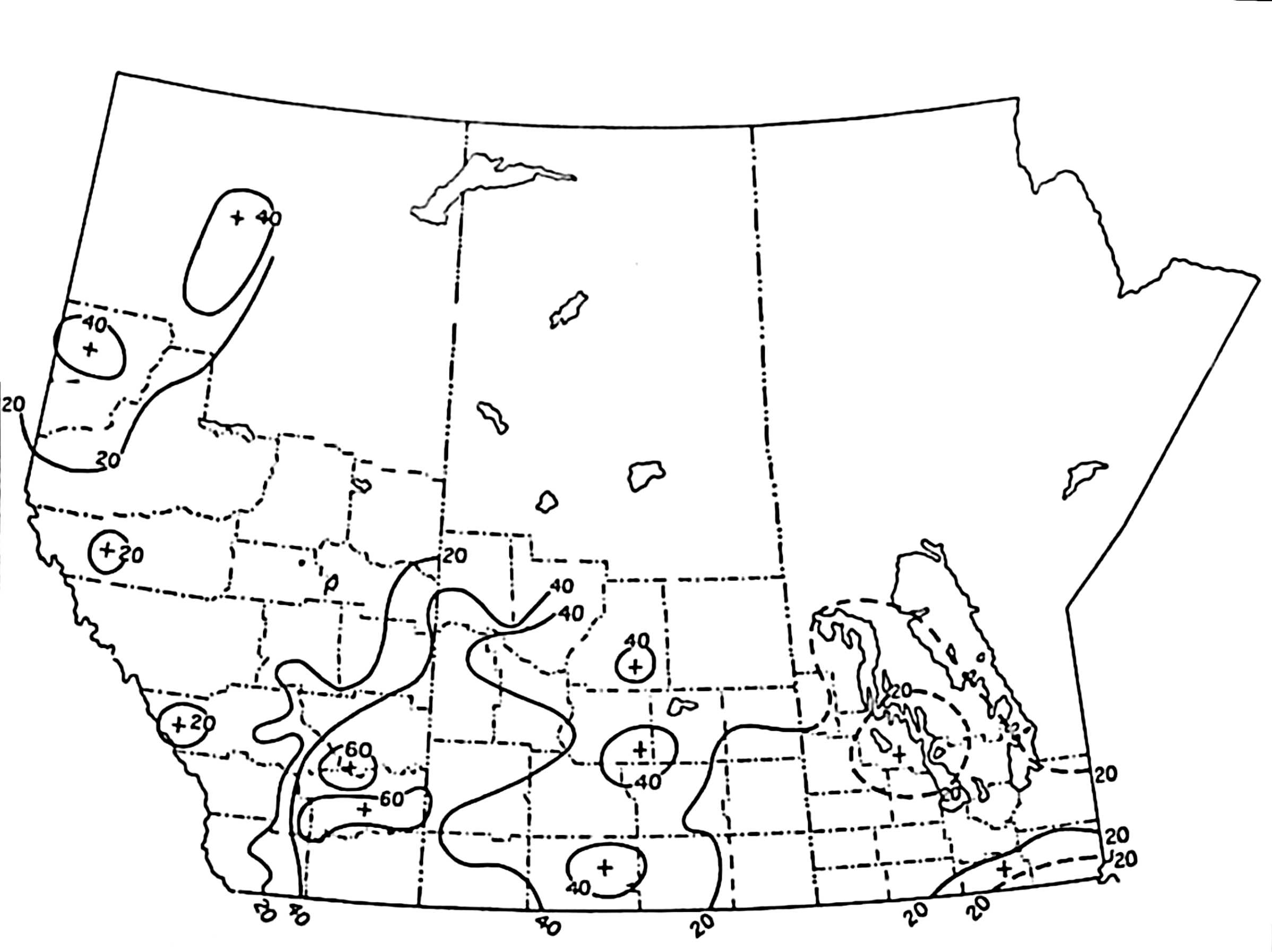
Fig. 3—Relative number of years in which warm-season rainfall, April 1 to September 1, was less than 7.5 inches. The figures shown on the map are percentages. In the construction of the map records of less than 15 years were used only for interpolation. Over 100 stations have relatively good records and the map gives a good picture of conditions. (Fig. 147, p. 175.)
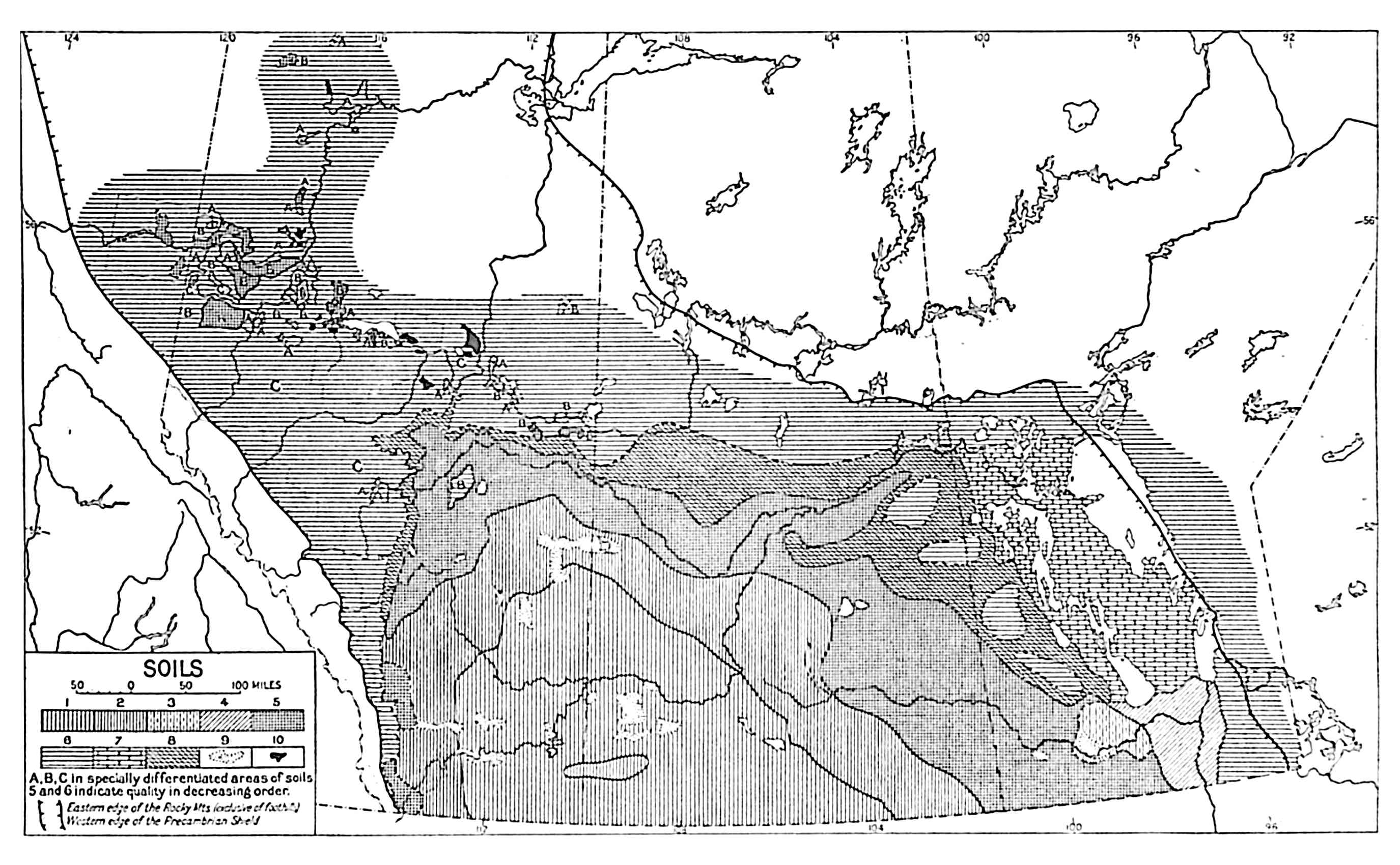
Fig. 4—Generalized soil map of the Prairie Provinces (prepared for the Canadian Pioneer Problems Committee by Dr. J. D. Newton, Department of Soils, University of Alberta). Key to numerals: 1, brown prairie soils; 2, dark brown prairie soils; 3, chestnut prairie soils; 4, black meadow soils; 5, black park soils; 6, grey timber soils and peat; 7, grey timber soils and high lime peat; 8, transitional soils (grey timber and black park). (Fig. 24, p. 23.)
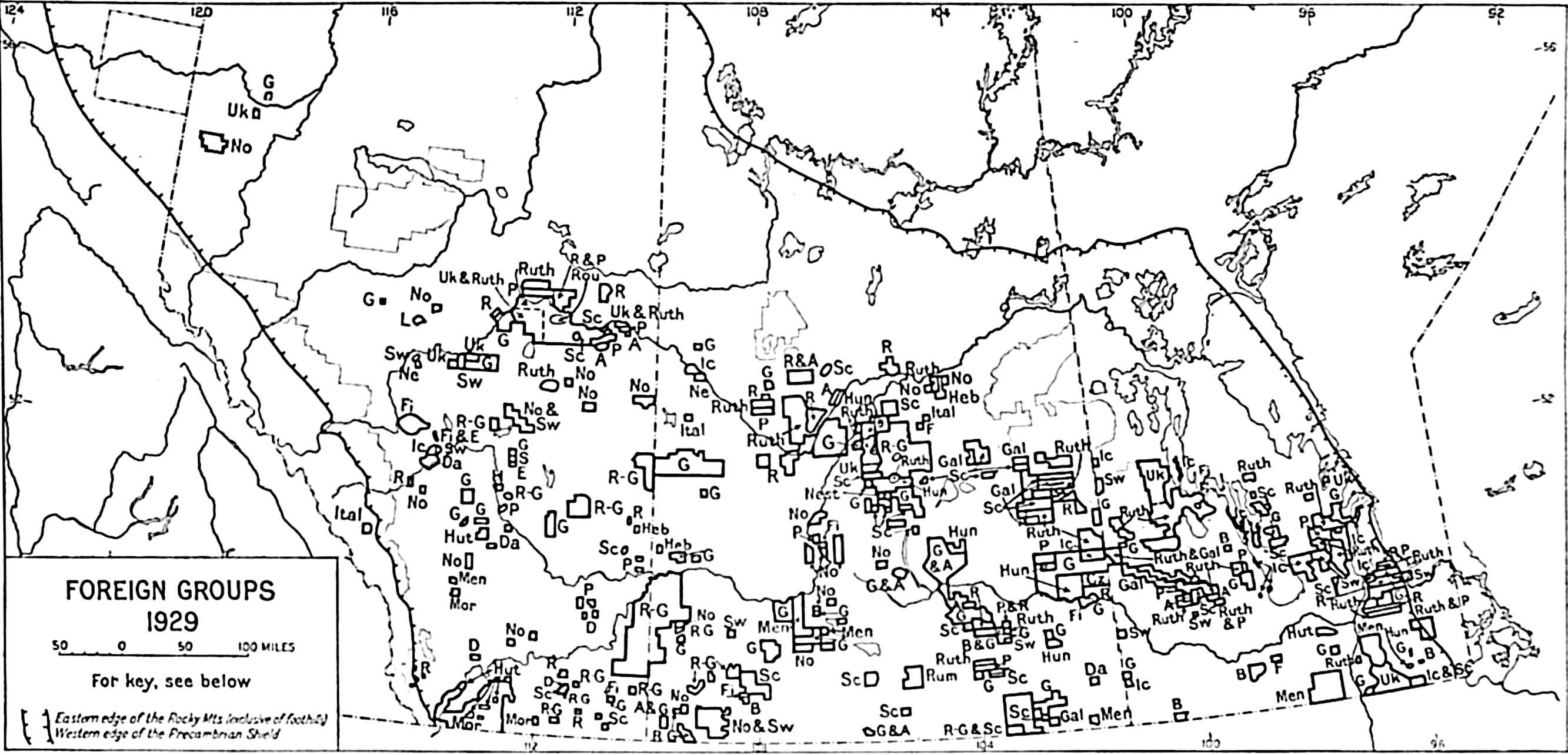
Fig. 5—Foreign groups, 1929. The areas outlines are those in which the groups still retain to some extent their Old World practices and languages. Key to symbols: A, Austrians; B, Belgians; Cz, Czecho-Slovaks; D, Dutch; Da, Danes; E, Estonians; F, French; Fi, Finns; G, Germans; Gal, Galicians; Heb, Hebrews; Hun, Hungarians; Hut, Hutterites; Ic, Icelanders; Ital, Italians; L, Letts; Men, Mennonites; Mor, Mormons; Ne, Negroes; Nest, Nestorians (“Assyrians”); No, Norwegians; P, Poles; R, Russians; Rum, Rumanians; Ruth, Ruthenians; S, Swiss; Sw, Swedes; Sc, Scandinavians (undifferentiated); Uk, Ukrainians. (Fig. 58, p. 81.)
Settlement takes place for exceedingly diverse reasons, of which by no means the most important are economic; settlement persists, however, only if satisfactory incomes can be earned.
Forecasting rests on many arbitrary assumptions, but the most probable outlook for the Prairie Provinces, assuming a return to conditions approximating to those which we have become accustomed to call “normal,” is for a further increase in the area of land in farms, say 15 to 25 per cent., a less than proportionate increase in the production of wheat, and an increase in rural population which may soon be converted into a decline.
If the Prairie Provinces, in common with other wheat export regions, are under pressure to reduce wheat production, it can be predicted that reductions will come in the Forest and Park Belts, where the comparative advantage of wheat has not been great, and to a less extent in the centre of the semi-arid belt, where the uses of land for grazing or for growing characteristic irrigation crops become more profitable. The greater part of the Prairie Plains, however—that part which now practises a high degree of specialization in wheat—may be expected to maintain its production because of the absence of alternatives. That area will be the last stronghold of wheat in the Prairie Provinces to be forsaken.
The fourth volume of the series, on economic problems of the Prairie Provinces, supplements the analysis of the first volume by emphasizing the importance of fluctuations in prices as a factor in variability of income. In the first section, by Professor Mackintosh, four chapters deal with long-run trends and short-run fluctuations in income and with rigidities involved in transportation and marketing costs. Two following chapters are concerned with provincial finance and distribution of financial burdens and services in Alberta, and succeeding chapters with the problems of rural local government and taxation in Saskatchewan. A final chapter deals with farm credit.
Geographically, the settler deals with certain soils, rainfall of given amounts and given dependability, frost and plant diseases of given occurrence, physical distances from the great markets for buying and selling. Economically, he deals with the cost of land, the cost of living, the value of his product, the cost of transportation, gross income, expenses, net income, the demand of the world for his products, and the cost of the products which he must purchase. Particularly in an area of commercialized agriculture, the success of settlement depends on the ability of the settler to wrest from his physical environment and from the economic facts of his position a net income sufficient to cover the standard of living which will permit him to make progress as he conceives progress.
The project was extremely fortunate in the time of its inquiry. The effects of the depression through the low price of wheat have brought out in sharp relief the problems of the western provinces and of Canada at a period in which rapid expansion has practically ceased. Settlement, in long-run trends, has responded to the influence of economic factors and has been divided into various periods: 1876-1882, the false start; 1883-1895, recession and severe struggle; 1896-1913, the great influx; 1915-1920, war years; 1921-1925, the postwar slump; 1926-1929, a new period of expansion. Wheat prices declined from 1873 to 1895, rose from 1895 to 1920, declined from 1920 to 1924, and rose from 1925 to 1929.
The catastrophic drop of wheat prices, 1929-1933, has created in the Prairie Provinces an economic crisis of the first magnitude. The great swings of the world price for wheat since 1873 have marked out the main course of the fortunes of settlement.
Transportation costs declined to a low level from 1901 to 1911, rose during the war, and declined, but not to prewar levels, in the postwar period. By 1932 wheat prices had declined so greatly that in some cases “half the Liverpool price of wheat was absorbed in carriage charges.”
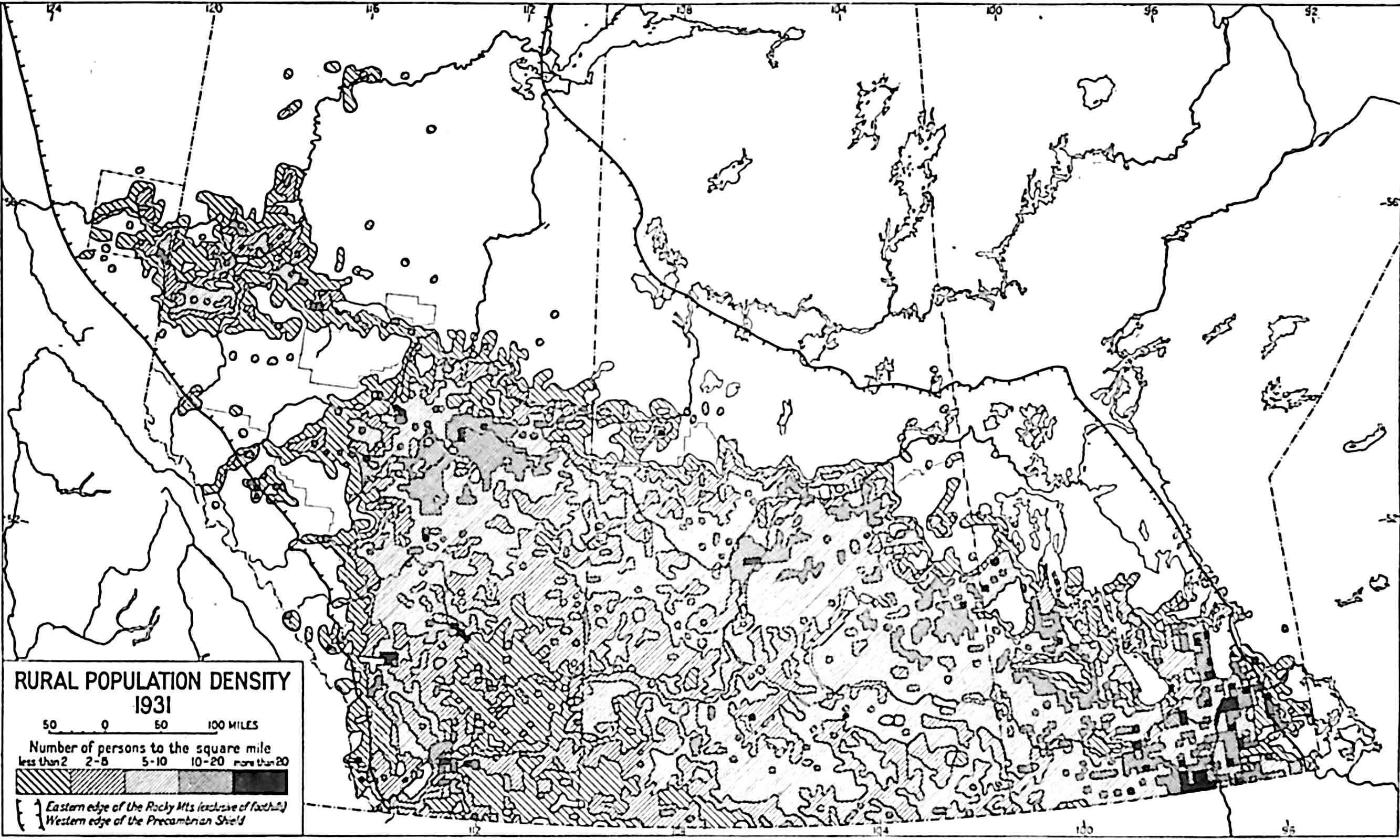
Fig. 6—One of a series of maps showing rural population density of the Prairie Provinces at five-year intervals, 1901-1931 (based on the township population figures of the censuses of those years). The population of Indian reserves, organized villages, towns, and cities, and of isolated settlements in unorganized territory is not included. (Fig. 49, p. 68.)
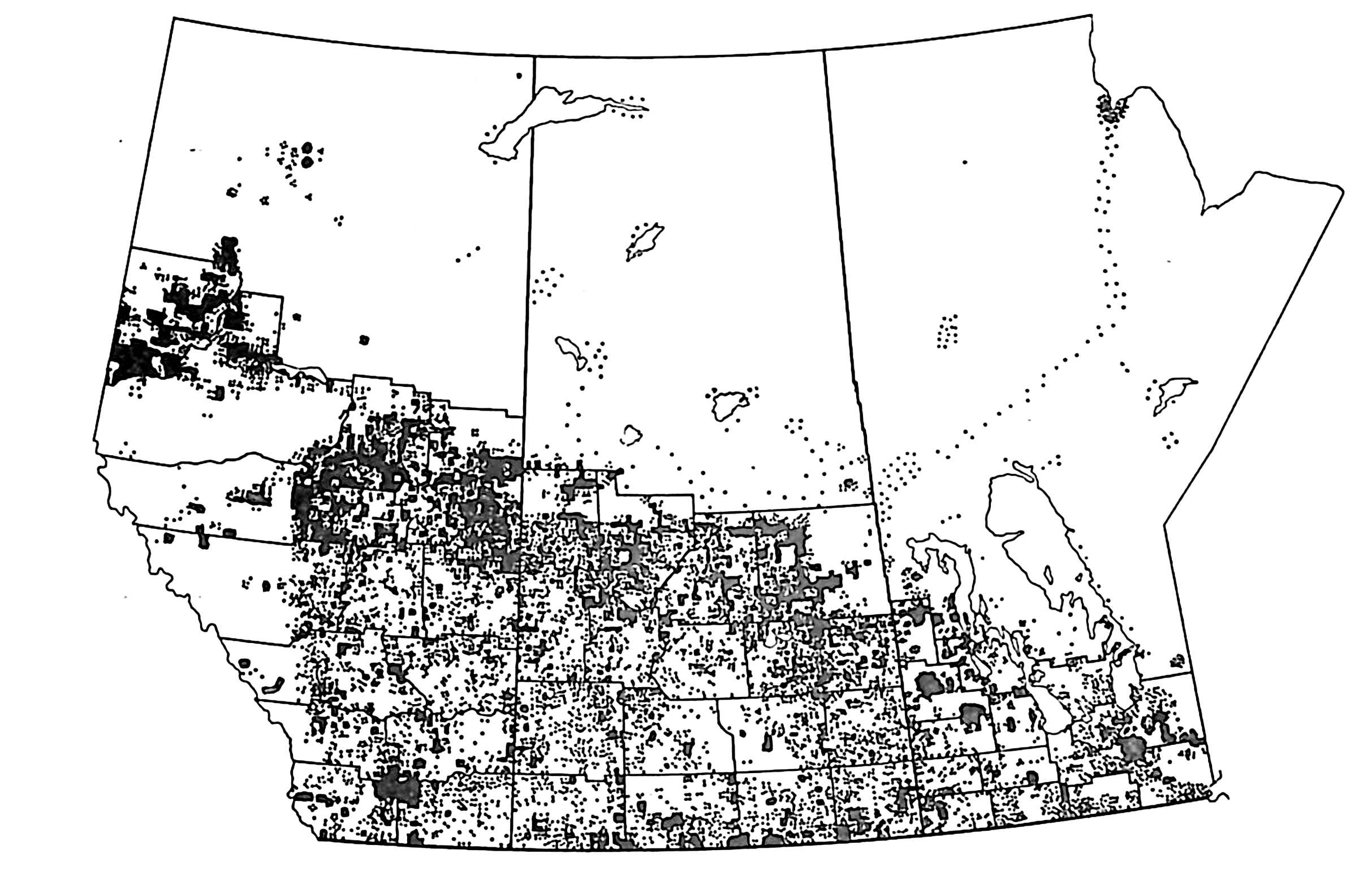
Fig. 7—Increase of rural population, 1926-32 (compiled from the censuses of 1926 and 1931). Each dot represents 10 persons. The territorial unit is the township. The dots in unorganized territory have been distributed according to the best information available. (Fig. 52, p. 72.)
Grassland areas of high fertility and obtainable at low costs facilitated rapid expansion of settlement. The increasing effectiveness of industrialism provided settlers with improved machinery adapted to the rapid occupation of vast areas. “Conditions which promote the outflow of the staple product and the inflow of capital” are the mainsprings of economic development.
Pioneer communities and pioneer countries will promote policies which are thought to be favourable to the export of the staple product and to the rapid provision of capital. If the country or community is in the interior of a continent, cheapness of transportation will be the object of innumerable policies for railway and highway construction, for subsidized transportation services, and for government construction where private initiative lags. Land is plentiful and cheap but with proper transportation service it promises to be valuable. Land grants have, therefore, been one of the commonest means of subsidizing the construction of transportation facilities. If the sale of the export staple is to be profitable, if the producer’s price is to be adequate, the channels to the world’s markets must be free and economical. Economic associations are formed to promote more efficient marketing, to remove abuses, and, if necessary, to provide through governmental or coöperative action more adequate and economical marketing machinery.
The economic factors of settlement have been to a marked degree factors which affected wheat as a commodity of agricultural production and as a commodity in the world’s commerce. . . . In the conduct of the business of farming on the Canadian prairies and in the conduct of government and community business generally this probable variation in the price of wheat, the main source of farm income and therefore of community income, is a basic consideration.
With variability of wheat prices accentuated by monetary disturbances, variability of yields, and variability of grades, the gross income of the farmer is subject to wide fluctuations, and the net income to even wider. It is scarcely an exaggeration to say that the accompanying table (p. 102) is the most significant ever published in the study of western and Canadian problems.
This extreme variability of net agricultural income in the Prairie Provinces is of the very greatest significance. Individuals and communities are necessarily acutely conscious of it and changes in agricultural programmes and practice have been directed toward its reduction. The pressure of this problem has also been the chief impulse behind demands for the extension of railways, for the reduction of transportation and marketing charges, and for programmes for coöperative or governmental control of the marketing agencies. All charges which intervene between the producer and his market and which fluctuate with the quantity sold but not to any great extent with the price are never outside the circle of the prairie farmer’s attention.
All economic problems which are concerned with overhead costs, whether those of the individual farm enterprise or those of communities or governmental bodies, are rendered active or quiescent by the fluctuations of net agricultural income. Sharply upward trends of expansion in a region, peopled not by a tradition-ridden peasantry but by pioneers and farmer entrepreneurs, bring demands for community services and for public improvements which add to the community and regional overhead. They promote also expansions of farm enterprises, thus adding to the overhead of the individual business. It is an axiom of finance that heavy fixed charges and highly fluctuating income are incompatible. The rapid expansion of agricultural settlement leads to the assumption of heavy fixed charges: highly fluctuating incomes make them difficult to carry.
. . . problems of public finance in the Prairie Provinces must be studied in the light of the highly variable net incomes which make up the larger part of the regional income. Problems of agricultural credit have usually been viewed as problems of making more and cheaper credit available to the farmer. In the Prairie Provinces there have indeed been important problems of adjusting credit institutions and practices to the peculiar needs of the agriculture of that region, but even more important have been the problems of adjusting the burden of the annual charges for credit to the character of the agricultural income. In a new country individual farm owners can accumulate capital only slowly; rapid expansion can take place only with the aid of credit, originating usually outside the region and secured by land- or chattel-mortgage. The temptation to pledge the future income from the land is constantly at war with the fear of the consequences of fluctuating incomes.
| The Variability of Net Cash Income Per Acre of Wheat in Saskatchewan Crop-Reporting Districts, 1921-1929* | |||
District | Average Variation (Dollars) | Coefficient of Variation (Per Cent.) | |
| 1. Southeast | 5.43 | 80 | |
| 2. Regina-Weyburn | 4.81 | 99 | |
| 3. South Central | 4.70 | 84 | |
| 4. Southwestern | 2.79 | 173 | |
| 5. East Central | 5.45 | 65 | |
| 6. Central | 3.81 | 71 | |
| 7. West Central | 3.82 | 127 | |
| 8. Northeastern | 7.04 | 68 | |
| 9. Northwestern | 5.25 | 68 | |
| * Vol. 4, Table XII, p. 30. | |||
In order that land might be made available quickly and imports of capital encouraged, railroad construction was supported by enormous subsidies from the Dominion and the provinces. Communication, as in the case of telephones, was extended through government ownership. Persistent efforts were made to reduce costs of transportation and to lower railway rates. Similarly, efforts have been made by improvements in marketing, to lower the charges 30 to 35 cents a bushel separating the wheat grown from Liverpool. The Manitoba Grain Act of 1900 was persistently subject to amendment, and in 1912 the Canada Grain Act provided a basis for more extensive regulation. Coöperative organizations have been improved and extended.
The problem of adjusting fixed charges to variable income becomes acute in the field of public finance. In the province of Alberta heavy bonded indebtedness and fixed charges have been caused by roads, 38 per cent. of the total; telephones, 20 per cent.; railways, 16 per cent.; and agricultural development, 10 per cent. These burdens become more acute under an inefficient tax system that, as a result of pioneer development, emphasizes a tax on property and neglects a tax on income. The difficulties are shown more clearly in Saskatchewan, with its greater dependence on wheat as a staple product. An extended and detailed analysis of departmental statistics supports the conclusion reached in the discussion of Alberta. With economic development the trend toward a single tax in Saskatchewan has become inefficient and should be accompanied by taxes on buildings and income. The school tax system, based on small local districts, has increased the burden of outlying regions and improved the position of the favored areas.
During the decade as a whole the burden of taxation has rested more heavily on the pioneer than on the established communities. In truth, the latter have had at their command more excellent and various local government services than were available to the other municipalities and at less cost.
The effects of rigid tax burdens have varied. Municipalities have been selected and divided into three groups, established, pioneer, and retrograde, and discussed in relation to population trends, land assessments, corporation tax levies, and tax collections. In the weak regions “in too many instances taxes, interest on mortgages, and other obligations have so burdened the farmer as to place the health and happiness of his family in jeopardy.” Looking at these undesirable effects, the reviewer finds it difficult to accept the statement that “however desirable the extension of social services, including the health programme, maybe they should be kept strictly within the limits of the tax paying capacity of the people.” Human costs in limited areas are confused with pecuniary costs as a whole.
A discussion of public finance is followed by a discussion of private finance in the chapter on farm credit. The last sentence of the volume may be taken as the key to the series:
In both public and private finance, this region adapts itself to its most important economic characteristic, its highly variable income.
Professor C. A. Dawson, assisted by Professor R. W. Murchie, has been concerned with an intensive study of a comparatively isolated region during a short period of time. It is
. . . the present-day representative of that agricultural frontier which entered the central plain of North America in the late eighteenth century. In the Peace River Country, on a smaller scale and with differences appropriate to the conditions and knowledge of the present, the experience of the agricultural frontier is being recapitulated.
In 1930 a detailed survey of typical districts and of nearly 400 farm families was made. The districts were divided into mature settlements, transitional districts, and fringe regions, and a large part of the volume is concerned with comparative studies of the Peace River area with the rest of settled Alberta and of the three types of region. The first chapter, “The Life Cycle of the Pioneer Region,” traces the growth of the pioneer region to the mature region. Although it includes numerous generalizations of first importance, it does not perhaps warn the reader sufficiently of their limitations. Indeed, if one may venture a criticism of such an important work, it is that too little place is given to the genetic approach and too much emphasis to the statistical tables. Copious extracts from extensive field notes and a chapter on the subjective side of the settlement process mitigate this criticism, but the present reviewer would prefer even more of the notes. The volume is strengthened by numerous maps, photographs, and statistical appendixes, but more maps and more bibliographical references, especially to newspaper files, might have been added.
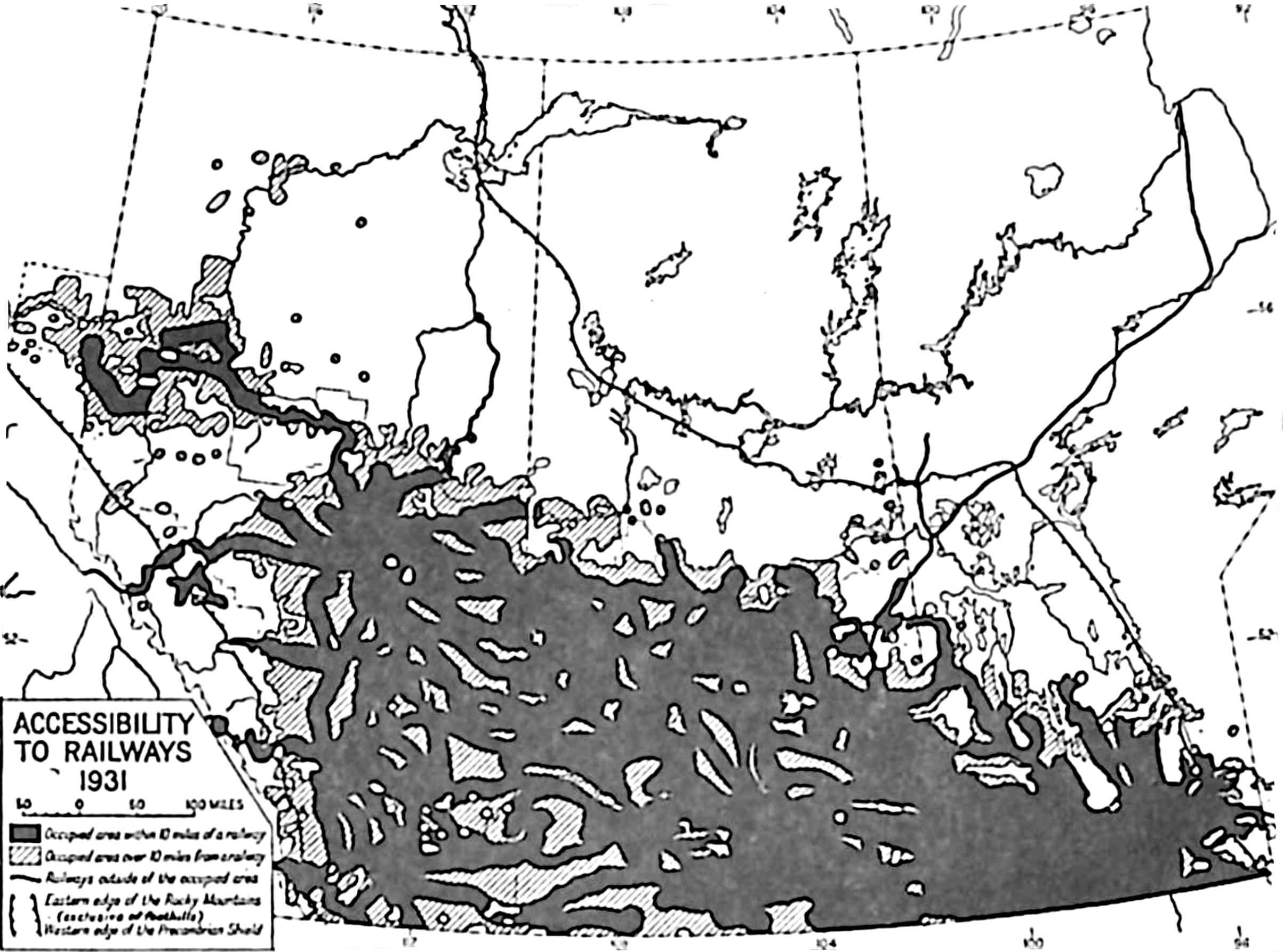
Fig. 8—One of a series of ten maps showing the relation of railways to the distribution of the rural population in the Prairie Provinces from 1891 to 1931. Accessibility is indicated by means of bands 20 miles wide enveloping the railway lines. Note the detached situation of the Peace River Country. (Fig. 40, p. 52.)
A chapter on the stages of settlement includes the outpost era, isolated settlements, expansion and integration, and regional centralization and is supported by a chapter on statistical indices, with detailed material on agricultural production and population. Professor Murchie prepared the material for chapters on the pattern of agricultural development in the Peace River in comparison with other areas and on agriculture in the successive zones of settlement in the Peace River area, discussed under such headings as the number, size, and tenure of farm holdings, utilization of improved land, values of farm property, indebtedness, relation of debt to average capital investment, initial capital, and cash receipts. Professor Dawson makes a comparison of farm-family expenditures in the Peace River area and in older regions and also in successive zones in the Peace River area in relation to total cash expenditures and disbursement trends of farm operating expenses, family living, and cash investment, and of cash family living and non-cash contributions with special reference to Peace River problems, such as gardening, the shelter belt, water supply, housing, communication facilities, reading practices, and advancement-goods. From a discussion of the farm plant and the farm family he proceeds to a chapter on focal points in the social and economic organization—crossroads centers, elementary centers of 50 to 150 inhabitants, larger elementary centers of 100 to 300 inhabitants, and independent centers such as Grande Prairie and Peace River. Social institutions, including religious organization, educational institutions, health organization, and numerous associations, are described with a wealth of analytical detail.
In a final chapter it is suggested
. . . that those lands which are considerable distances from the railway (or other adequate means of transportation) be withheld from settlement. . . . that means be sought to settle the suitable land in entire districts at one time, and that the units selected should be sufficiently large to allow for rapid development of local social organizations, as well as of the more specialized services which require a relatively large constituency.
. . . the withholding of land for settlement until the time is opportune, the planning of transportation facilities, the assembling of accurate information to guide the settler, together with ready coöperation with other bodies interested in the development of new areas, would appear to be among the major responsibilities of the provincial governments. It goes without saying that governmental authorities are expected to protect the settler from the exploitation of special interests who would promote land settlement for private gain and without thought of public good. The effects are far too significant to allow the free play of such interests. Governments will want to be assured that the programmes of private bodies are compatible with public welfare.
It is impossible even in an extended review to convey an appreciation of the significance of the work carried out under the project represented by the volumes under review. The authors have been concerned primarily with the more immediate problems of Western Canada, but their work provides a fundamental basis for an approach to the problems of Canada as a whole. Throughout the volumes the problem of the adjustment of burdens between established and fringe areas has been of vital concern, and emphasis has been placed on methods by which the burdens may be kept under control and reduced. But in many ways Western Canada is to the industrial center of Canada what the fringe is to the center within the western provinces, and a provincial regional problem becomes a Canadian problem. These volumes constitute a first preliminary in the attack on the difficulties of provincial-federal relations, and their importance is enhanced by the opportune date of the study and of their appearance in the years of the depression. No economist or historian or geographer can continue to write intelligently about diminishing returns, the frontier theory, and other related concepts without a thorough appreciation of their implications.
|
For reference to the history and plan of the project see “Pioneer Settlement,” Amer. Geogr. Soc. Special Publ. No. 14, 1932. |
|
The remaining volumes are: Vol. 2, History of Prairie Settlement and Dominion Lands Policy, by A. S. Morton and Chester Martin; Vol. 3, History of Immigration Policy and Company Colonization, by Duncan McArthur and W. A. Carrothers; Vol. 5, Agricultural Progress on the Prairie Frontier, by R. W. Murchie assisted by William Allen and J. F. Booth; Vol. 7, Group Settlement: Ethnic Communities in Western Canada, by C. A. Dawson; Vol. 8, Pioneering in the Prairie Provinces: The Social Side of the Settlement Process, by C. A. Dawson; Vol. 9, Settlement and the Forest and Mining Frontiers, by A. R. M. Lower and H. A. Innis. |
|
Canadian Frontiers of Settlement, edited by W. A. Mackintosh and W. L. G. Joerg. Vol. 1, Prairie Settlement: The Geographical Setting, by W. A. Mackintosh (1934); Vol. 4, Economic Problems of the Prairie Provinces, by W. A. Mackintosh assisted by A. B. Clark, G. A. Elliott, and W. W. Swanson (1935); Vol. 6, The Settlement of the Peace River Country: A Study of a Pioneer Area, by C. A. Dawson assisted by R. W. Murchie (1934). The Macmillan Company of Canada Limited, Toronto. |
Misspelled words and printer errors have been corrected. Where multiple spellings occur, majority use has been employed.
Punctuation has been maintained except where obvious printer errors occur.
A cover which is placed in the public domain was created for this ebook.
[The end of Canadian Frontiers of Settlement: A Review, by Harold A. Innis]