* A Distributed Proofreaders Canada eBook *
This eBook is made available at no cost and with very few restrictions. These restrictions apply only if (1) you make a change in the eBook (other than alteration for different display devices), or (2) you are making commercial use of the eBook. If either of these conditions applies, please contact a https://www.fadedpage.com administrator before proceeding. Thousands more FREE eBooks are available at https://www.fadedpage.com.
This work is in the Canadian public domain, but may be under copyright in some countries. If you live outside Canada, check your country's copyright laws. IF THE BOOK IS UNDER COPYRIGHT IN YOUR COUNTRY, DO NOT DOWNLOAD OR REDISTRIBUTE THIS FILE.
Title: The Canadian Horticulturist Vol. 9, No. 1
Date of first publication: 1886
Editor: D. W. (Delos White) Beadle (1823-1905)
Date first posted: April 23, 2026
Date last updated: April 23, 2026
Faded Page eBook #20260447
This eBook was produced by: Marcia Brooks, Cindy Beyer & the online Distributed Proofreaders Canada team at https://www.pgdpcanada.net
This file was produced from images generously made available by Internet Archive.
THE
CANADIAN
HORTICULTURIST,
PUBLISHED AT TORONTO AND GRIMSBY, ONT.
BY THE
FRUIT GROWERS’ ASSOCIATION OF ONTARIO.
—————————
VOLUME IX.
—————————
L. WOOLVERTON, M.A., Editor.
OFFICE ADDRESS—GRIMSBY, ONT.
—————
N.B.—Numbers I. to X. of this Volume were Edited by Mr. D. W. BEADLE,
of St. Catharines, Ont.
—————
THE COPP, CLARK COMPANY, LIMITED,
GENERAL PRINTERS, 67 & 69 COLBORNE STREET, TORONTO.
1886.
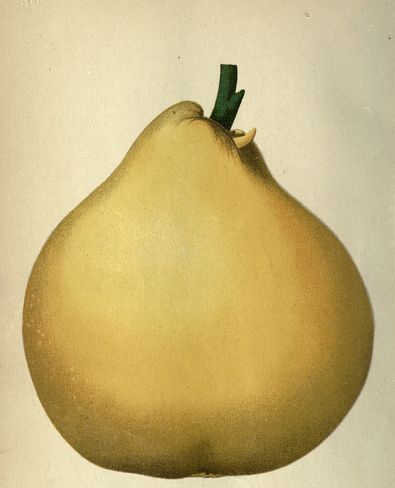
THE GREAT, NEW QUINCE,
“Meech’s Prolific.”
This sort bears very early,—sometimes one year from cutting, and usually
a full crop at three years. The most prolific of all known varieties.
Ripens between the Orange and Champion.
THE

| VOL. IX.] | JANUARY, 1886. | [No. 1. |
The consumption of this fruit has greatly increased within the past ten years, so that the attention of fruit growers is being turned to the consideration of more extensive planting in order to meet the increased demand. Hence the question arises whether the planter may expect that an orchard of quince trees will be remunerative, and, if so, what varieties are most desirable, what soil is best suited to their growth, and what cultivation should they receive.
With regard to the question of remuneration it may be sufficient to say that this matter of fruit growing for profit is like every other business, it needs to be conducted with skill and prudence, while prices will vary as do the prices of all other products according to the supply and demand. If there be any branch of agriculture that calls for the intelligent use of one’s brains more than another it is this very department of fruit growing for profit. Not a few have been sorely disappointed just because they have made fruit growing a secondary matter, a sort of adjunct to the usual farm operations. If that way of fruit raising was ever profitable, the day has now passed; they only may expect success who will make this fruit growing the business to which all else is secondary.
We shall endeavor to set forth the conditions under which the quince can be successfully grown so as to yield good crops, leaving it to our readers to determine for themselves whether they can meet those conditions and reasonably expect to find quince-growing for market to be remunerative.
The quince will thrive best in a rich, deep, clay loam, that is thoroughly drained of all standing water. It has been the fashion to plant the quince bushes in some low, wet place and let them grow as they may without care. Experience has taught us that this method is unwise, that on the contrary, they will respond as readily to generous treatment in well drained ground as any fruit plant. The climate must also be taken into account. The trees are more hardy than the peach and may therefore be successfully grown somewhat beyond the limit of peach culture. It is not the wood of the branches nor the fruit buds, but it is the root of the quince that is most liable to be injured by severe freezing, especially if growing in a light sandy soil. Hence in our climate it will be found that a mulch in autumn will often be serviceable as a protection to the roots, thereby preserving the quince tree from injury.
The trees should be planted about fifteen feet apart each way, and the ground kept clean by thorough cultivation with the cultivator. Ploughing after the trees have become well established is likely to tear and injure the roots, which are fibrous and lie near the surface. Liberal annual manuring is as important in the quince orchard as anywhere else. Besides this a dressing of common salt applied every spring, and occasionally during the growing season, at the rate of a quart to each tree, scattered upon the surface of the ground, has been found to have a very beneficial effect. Pruning must not be neglected. The trees need to be kept open that the foliage may be fully exposed to the light and air. This should be regularly attended to every spring, requiring then but little labor, and only such an amount as that the heads shall not become a mass of interlacing brush.
For some time only two varieties were usually planted, the Orange or Apple-shaped Quince, and the Pear-shaped. Of these the apple quince was to be preferred on account of its better quality and brighter color. The Portugal Quince has been highly esteemed for its fine quality and the handsome color of the flesh when cooked, but it is not profitable as a market variety on account of its being a shy bearer. In later times we have had brought to notice Rea’s Quince, which is a variety of the Orange of large size and by some thought to be the best of all, but it has not proved to be sufficiently productive in our climate. This was followed by the Champion Quince, which comes into bearing early and is productive, but ripens quite too late for our seasons. We have now brought before us a variety known as Meech’s Prolific. Its origin is lost in obscurity. Mr. Meech, of Vineland, N.J., found it growing in the grounds of one of the early settlers of that place who brought it from Connecticut. After growing it with the other varieties, Mr. Meech became satisfied that it was distinct from and superior to all of them. It is somewhat pear-shaped, but said to differ from the old pear-shaped quince by ripening earlier than that variety, yet a little later than the Apple or Orange Quince. It is also said to ripen earlier than Rea’s and decidedly earlier than the Champion. The particular merits claimed for this variety are the vigorous, healthy habit of the tree, early bearing, and great and uniform productiveness. Young trees of two and three years old shew fruit, and continue to bear so abundantly thereafter that it is necessary to thin out the fruit in order to prevent injury to the trees from over-bearing. Trees five years planted yielding from eighty to ninety well-grown quinces. The fruit is very large, often weighing from twelve to fifteen ounces, of a beautiful golden color, and possessing the peculiar agreeable quince fragrance in a high degree. It is claimed for it that its cooking qualities are remarkably good, one lady stating that it cooks as soft as a peach.
We are indebted to Messrs. Hance and Borden, of Red Bank, New Jersey, for the colored plate of this new quince which accompanies this number. These gentlemen were so favorably impressed with the good quality of this variety that they have undertaken its cultivation and dissemination, and to them we are indebted for the above particulars concerning its characteristics. Should it prove to maintain in our climate the good qualities which they state it has shown in New Jersey of coming early into bearing and continuing to yield heavy crops of large, well formed, highly colored, and highly flavored fruit, it will be a most valuable acquisition.
The quince is most frequently used for making a marmalade, by cooking the fruit soft, crushing the pulp and sweetening according to taste. Canned quince is a favorite dish with many, requiring only to be cooked soft before adding the sugar, else the quince will be made tough. Baked quinces are a most delicious dish. The core should be punched out, the space filled with sugar, and the fruit then baked in a pan containing just a little water. Eaten with cream and sugar—well, if you have never enjoyed this dish, there is a most agreeable experience in store for you.
—————
Mr. T. H. Mackenzie has endeavored to grow the Bignonia radicans at Dundas, but has only had it bloom once in five years. The winters usually kill it down to the ground, and although the root survives and throws up strong shoots the next summer, it does not produce flowers.
—————
For five new subscribers and five dollars we will send prepaid any one of the following collections of choice bulbs or plants. This is an opportunity to secure a fine assortment of beautiful flowers and valuable plants without cost, other than the pleasure of doing a favour to your friends by introducing this monthly to their notice, and of enlarging the circulation and extending the usefulness of the only horticultural magazine published for the benefit of Canadian lovers of fruits and flowers:—
Collection No. 1—One Chionodoxa lucillæ, one Lilium longiflorum, two Frittillaria meleagris, two Spanish Iris, and two Narcissus poeticus.
No. 2—Five Tulips, two Chinese Peonias, one Spotted Calla, one Tiger Lily.
No. 3—A collection of five different Lilies.
No. 4—A collection of five different sorts of Iris.
No. 5—Two double and two single Hyacinths, and three double and three single Narcissus.
No. 6—Five herbaceous perennials—Fraxinella, Dianthus, Japan Anemone, Japan Spirea, and Clematis erecta.
No. 7—Three hardy flowering shrubs—Hydrangea paniculata, Spirea Van Houtte, and Purple Fringe.
No. 8—A collection of twelve different sorts of flower seeds.
No. 9—Four hardy Roses.
No. 10—Four Tea Roses.
No. 11—Three Polyantha or miniature Roses.
No. 12—Four Climbing Roses.
No. 13—Ten plants, to be chosen by you from the following list: Geraniums, single; Geraniums, double; Fuchsias, single; Fuchsias, double; Petunias, double, blotched and fringed; Abutilons, rose-coloured; Abutilons, white; Abutilons, straw-coloured; Begonias, scarlet; Begonias, rose-coloured; Begonias, white-flowered; Coleus, with most beautifully variegated foliage; Hydrangea Thomas Hogg; and Hydrangea Otaksa. These plants will be securely packed and sent by mail. You are at liberty to choose the ten from any one or more of these different kinds of plants.
No. 14—Six beautiful clove-scented carnations.
No. 15—Six Double Dahlias, different colours.
No. 16—Twelve Gladiolus bulbs.
No. 17—Twelve Tuberose bulbs and six Gladiolus.
No. 18—Jessica Grape-vine.
No. 19—A Niagara Grape-vine.
No. 20—An Amber Queen Grape-vine.
No. 21—A pruning knife.
No. 22—Three plants of Hilborn Blackcap Raspberry.
For ten dollars and ten new subscribers we will send, prepaid, any two of the above collections you may designate; or if preferred, we will send you one strong yearling tree of the Russian Vladimir Cherry, grown from trees imported by the Fruit Growers’ Association direct from Russia.
If you prefer books, we will send you, prepaid, on receipt of three dollars and three new subscribers, Every Woman Her Own Flower Gardener, 148 pages, bound in cloth.
For five dollars and five new subscribers, Window Gardening, 300 pages, illustrated with 126 engravings.
For twelve dollars and twelve new subscribers, Saunders’ Insects Injurious to Fruits, 436 pages, 440 engravings, bound in cloth.
For fifteen new subscribers and fifteen dollars, the Floral Kingdom, a magnificent art book, splendidly bound, 450 pages, 200 illustrations.
—————
Mr. Thos. H. Mackenzie, of Dundas, County of Wentworth, informs us that he has two trees of the White Fringe, one of them now fifteen feet high, and the other ten feet, that they flower freely every year, and have done so ever since the fourth year from planting, and that when covered with bloom and when ornamented with their rich purple drupes they are most beautiful objects. It is now fully settled that this beautiful shrub or small tree is perfectly hardy in our Canadian climate, reports having been received of its flourishing at Dundas, Guelph, and at St. Anne de Bellevue, in the Province of Quebec.
—————
We are indebted to Mr. F. P. Gassion for a copy of a little pamphlet of some thirty-five pages, with the above title, in which the author sets forth his method of growing fruit of all kinds with great success. His management is based upon the theory that the roots of a tree are of three kinds, the small fibrous roots, the lateral roots, and the tap roots, and that the office of the fibrous roots is to produce fruit, of the laterals to produce wood, and of the tap root to anchor the tree. Accordingly he cuts off the lateral roots every second year or so. If the tree be four inches in diameter at the ground, or a foot in circumference, he allowed a space of two feet from the tree, and cut off the roots at that distance from the trunk, thus leaving a circle of roots four feet in diameter. His time for doing this root pruning is in the autumn after the leaves have fallen. After cutting off the roots, he dresses the surface of the ground with a liberal supply of good, solid manure. In the spring, when the trees began to open their blossoms, pails full of liquid manure were given them occasionally as long as the blooming process lasted; also for some time afterwards, particularly if the weather were dry. The fertilizers used were the drainings of the stable and cow-house, fresh solid manure of any kind well mixed with water, and a few handfuls of guano well stirred up in a pailful of water.
As a result of this treatment the author states that the trees soon covered themselves with fruit spurs, yielding great quantities of fruit. That this process of root pruning forced the trees to make short stiff wood well supplied with fruit buds. He thinned out all small, poor fruit, and then let the trees bear to their very utmost. In addition to the manuring, he gave the trees an annual dressing of lime.
We have no doubt but that by this method of lessening the wood growth of a tree, and at the same time supplying the remaining roots with an abundance of food, and thinning out the fruit so that each remaining specimen shall have sufficient room for full development, perfect fruit, of fine appearance and full flavor will be obtained. This method is particularly to be commended to those who have but small grounds, who can attend to the trees during the season of growth, and see that they do not suffer for lack of food or moisture, and who desire to have very choice fruit and of the highest flavor. It must be remembered that when the roots are thus shortened, food and drink must be supplied to the remainder, else the tree will suffer, and the fruit, and possibly the leaves, drop.
Should any of our readers have trees that are making too vigorous wood growth, and therefore yielding little or no fruit, they will find this root pruning process will check the excessive wood production and throw their trees into fruit bearing.
—————
We have been favored by Mr. R. Hobbs, of Auckland, with a copy of the report of the joint Codlin Moth Committee appointed by the Legislative Council and the House of Representatives of New Zealand to consider and make suggestions for the proper working of the Codlin Moth Act, 1884, with the object of checking the spread of this terrible pest.
It appears from the report that the investigations of the Committee took a much wider range, and embraced scale insects, peach blight, &c. Mr. T. Kirk prefers syringing with a weak solution of caustic potash, rather than Paris Green, for preventing the Codlin Moth from depositing its eggs.
The appendix to the report contains copious extracts from the Canadian Horticulturist and the Report of the Fruit Growers’ Association for 1884.
In his letter just received, Mr. Hobbs states that he has received at different times copies of the Canadian Horticulturist from Mr. Twohy, Hamilton, but that he wishes to become a regular subscriber, and accordingly he encloses his subscription for two years, 1886 and 1887. He adds: “I made free use of your Journal by taking extracts from it re the cure for insect pests, feeling sure also that you would be pleased to know that the usefulness of your Journal extended as far as New Zealand. Ours is a grand country for fruit, and our mild climate is very favorable to insects as well. We are now only beginning to realize the fact that we must do something to keep them in check; and it is with this object in view that I have been interesting myself in the matter.” Mr. Hobbs is the chairman of the Committee of the House of Representatives appointed to inquire into the best methods of combating the codlin moth.
—————
This is a new variety of the Black Cap family, an accidental seedling transplanted with a number of others by Mr. W. W. Hilborn, of Arkona. This one manifested such a decided superiority over the others that he has continued to grow it for over six years past, and esteems it to be the most valuable of all the Black Caps for either home use or market. He states that it will average larger than any of them, save only the Gregg, is jet black, very productive, and the best in quality; that it begins to ripen just after Tyler or Souhegan, and continues in fruit later than most. The plant is a strong grower, has few thorns, and is as hardy as any Black Cap.
If any of our readers will send to this office five new subscribers, they shall receive in the spring three plants of this new valuable Black Cap Raspberry.
—————
Green & Whineray’s circular of 28th November, ’85, quotes Canadian apples at Liverpool as follows:—Greenings, 12s. to 12s. 6d.; Spitzenburgs, 10s. to 11s.; Spys, 8s. 6d. to 10s.; Golden Russets, 15s. to 17s.; Kings, 12s. to 15s.; Seek-No-Furthers, 9s. to 11s. Total arrivals to date, 209,222 bbls.
—————
One of the most worthy of the publications of this province is the Canadian Horticulturist, edited by D. W. Beadle, of St. Catharines. Among the contributors who are recognised as authorities upon various horticultural topics, is the name of F. Mitchell, of Innerkip. Mr. Mitchell is a most successful florist, and an intelligent writer.—Woodstock Times.
—————
Of the Fruit Growers’ Association of Ontario will be held in the Town Hall, Stratford, on Wednesday and Thursday, the 10th and 11th of February, 1886, commencing at ten o’clock in the forenoon of Wednesday, and continuing through both days and evenings.
We have received notice that Mr. T. T. Lyon, the President, Mr. E. H. Scott, the Chairman of the Executive Committee, and Charles W. Garfield, the live Secretary, of the Michigan Horticultural Society, and also Mr. W. H. Green, of the Ohio Experiment Station, intend to be present at that meeting. They are all eminent as fruit growers and horticulturists, and will add very much to the interest of the occasion. We trust that our members will not fail to avail themselves of this opportunity of listening to these gentlemen.
—————
A writer in the American Garden says this “is a handsome tree. The top is spreading, symmetrical and graceful. The foliage is dark green. The trunk is smooth and well proportioned. In point of beauty it is excelled by none of our forest trees. It is equally commended by its hardiness. It does well in Lower Canada; [We saw it growing most luxuriantly at Winnipeg, Manitoba, where it is not injured in the least by the cold of winter.—Editor.] and along the fortieth parallel, it is never injured by the winter. Nor is it injured by heat or drought.”
—————
Mr. N. Robertson, Superintendent of the Government grounds at Ottawa, writes to the Floral Cabinet that Coleus Firebrand is a grand object; under glass it assumes a brilliant fiery appearance, and that in the open ground, though the sun destroys this delicate color, it yet is superior as a dark bedder over any other he has tried, and is a fine addition to our bedding plants. Golden Bedder under glass seems to him to have no particular attraction, being of a greenish white, but when bedded out the sun changes this to a bright golden yellow that in the distance is most attractive and pleasing and makes a splendid contrast with the other, either planted alternately or in lines. Mr. Robinson remarks that Golden Bedder with him is much dwarfed in outside planting and requires to be kept on the front line.
—————
What variety besides Concord would you recommend for our climate and soil? The latter is a light, gravelly ridge, lying between Blenheim and Buckhorn.
R. B. B.
—————
Reply.—If wanted for your own table, you will find the Jessica a most delicious white grape; the Brighton an excellent red, and the Wilder a magnificent black variety.
—————
Dear Sir,—I send for your investigation and opinion in regard to what these small worms are on this grape vine. This is one I was transplanting this fall. Please let us know through the Canadian Horticulturist.
Yours truly,
W. C. Webster.
—————
Reply.—We received with the above a piece of a rooted cutting that was quite dry, and could find no worms, or appearance of worms, on it. They must have left the vine during its transit in the mail bags.
—————
—————
Although in Canada we have a variety of nut-bearing trees growing wild in our woods, it cannot be said that any of the nuts produced on them are to be compared with the English or Spanish walnuts, the Barcelonas, Filberts, or sweet chestnuts of the Old World; and after all, this state of things is reasonable enough. We do not go to the woods to find snow apples or Smith’s improved gooseberries. In the forests are found the original types of cultivated fruits only; it is left to man to improve on nature. Sometimes, however, we have been able to adopt the improved forms of plants that a long course of civilization has produced, but the attempts at growing the walnut, filbert and chestnuts imported from England to Canada have met with but little success. In Ottawa the cold of winter is entirely too severe for any of the above to flourish. The filbert has dragged out a miserable existence from year to year, but the catkins which form in the autumn do not pass sufficiently safe through the winter to shed their pollen in spring, or else the female flower buds are destroyed by the severity of the cold. Whichever is the case, certain it is that when the time for nuts is at hand the trees are found to have produced “nothing but leaves.” There is little doubt, however, but the hazel, which is wild over a large portion of the Dominion, might be hybridized by pollen from the English varieties, and a cross obtained suitable for our wants, if not so fine as the British parent. In the same way perhaps the condition of the native Canadian chestnuts and walnuts (either the black or the butternut) might be ameliorated. A cross between the two latter might be effected with good results. Many of the nut-bearing trees, such as the walnut and filbert, having unisexual flowers, the process of hybridizing would not be difficult if pollen could be obtained. Where the male and female organs are situate in the same flower, as in the grape for instance, of course the flower has to be artificially opened and the male organs removed before they are sufficiently advanced for the pollen to impregnate the female portion of the flower.
The Juglans regia is the variety cultivated for its nuts in Europe. Its home is supposed to have been originally in Persia or the Levant, from which it was no doubt carried to England by the Romans. The English nuts are now said to be better flavoured than those grown on the continent of Europe. The word Juglans is supposed to be a contraction of Jovis glans, “nut of Jupiter.” J. regia is by no means a hardy tree. It is in fact so tender that it flourishes better in the south of England than in the north; nevertheless the writer has seen some fine trees of this species in Suffolk, Norfolk and Lancashire, but the trees of Kent and Surrey have the reputation of producing the finest nuts. There is a record of a walnut tree which grew in Welwyn, Herefordshire, whose umbrageous branches covered an area of over two thousand square yards. There is still standing at Balaclava, in the Crimea, a walnut tree said to be upwards of one thousand years old. This tree yields its proprietor a yearly average of eighty thousand nuts; it has been known to produce as many as one hundred thousand in a single season.
There is one way in which our nuts could be utilized as an article of commerce, and that is as a pickle. Both the black walnut and butternut when in that stage of growth, just before the shell begins to harden, while it is yet sufficiently soft to admit of its being penetrated with ease by a knitting needle, is gathered and converted into a most delicious pickle. When the nuts are ripe they are sold on the market in Ottawa for about one dollar per bag, but as a pickle they would bring in the English market, and perhaps in Canada, ten or fifteen times that sum. The writer has walnuts pickled, as well as the ripe nuts with the outer shell on, preserved for the Colonial and Indian Exhibition to be held in London next summer.
The walnut of England is a slow growing tree, and as some one has said of pears, though perhaps not truthfully,
“He who plants pears
Must leave it to his heirs”
to eat them; so in Britain one generation plants the J. regia and the next partakes of the nuts. This is by no means the case with J. cinerea, as I have myself planted the nuts and have gathered fruit from the tree seven years afterwards. I have now two trees eleven years old which yielded last season over a bushel of nuts. The older the walnut tree becomes the more nuts they produce, but it takes more than one generation to obtain a tree that will produce one hundred thousand.
The paper-shelled hickory is a pleasant nut. The tree, though slow of growth, is of a very clean, handsome appearance both of bark and leaf, and should be more extensively cultivated. The chestnut is indigenous to the western part of this Province, and why it is not more cultivated it is difficult to understand. The tree is thrifty and a fine grower. The nuts, though not so large as the Spanish, are, when roasted, much relished by the children, and overgrown boys and girls have been known to eat them.
The fact is our nut-bearing trees have been too much neglected. It is trusted both the subject and the trees will receive that attention which they so justly deserve in the columns of the Horticulturist. I should like to call on the readers of our paper to send to the Editor any notes as to their success or failure in trying to cultivate or improve our wild nuts, and I am sure he would give any such information his immediate attention and publication; but I fear did I do so I would be like the character in Shakespeare who said, “I can call spirits from the vasty deep,” to which his friend replies, “And so can I, and so can any man, but will they come when you do call for them?”
If the men of the present day have become too ancient to enjoy nuts, it must not be forgotten there is always a large crop of youngsters coming on who will be glad of them.
The destruction of our forests is no doubt making our native nuts scarcer; but there is plenty of waste and roadside ground that could be utilized for the reproduction of our nut-bearing trees.
—————
Notwithstanding last winter was the coldest I have experienced in Muskoka and the summer a rather cool one, my grape vines produced very satisfactorily; one of Rogers’ ripening 48 lbs., another 23 lbs., and another 18 lbs. Moore’s Early I got from the Association, not so free a bearer, 10 lbs. Strawberries a heavy crop. Raspberries light, being mostly frozen down to the snow line.
F. W. Coates.
Cape Elizabeth, Muskoka.
—————
We addressed a card of inquiry to a few of our esteemed readers, asking them to favor us with the names of the three varieties of grapes grown in the open air which they valued most; and to state the reasons for their preference. We have been kindly favored with the following replies; for which we desire to express our thanks:—
AT ABBOTTSFORD, QUE.
Dear Sir,—Your query as to my best three grapes: I fruited forty-seven kinds last year. If planting only five kinds it would be: (1) Delaware, (2) Massasoit, or Lindley, (3) Brighton, (4) Duchess, (5) Herbert, Amenia, or Worden. This is as near as I can answer your question.
Yours truly,
Chas. Gibb.
—————
AT ADOLPHUSTOWN, ONT.
Dear Sir,—I have your favor of the 12th inst. In reply, the only grapes I have are eight at the foot of my garden, and they did not prove true to name. I have two that seem very hardy: one is the Brant, and the other Mr. Williams, of Prince Edward, told me was Rogers’ very best grape, but I am not sure of the number.
D. Young.
—————
AT BARRIE, ONT.
Dear Sir,—In answer to your card asking me to state the three varieties of grapes, grown in the open air, most esteemed by me, and why. I beg to reply that the only grapes grown by me, in the open air, and which I care to eat, are the Rogers’ amber grapes; but these are produced in poor bunches, the berry is large and to my taste very good, and the yield on the whole is good. It is sometimes injured by the early frosts, but that is the case with all grapes here. I find it the most reliable in this climate, except the Champion, but this grape I do not care to eat. The Delaware and Concord are tolerably successful here, but I have no bearing vines of either, and do not speak from experience. The only two grapes I ever recommend here are the Rogers and the Delaware.
At the last show in Collingwood a white grape was exhibited, which I would have said was grown under glass if I was not assured on undoubted authority that it was raised in the open air. It was fleshy and sweet, and much like in flavour a Hamburg grape. I hope to obtain a cutting or two, in order to try it here. If it succeeds I should consider it a great boon in the matter of open air grapes. I believe its name is not known to the grower, and I have not heard its history, but hope to learn more about it in a few days, and may write you again.
Yours in haste,
Wm. Roys.
—————
AT BRIGHTON, ONT.
Dear Sir,—Immediately on receipt of your card, I called on J. M. Wellington, Esq., Main Street, Brighton, a pioneer in grape culture, established over twenty years; and from that interview learn that the varieties of grapes grown by him, not mentioning those discarded as not suited to this climate, are as follows:—Delaware, Concord, Isabella, 12 different varieties of Rogers’ hybrids, Elsinburg, Ontario, Union Village, Brighton, Allen’s Hybrid, Lydia, Rebecca, and Maxatawny. His favorites for prolific bearing and early ripening are Rogers’ Hybrid No. 4, Elsinburg, and either Brighton or Delaware for third place; for size, Brighton has the preference. Delaware is small, but very prolific, with hardy vines.
These varieties ripen nearly at the same time; if anything Rogers is in advance. Maxatawny, Lydia, Rebecca, and Allen’s Hybrid are white grapes, of which he gives the Maxatawny the preference. Elsinburg he gives the preference over the blue varieties; while to Rogers’ Hybrid No. 4 he gives the decided preference over all.
Hoping this may prove the information you desired,
I am, yours respectfully,
D. W. Dulmadge.
—————
AT BROCKVILLE, ONT.
Of the grape vines purchased some ten years since, I find the Rogers (No. 39, I think) a very fine, rich grape, berries nearly an inch in diameter, bunches not large, amber color, tough skin, but like full flavored Muscat. I gave some cuttings to my neighbor, Mr. Cochrane, a Jerseyman, who says they are as fine as any he met with in Jersey, or on the main coast of France; I prefer it to all our out-door grapes. I am sorry to say some of these got blighted this year, became hard like marbles, and did not ripen: I think it was owing to the cold, wet season. Next I have the jolly little amber-colored Delaware, prolific, but small bunches; my wife prefers these to all others of our out door grapes. Then there is a black, luscious grape, prolific, with large bunches, the name of which is lost: I think it is Concord. Then the Israella, black, which I like for its wild taste, and gets richer after a little frost has passed on it. Of the several different varieties of out door grapes, these are the most notable. I have more satisfaction with them than with those grown under glass.
Besides these, I have the August Giant, and the Pocklington; also the Niagara, the Vergennes, and the Empire State, but only the first of these has yet given me any fruit. The Pocklington gives promise of doing well; like the sweet water, it is pale green, large bunches, and ripens early. All my grapes have ripened this year, notwithstanding the cold season we have endured. I always lay them down in winter, and cover them with a little earth.
Samuel Keefer.
Brockville.
—————
AT BLYTH, ONT.
Dear Sir,—I grow Isabella, Concord, Martha, Champion, Salem, Pocklington, Burnet, and Clinton.
Concord, Isabella, and Salem, in the order named, have done best; that is, as to bearing and quality. Champion and Clinton are good for wine, but not fit for a table grape.
Yours truly,
W. Sloan.
—————
AT BLANTYRE, ONT.
There are very few grown near to me. I know of but one place where there are a few vines grown of Concord and Arnold’s Hybrids, which grow and bear very well. I have a few myself, but they are yet young; one, the Concord, fruited this last season for the first time. The names of mine are Concord, Hartford Prolific, Martha, Salem, Worden, Prentiss and Brighton, and three or four of Arnold’s, which are all growing very well. I will try and keep you informed how they succeed with me.
Duncan Robertson.
—————
Dear Mr. Editor,—As you invite your subscribers to give their experience anent their fruits, “garden sass and sich,” I’ll unload my worry regarding my grape vine Jessica, my only child “of that ilk,” who, with all my tender nursing, has turned out a pathetic failure. Solomon says, “In the multitude of counsellors there is wisdom.” But I like best the old Scotch saying, “O’er many cooks spoil the kail.” One friend advised me to put bones under Jessica. I suspect he belonged to the “Pile o’ bones Agricultural Society.” Another said, “put old leather shoes under her.” I thought my “sweet girl graduate” would not rise by degrees on that fare. As science is so bewildering now-a-days, I sat down to study what connection leather had to bones, and concluded there was an affinity, though, like Parlan McFarlane’s, “pretty far removed.” So Jessica got the bones and an old slipper. Then another said, “keep her eyes above ground.” I did so. But alas, this last advice blasted all my hope of ever “sitting under my own vine.” The cat came along and scratched poor Jessica’s “eyes out.” Snuffing after the bones, no doubt. I took the old slipper, and was nearly giving her “a clout i’ the lug,” when the thought struck me that cats are not mentioned as forbidden beasts in John’s Revelation as dogs are, so puss was allowed to shake the dust off her feet and clear. My poor Jessica, I fear she’ll come to “Lochaber no more.” I’ll get another, and abide by your directions only.
Grandma Gowan.
Montreal.
—————
Happily for the northmen, if they cannot grow the more luscious fruits of their southern neighbours, if only the hardiest apple trees will grow and bear for them their golden and crimson fruit, if the finer and richer plums of the yellow, blue and white varieties refuse to flourish in their rigorous clime, and though the pear and the peach can there nowhere be found, they are still fortunate in being able to produce as fine specimens of red, white and black currants as can be grown in any part of the temperate zone. No special care is required in their planting. They demand no winter protection, other than is natural to themselves. They call for no special treatment at any season of the year, but yield with an unsparing hand an abundance of beautiful wholesome fruit.
The greatest difficulty to be overcome in growing currants of any kind, is the difficulty experienced in getting people to plant them. For once planted it is astonishing how much neglect, and even abuse, they will stand, and yet yield a very fair crop of edible fruit.
Of the red currant the principal varieties now grown are the Versailles and the Cherry. Between these there is very little to choose, both varieties being large in size, quite productive, but somewhat acid even when fully ripe. Fay’s new Prolific and Moore’s Ruby are among the newer varieties. Both of these were fruited on my grounds last season for the first time. I am, therefore, unable to speak positively of their merits until I have tested them for at least another season. They are both large in size, and it is claimed that they are more productive than the other varieties; and furthermore, it is said of Moore’s Ruby that it is not so acid when ripe as the older improved sorts. But notwithstanding the large size and great productiveness of these varieties, no grower should be without a few bushes of the Old Dutch Red for his or her own use, as what it lacks in size, it more than makes up in sweetness and richness of flavor. On this head it, as yet, has no rival.
Among the whites, the White Grape seems to be in greatest request, but although attractive in appearance and highly prized by the thoughtful housewife for converting into jelly, still even when at its best, it is too acid to be as highly prized as it otherwise would be.
Among the blacks, Black English and Black Naples, which very closely resemble each other, have been chiefly grown by market gardeners, but latterly they have been somewhat superseded by Lee’s new Prolific, which, on all points, is considerably more desirable than its predecessors. But even this variety is now likely to be shorn of its strength by the Champion of England, which nurserymen say is far ahead of anything yet produced.
The currant, like any other shrub, will respond invariably to good treatment. It succeeds best in a deep rich soil, and when well mulched will yield fruit at least twenty per cent. larger than when not. There is no better manure than wood ashes, although ordinary stable manure answers a very good purpose. One thing in particular has to be carefully watched, and that is for the appearance of the currant worm. If taken in time, and the bushes well sprinkled with hellebore water in the proportion of two tablespoonsful to a pail of water, no evil results will follow; but if neglected, and the bushes are allowed to be stripped by them of their leaves, you may expect nothing but poor and unsatisfactory results. If you are too poor to buy bushes from the nurserymen, go to your neighbor’s garden in the fall after the first heavy frost, get some cuttings of the present season’s growth, merely stick them in the ground where you wish your bush to stand, and in a couple of years you will have fine healthy bushes.
A. A. Wright.
—————
We attended the Agricultural Show at Bracebridge; were received very cordially by the Directors and officers of the Society; acted as judge in several departments. The fruits were sparse. Duchess apples were fair samples, some others were rather inferior in quality; there were not many in competition. Of crab apples there were two varieties (Hyslop and Transcendent) and 8 entries. The fruits appeared to be held back. The flowers were much better, as there was a very good show for a new country like Muskoka. The vegetables were excellent in size and variety.
C. H.
—————
I attended the South Simcoe and Essa Agricultural Show at Cookstown on the N. & N. W. Rys.; was received by the Directors of the Society and cordially invited to dinner, where a large number of happy faces met and enjoyed a hearty feast of the viands set before them. The Secretary, R. T. Banting, Esq., of Cookstown (who is also County Secretary), presented me with a badge of welcome, and afterwards pressed me into their service as judge on fruits with two other gentlemen from different parts of the county. The fruits were excellent specimens of the various kinds. Apples—4 entries Duchess of Oldenburg, which were fair samples; 6 entries St. Lawrence, good size and shape; 10 entries of Snows, very good; 4 entries Alexanders, excellent; 2 entries Colverts, fine specimens; 3 entries King of Tomkins with other fruits, Seek no Further and a very fine specimen of Cayuga Red Streak; 6 entries Greenings; 9 entries American Golden Russet; 5 entries of grapes—Hartford, Brighton and Concord—all very fair samples. The vegetables were remarkably good. This part of the country is making rapid strides in the way of improvement in all the various branches of gardening, horticulture and floriculture. The flowers that were shown were a great credit to all that part of the county. The Show on the whole was a great success. All they want is to become members of the Fruit Growers’ Association.
C. H.
—————
Jefferson.—This variety has been a disappointment in two respects—earliness and hardiness. Although the foliage apparently partakes largely of the enduring Concord type, yet it fails unaccountably in ripening its wood on young vines to a sufficient degree to withstand the severe winter. Most varieties grown here require no winter protection but our usually abundant snows; but the young Jefferson vines seem to need something more. I have had it on my place four years without getting a single cluster, but have seen it fruiting with a friend in town. The fruit is certainly very fine, but I fear it will always be later than Concord in ripening.
Vergennes.—I have not had this as long as the preceding variety and the vines are not large enough to fruit. On a friend’s grounds I tasted a cluster that was very good, though not large. It does not appear to ripen much in advance of Concord, yet further experience is necessary to satisfy me on this point. The wood ripens well with me, and the foliage appears of the hardy insect-resisting, mildew-proof native type. On the whole I regard the Vergennes as well worthy of further attention.
The little Delaware still perseveres worthily among its red sisters. Whereever it does as well as it does in the Owen Sound district, it is essential to the completeness of any collection. Its quality is the sweetest and its clear waxy appearance the most beautiful of all out-door grapes in common cultivation, while its unusual compactness of cluster, and the tough yet thin skin of the berry, give it special value for market when it is once got into the basket. What a pity that both cluster and berry are not a little larger. Yet give it well drained rich clay loam, and keep it from over-bearing, and clusters four or five inches long, with berries over half an inch thick will delight the grower in regions where the foliage is free from mildew—as it is here. But the principal drawback of the Delaware appears to me to be its slow growth. It is hard to get a good-sized vine without thinning the crop to only about half of what a Concord or Niagara might readily ripen with impunity.
Agawam (better known as Roger’s No. 15).—Will some one please say why this sort should not be kicked out of at least all northern grape regions? But it is a very large grape? Yes: a little larger than any other that we grow. And it’s a great bearer? It is. And it has a rich flavour? Decidedly so. And it ripens rather early? It does indeed, usually in advance of Concord with us.
But what is the use of size in a grape when the only portion fit to swallow is a circumference of juice which surrounds a large tough pulp too sour to give to the pigs?
Such are the reflections that come to a man after going systematically through a pound of well-colored Agawams with the result of just about a quarter as much substance fit to swallow as could have been got from a pound of Delawares, and that quarter only about half as delicious as an equal bulk of the Delaware.
The Agawam is one of the very few varieties that I have heard of mildewing in this part of the country. It mildews with me. Where it is free from this it may be good to sell; but I prefer to grow varieties that I would not be afraid to talk to my customers about afterwards. I see that Toronto market-reports gave two quotations for Roger’s Grapes: one “Rogers Sour” being considerably less than the other. Can it be that No. 15 crawls into the cellar that way in southern districts, as well as with us?
Salem (Roger’s No. 22).—Was praised as among the best of the Rogers’ hybrids some years ago. It does not seem to rank as high as some of the others now. The foliage like the Agawam, while large enough, does not seem to me to have as much native blood in it as we find in Lindley and Massasoit, which may account for more mildew in Salem also, and the irregular or late ripening of the fruit when there is a full crop. It seems to be a good grower and bearer, and the fruit is fine; but we want something more reliable.
Massasoit (Rogers No. 3).—Is more reliable with us, and I judge everywhere. It ripens soon after Champion here, and probably will rank as the earliest red grape in common cultivation in Canada. The berry is large, so is the crop; the vine is hardy and an excellent grower, and the foliage unusually good for a hybrid, though not as disease-resisting as Concord and other pure natives. The cluster is not large, and the berry is rather too dark a red, and not just good enough in quality to suit a connoisseur. Still many people would buy it readily for Lindley, and consider it better than Concord. It is certainly much better than any Concord we can raise here, and can be depended upon as one of the surest and most profitable.
Lindley (Roger’s No. 9).—I consider this the best red grape for all purposes, of all that I have any certain knowledge of. The vine is a fine grower; it bears well; the foliage, for a hybrid, is just next-door to the Concord family, and will probably escape disease and insects when everything else fails except the Concord-Hartford tribe; the cluster is large, though often loose; the berries rather large, of a rich brick-red color, with bloom; and the quality sweet, rich, and of about the purest flavor of any out-door grape in ordinary cultivation. I saw it in Barrie last year with the same characteristics, and it seems the same in many parts of the country.
Was it the president of the American Pomological Society who, a few years ago, called it “the best grape in the world?” No: I think it was Mr. Barry the chairman of the Committee on Nomenclature of that Society. Let us pass it along anyway as the Best Red Grape in Canada. I will be uncommonly glad to hear of a better one, but this is good enough for me.
Poughkeepsie Red and Ulster Prolific have not yet fruited with me.
—————
Mr. Editor,—Notwithstanding that former remarks made by me, through the medium of the Horticulturist, on the “Rose,” received some gentle strictures from the pen of a much respected friend of mine—Mr. Gott, of Arkona, I still hold as warm and loyal allegiance as ever to the queen of flowers. In fact I find that another season’s added experience and association has but added to and deepened my craze (if craze it is) for this (as I still claim it to be) the most beautiful of all flowers. I will, however, with as little effervescence as possible give a few notes on my experience the past season with the rose. For the hardiest kinds of out-door roses the season has been a very good one, while for tender sorts and for all kinds which are liable to mildew it has been very unfavorable. Alfred Colomb, General Jacqueminot, and Fisher Holmes, among the reds, fully sustained the reputations which I accorded them last season, while General Washington exceeded anything which I have ever given it credit for. It bore blooms (and grand ones) the whole season through, from June until severe autumn frosts. I am still, however, of the same opinion as formerly, that Alfred Colomb is the finest, most reliable, and the most valuable rose of its color which I have tested. Another red rose which made a most remarkable and beautiful display with me early in the season was Maurice Bernardin. I have only one bush of this variety, and it is rather a small one, but I have counted nearly a hundred fine blooms on it at one time.
Among the pink or rose colored, La France, Paul Neyron, and Marquise de Castellane, again proved themselves worthy of all the praise I have ever given them, while François Michelon has this year proved itself quite worthy of a place with this former-mentioned beautiful trio.
Baroness Rothschild far exceeded anything it ever did before. I have formed a more favorable opinion of it than I ever held before. In cold, damp seasons like the past one, I think it will prove a valuable rose.
Among the white roses, the White Baroness has this year carried off the palm. It is not quite white, but its symmetrical blooms were so entrancingly beautiful, that even sensible, matter-of-fact visitors who came to see it, and who profess to be quite above little weaknesses which I am marred with, were sometimes almost tempted to fall down and give it a little idolatrous worship like myself. I wish my gentle critic of Arkona had been there, and I think he would have forgiven me for getting off the solid earth occasionally when speaking of the rose. Madam Noman, Eliza Boelle, and any of this tenderest type of the hybrid noisette family, were hardly up to the standard of former years. The season, I think, was too cold for them. I think this will prove a particularly valuable class of roses in dry and hot seasons. I find that Madam Noman retains its blooms longer, and is less affected by dry heat, than any other rose I have.
Among the dark roses, Louis Van Houtte again took the very first place, its only fault being that the bush is a poor grower and is somewhat tender. Baron de Bonstetten is also a very fine dark rose, and appears to be very hardy. Jean Liabaud is a very fine rose of this color, but did not bloom much late in the season.
Among the tender roses I have not much to chronicle. As I stated before, I find Sunset only a very slight improvement on Perle des Jardines, and that, chiefly, in that it appears to be a somewhat better grower. The color is so nearly the same that I have to keep them labelled so as to make sure which is the new Sunset which came out with such eclat. These are both very fine roses for the amateur. Perle de Lyon is another yellow rose, but one I would warn the amateur against meddling with. Mildew appears to be natural to it. I got one, but after patiently doctoring away at it for weeks, during which time it infected nearly every plant I had, I was forced to cremate it at last, and then it took me weeks to get rid of the effects of it.
Among the newest arrivals, I may mention that I have the Wm. Francis Bennett. It appears to be a good grower, and as soon as it blooms, which will be shortly, I will (if it is worthy) make mention of it. I have also other new garden roses, such as the Marshall P. Wilder, and others, but which have not bloomed yet, and on which I can note no experience of the past year, but whose beauties I am already looking impatiently forward for a coming season to unfold.
As to the respective merits of the rose and the geranium, as called in question by my friend, Mr. Gott, I have nothing to say, more than that I am in full and complete accord with all the good things this gentleman has said, and said so well, about the geranium. I endorse them all, fully and freely, and would only feel over gratified if I could think I had been in any way instrumental in bringing out so many good things as there are in that article from his able pen.
Frederick Mitchell.
Innerkip, Nov. 23rd, 1885.
—————
The raspberry has been planted very extensively within the last few years, and is every year becoming of greater importance as a market fruit. The first to ripen of the blackcaps was the
Tyler—The berry is quite large, of good quality, and very productive; bush is very hardy; it is a little earlier than Souhegan. I have it planted in rows side by side; one part has been planted two years, the other three; and in both cases the Tyler gave double the number of quarts at the first picking, on bushes of the same age and size, and on the same soil. If they were planted some distance apart it would be hard to notice the difference. Souhegan is sometimes injured with rust on the plant, while Tyler has been perfectly free from it with me. These two varieties are the best early sorts in most sections; it will make but little difference which one you have.
Hopkins is next to ripen; not quite so large as the above; I see no special value in it.
Mammoth Cluster begins to ripen with the second picking of Souhegan; of good size; a little larger and quite hardy; with good cultivation is very profitable.
Gregg is the largest and best late market berry; very productive, firm, and when grown in strong clay loam, is so large that it will sell well in any market; not quite as hardy as Mammoth Cluster.
Shaffer’s Colossal—A purple berry of the largest size; the bush is the strongest grower of any raspberry I have seen; it is also the most productive and hardy. I have been favourably disappointed in its hardiness: there was no raspberry came through the past severe winter in better condition than Shaffer’s. The fruit, if left to get over ripe, is too dark and soft to ship well; but when picked every day it looks well, especially to those who know its unexcelled canning qualities. There is none in the whole list of raspberries, either red, black or yellow, that suits my taste so well with cream and sugar; it has just the right proportion of acid, when combined with the sugar and cream, to give that sprightly flavor that causes you to always want one more dish of them.
Caroline is the best yellow yet tested; a cap variety; very productive; of quite good quality; of a pink orange color; rather soft for shipping very far. Will give fruit when others are gone.
Beebe’s Golden Prolific is not of much value; of poor quality, very productive, medium size; when a little over ripe it turns dark, and no one wants to buy it. Shall dig out most of that sort.
Turner, all things considered, is the best early red raspberry we have yet tested; it always comes through the winter all right; it is good in quality: a little soft for shipping.
Cuthbert—Best late red; not as hardy as Turner, but larger and later; quite firm; the best market berry we have where it will stand the winter.
Hansell has not done much with me, although I have not given it as good a chance as it should have. Will give it further trial.
Marlboro’ fruited with me only on spring-set plants; fruit as large as Cuthbert, of bright red color; quality not as good as Cuthbert.
I have a seedling red raspberry from Northern Muskoka that fruited with me this season on spring-set plants that is very promising. It was sent to me by a man who has fruited it several years, and says it is the best and most hardy of any he has seen. If it should prove valuable you will hear from it at some future time. It has made a good beginning, but time alone will tell its weak and strong points.
I have several new varieties that have not yet fruited enough to say much about them, such as Nemaha, Rancocas, etc.
W. W. Hilborn.
—————
In giving a report of my grapes it will be necessary first to mention that they are growing on a bed of scaly limestone rock, covered with from six inches to a foot of clay loam. This rocky bed is intersected with fissures of about six inches in width, leaving large blocks of from eight to twelve and fourteen feet square. The fissures are filled with earth, and whenever a vine or a tree gets its roots into one of them the effect is soon visible. This piece of ground is on the south side of the Owen Sound bay, about one mile from the shore. Frosts do not affect it as much as where there is no limestone; but the intense heat of summer must be tempered by mulching well around the roots of anything growing on it. A number of years ago I planted on it a number of fruit trees, several vines of the Isabella grape, and one vine each of Rogers’ Nos. 4 and 15, and Salem. They all did well. The Isabellas have now grown to be large vines, and every year yield abundant crops, but they ripen too late. Occasionally they ripen well and are fine grapes; still one looks for a kind to ripen earlier and be a surer crop. The Salem does well with me, producing fair crops of choice fruit. It has never mildewed, but in the season of 1884 it bursted badly. Nos. 4 and 15 do very well too; but, owing to their being planted too near other trees, they seem not so healthy and productive as the Salem. Those three of Rogers’ ripen about the same time, and are ten to twelve days before the Isabella. I have Rogers’ Nos. 3 and 9. They bore fruit for the first time the past season. They are both good growers, but the fruit of my No. 3 is much larger and finer flavoured than No. 9. I would give it a place next to the Salem in every respect. I planted Rogers’ Nos. 43, 44 and 19 last fall. They made fair growth during the summer, and look to be healthy vines. I have a vine of the Eumelan that yielded some fruit for the first time the past season. The fruit was very small. I do not think much of it, and would not plant any more of them. Still, another year may make a change. I planted a vine each of the Champion and Brighton about four years ago. The Champion was planted about five feet from a small peach tree. Each year it would grow from one to two feet, and be all dead the next spring, when it would start again from the roots. Last winter the peach tree was killed, and this summer the vine grew vigorously, and seems quite different. The Brighton has grown well, and this year it would have borne fruit, but they got picked off. Two years ago I planted a vine each of the Pocklington and Lady Washington, and in the spring of 1884 I got the Prentiss from the Fruit Growers’ Association. The Lady Washington is the most delicate-looking vine I have, and if it does not do better another year it will have to go. The Pocklington is also a slow grower, and as yet I have a poor opinion of it; and I may say the same about the Lady; still the Lady has not had the same chance, being only a one-year vine when I got it, and not a very healthy looking one. Last year I sent you a report of the Prentiss I got from you, and spoke very highly of it. This year I can do the same. It is one of the most healthy looking vines I have got. It has a dark green leaf with a marked freshness about it, and it keeps its color longer than any kind I have. It has made very fair growth, and gives every appearance of being a very healthy plant. I have a vine, too, of the Delaware, which seems healthy, and does not exhibit the same tenderness that I hear others speak of. It has grown well with me, and I would have got some fruit off it this year had it not met the same fate as the Brighton. Last spring I planted a Jessica, a Moore’s Early, as well as a few Wordens, two Concords, and a vine each of Burnet, Martha, Cottage and Early Victor, and a Niagara. All of them have grown very well and look healthy, and have made quite a length of permanent wood. I will only particularize the Cottage and the Niagara. The Cottage I got from Chas. A. Green of Rochester. It is a seedling of the Concord, and, although it was the last one I planted, it more than doubled the growth of any of the others planted the same year, with the exception of the Niagara. It seems strange to me there is so little said about it if it grows as well with others as it has done with me. I will conclude with a brief sketch of the Niagara. I got a vine of it in the spring from Mr. White of Owen Sound. It took root and began to grow soon after planting, and by the fall it had grown about ten feet, and most of that permanent wood. It far outstripped any of the others of the same age, and if it does as well other years with me as it has done this, and if it does as well with others as it has done with me, it can easily be seen why the Niagara Grape Co. has made such efforts to keep it in their own hands. If it bears good fruit in proportion to its growth, I for one will not rue the price I paid for it.
A. C. Sloane, M.B.
—————
Dear Sir,—The faded and falling leaf, while it reminds us that another mile-stone of life’s journey is reached (let us hope running in the right road), tells us, too, that summer is ended. Most of your readers being more or less employed in garden operations, a review of the season’s crop may not be without some interest. As success depends much on cultivating kinds the best and most suited to the locality, and as these kinds can only be selected by the study of our own failures and successes as well as that of our neighbours, we venture a word of our experience and solicit that of others. “In the multitude of counsellors there is wisdom.”
The present season for most vegetables has been especially favorable. We doubt if even that oft-spoken of character the oldest inhabitant, ever saw one more so. On this account the success of this year may be the failure of the next.
Beans.—Among the multitude of kinds it is difficult to name a best. Our good friend, Mr. Goldie, kindly sent me highly recommended seed of the Lima. It is certainly not the kind for our cold section. It was but started in the hot-bed; to ripen it should be there now. In common seasons no doubt it would do better. The dwarf Butter Bean, Golden Wax and Newington Wonder are favorites with us, but of late years have spotted badly.
Beets.—We begin to think seedsmen have no conscience. We buy a packet marked Long Blood Beet, the picture of the pure thing is on it, true to life, is beautifully got up, 5 cents seems a mere bagatelle for it, but it’s the best part of the bargain. In this case like does not produce like; in all likelihood the crop turns out to be something bearing a strong affinity to mangel wurtzel, baffling every effort of the cook to get it into her largest pot; and if it did go through the ordeal of cooking, the most fitting place for it is the swill tub. Of last year’s novelties we tried the Eclipse early beet, but did not find it much of an improvement on the old early Egyptian. Burpee’s Improved Extra Early Turnip Beet, almost as early and of better quality than the Egyptian, we have found excellent.
Carrots.—Of many kinds tried we prefer the Half-long Luc. They are early, easily lifted, yield and keep well.
Cabbage.—In Henderson’s Late Flat Dutch we thought we had found perfection. Early in the season it headed beautifully, and some of it ripened early; but now, when it should be ready for pulling, although of immense size, there is a large proportion of soft unripened heads. This may be owing to the want of heat, but we think as much or more weight of cabbage, and of better quality, could be raised from the Winningstadt planted 18 inches apart than from any of the large varieties.
Cauliflower.—Till now we have been well satisfied with the Extra Dwarf Erfurt variety. This year we have tried Henderson’s Early Snowball. It did not come up to our expectations, but as we had a few good heads, and have it well reported of by friends, we must try it again.
Celery.—Henderson’s White Plume gave us less labour and more satisfaction than any kind we have tried. Planted nearly on the level, with only one slight earthing up, about one inch, which I don’t think it required, it blanched beautifully. I can fully endorse Henderson’s description of it when they say, “It far exceeds any known vegetable as an ornament for the table. Its eating qualities are equal to the very best of the old sorts. Altogether we can’t find words to describe its many merits as it deserves.” We also tried Major Clark’s Pink Celery (new), but giving it the same treatment as the White Plume, i. e., failing to earth it up; it is as green to-day as we were to neglect it.
Corn (sweet).—For this crop the season was unfavorable. We had only a few dishes late in the season. We have found none better than Moore’s Early planted at intervals. Stowell’s Evergreen is also good for a late crop.
Cucumbers.—Who can’t grow them? Early White Spine, the catalogues say, is very desirable; we have found it so.
Lettuce.—I think I hear my good friend the Editor saying, What in the world can the Scotchman tell us about lettuce? Muckle, i. e., much. After trying the legion of kinds, I confine myself to a kind I’ve grown for forty years. If you ask me for its name, that’s the only thing about it I don’t know; but it deserves a name, as Burns says, as lang as my arm. Our worthy President is full of big names; I’ll get one from him, and you’ll have it some of these days under the head Novelties. Joking apart, I consider it very valuable. Besides supplying many friends here, I have sent it to England and Scotland, and as they have difficulty in ripening the seed there I have yearly orders for it. I’ll ask Mr. Wright, of Renfrew, to report on it.
Melons.—A failure, I believe, all over; season too cold.
Onions.—On ground clean and rich, sowed early, they are a profitable crop, not otherwise. This year we could not get them sowed early enough. Last year off ¼ acre I sold 80 bushels at 65 cents, and had 20 bushels of thick necks besides. Query, was it the season, the soil, the culture, or what the cause? But friend Beall is the most successful grower of onions I know of, and he can tell us how to keep them, too. I take it that every Director of our Association is in duty bound to make known all he thinks worth knowing.
Parsnips seldom fail. Left in the ground all winter they supply a lack of vegetables in early spring.
Peas.—the perfection of vegetables. So think the black-birds. As usual they left me nothing of the early sowings but the pods. We have not yet found any variety come up to the American Wonder.
Rhubarb.—Mr. Wright kindly supplied us with plants of the Victoria and Cahoon’s Mammoth. They produced leaves as large as a good-sized umbrella, and stalks as thick as my wrist; the quality excellent. If these are a sample of Renfrew production, what provokes our friend to complain of his hard climate? We cover our plants in spring with sash before they are needed for melons, and have it a little in advance of the season.
Salsify fails to repay us the trouble of growing.
Tomatoes were late of ripening, and rotted badly on the ground. The Mayflower variety is good and early, but a neighboring garden growing the Fulton Market had fine tomatoes about two weeks earlier than I had the Mayflower. The Fulton Market is recommended in the American Garden as first early.
Turnips.—I never succeeded in growing early turnips fit to eat. This year I got among the novelties; and experimenting with them, it’s no novelty to be disappointed. The Early Millan, recommended highly, proved to be bitter and unpalatable. In Swedish turnips, our Scottish Champion and Sutton’s Champion, sowed 3rd June, yielded us a fine crop of splendid turnips. The depredations of the black fly, the greatest hindrance to their culture, we found much lessened by sprinkling the plants as soon as they appear with a solution of bitter aloes, 2 pounds to a 40 gallon barrel of water, a portion of it boiled to dissolve the aloes.
With varying seasons it is difficult to name the proper time for lifting vegetables. That they still grow is no excuse for leaving them till the lifting of them, if not risky, is unpleasant. As a rule we think they should be stored in our section not later than 15th October.
Done with the Gardener, a word to the Cook may bring us more thanks.
Sweet corn, cut off the cobs ripe as for use, and firmly packed in the usual glass jars, placed in cold water on the stove, and boiled three hours with the covers screwed on, is little, if any, inferior to fresh pulled. Try it, readers, and you will abandon the old system of drying it, or any other. When removed from the stove tighten the covers.
John Croil.
Aultsville, Stormont Co., Nov., 1885.
—————
Having noticed at different times, in the Horticulturist, remedies mentioned, that I considered inferior, for the destruction of the Scale, or Bark-Louse, on apple trees, and at the same time having, to my own knowledge, in my possession a very effectual remedy, I have often thought of mentioning it to you, which I will now do. When I planted my young orchard, there was an old orchard in the centre of the plot, and it was about three years afterwards that I noticed, for the first time, that the trees of the old orchard were literally covered, even to the fruit spurs, with the Bark-Louse; and they had spread into several hundred trees of the young orchard. I cut the old orchard down and burnt the trees, branches and all; the following year, in the month of February, or March, I applied the remedy in question with the best results, killing all the insects, excepting on a very occasional tree, which another dose the following year cleaned; and to-day, out of 8,000 trees, I do not know of one that is infested with the Bark-Louse. The shells of the old louse remained on the trees for a few years, so that many thought they were still infested, but they were not, and eventually the old shells were washed off by the rains.
The remedy is simple: Take small cotton bags, two inches wide and three or four inches long, filled with the composition; and with a little carpet tack fasten them in the forks of the trees, or on the upper side of the main branches, in February or March; and the rains dissolving the composition, it makes its way into the sap, and being carried to every part of the tree poisons the insects on whatever part they may be. It is this:—2 lbs. of copperas, ½ lb. blue vitriol, ¼ lb. saltpetre, 4 lbs. hard soap, 4 lbs. common salt. Pulverize all but the soap, and mix with the soap thoroughly; then fill the little bags, and proceed as above directed.
Yours truly,
D. Young.
Adolphustown, Ont., Nov., 1885.
—————
The Brighton grape sent me some time ago by the Fruit Growers’ Association, bore a heavy crop this year, and the berries ripened fully in spite of the backward season.
D. R.
Montreal, Nov. 18, 1885.
A correspondent wishes to know the best way to keep geraniums in a cellar during winter. The treatment must vary according to the condition of the cellar. The practice which is frequently recommended, of hanging the plants up by the roots, exposed to the air, can succeed only in a cellar uniformly cool and but few degrees above the freezing point; and the degree of moisture in the air must be just such as to retain the natural amount in the plants, without being so dry as to shrivel them on one hand or so moist as to cause decay. The plants must be kept as nearly in a dormant state as possible by maintaining a low temperature. There are but few cellars which possess all these requisites, and this treatment is not likely to succeed in most cases.
We have adopted the following mode, which requires little care and answers well. A rather large and well lighted window is double glazed, and a stand is provided on which the plants are placed so as to receive plenty of light. When they are taken up in autumn, nearly all the tops are pruned off, but enough is left for the base of a compact form, with a small portion of the young foliage, say about one-tenth or one-twentieth of the leaves of each plant. They are then planted in moss, in a shallow box, placing the box in an inclined position or with a slope of about forty-five degrees, putting a layer of moss on the lower side, then a row of the trimmed plants and another layer of moss and row of plants till the box is filled. It is then placed in its position on the stand in front of the window. The moss may be kept sufficiently moist by showering it with a watering-pot once a month or a fortnight, as it may require, a warm and dry cellar needing more frequent watering than a damp or cool one. In a warm cellar the plants will make some growth during winter, and as the leaves increase in number they will consume more moisture than at first. If the cellar is quite cool they will remain nearly dormant, and the slight moisture from the moss will preserve them from drying up. Moss is much better than damp sawdust, which in its turn is better than soil. In moss, there is no danger of their becoming water-soaked after watering, the natural supply being given off partly in the form of vapor.
The most convenient size for the boxes is about two feet square and six or eight inches deep, but they may be larger or smaller. An early growth is made the next spring by putting them in a hot-bed for a few weeks before planting in open ground. A small portion of a hot-bed will hold a large number placed compactly together.
It is now too late to adopt this treatment, except for plants which have been already placed in cellar for wintering by a more imperfect mode.—Country Gentleman.
—————
Mr. Joseph Harris writes to the American Garden concerning this Lettuce as follows:—
I have just been to see Mrs. Müller. I found her and her daughter digging Potatoes. I told her that the New York Experiment Station had tried her Lettuce, and out of 150 varieties with 700 different names, her Lettuce proved to be the best, and I wanted her to tell me all about it.
Ques.—How long have you grown it?
Ans.—Over forty years. I am an old woman, I shall soon be seventy. I want to make a good deal of money out of this Lettuce, but I cannot get about as I used to.
Ques.—Where did you get it from?
Ans.—A French lady from the place where I came from, near Strasburg, brought me some seed. Strasburg is in Germany now; but I do not care. This is my country.
Ques.—And you sowed the seed and found it good?
Ans.—Yes.
Ques.—Why is it so good?
Ans.—Because it is.
Ques.—I mean, why is it better than other Lettuce?
Ans.—It is sweet and tender, and always makes a head even on poor soil. But the richer the soil the better, and you do not sow it too thick, and you should sow it early.
“Yes,” said the daughter, “last year mother was cleaning the seed in the water and threw the chaff on the snow, and in the spring when the snow went off the Lettuce plants came up.”
Ques.—Cannot you tell me something more about it? Did the French lady tell you its name?
Ans.—No. I have told you all there is to tell about it.
Ques.—You have grown this same Lettuce ever since the French lady gave it you forty years ago. How did you manage to keep it?
Ans.—(Smiling at my simplicity.) I raised seed myself. I left some of the very best heads every year for seed. And the people in Irondequoit wanted us to try some other kind. I saved the seed in another part of the garden. You know Lettuce will mix. I never found any other Lettuce as good as mine, and I always grow the seed apart by itself.
Ques.—How do you manage to grow the seed? I can’t make it go to seed.
Ans.—Some seasons you can’t get any seed. But it will keep for many years, and the old seed is just as good.
Ques.—Do you do anything to make it go to seed?
Ans.—Nothing, except to select the best heads, and then break off the lower leaves and open out the head.
I imagine that this last suggestion is valuable for general adoption.
1st.—It seems clear that this so-called “Deacon Lettuce” was a good variety to start with, or the French lady would not have thought it worth while to have brought it to this country.
2nd.—That Mrs. Müller by keeping it firm and by continuing selecting the best heads has made it what it is.
3rd.—It is not any better than it should be. It is good, or as “Elm” says, “the finest heading variety we have grown,” because nearly all our Lettuces are so poor. I have often said that they are a disgrace to seed growers and seed sellers. And they will continue to be so till we adopt Mrs. Müller’s method of selecting the best heads for seed.
—————
Of several varieties of peaches which we put out six years since, this variety proves the hardiest and most enduring tree.
The Crawford, Honest John, and several others standing near, have lost from one-half to all their trees, when the Richmond row is full of thrifty, healthy trees.
We think that Dr. Sylvester never received the credit due him for its introduction.
The fruit is full as large as Crawford’s, and perhaps not behind it in any feature except for yellowness of flesh, which with some is not considered any advantage, while the tree is much the hardiest.
It seems as though the hopes of peach growers might be quickened in view of the general good appearance of all peach trees this year, promising a peach season in the near future—perhaps next year.—Fruit Notes.
—————
Beautiful snow, beautiful snow,
Over its bosom we merrily go,
Now stars in the heavens are shining bright,
And moonbeams smile in the glittering night,
The earth in her own virgin garb is dres’t,
And pearls from heaven are strewn on her breast.
Away, away over the snow we fly,
Like a sporting cloud in the deep blue sky.
Away o’er the hills and the shrouded lakes,
Where the snow-clouds dance—where the tempest wakes,
No spot on earth’s bosom, no stain like care,
But boundless purity everywhere.
The streaming light over the northern star
Now sends through the heavens its radiant car;
The peerless moon like a gem on high
Gladdens the clouds as they pass her by;
A pure creation in silvery fleece,
And the breath of heaven is peace, sweet peace.
But the snow will weep when the breeze of spring
The odors of distant lands shall bring;
It will start at the summons and soon appear
On the bosom it loved like a frozen tear,
Like the waning light of some holy dream,
That fades when the morn’s first smile is seen.
And thus like the snow will each beauty fade,
And the lustre that wealth and power have made;
The young and the old, the sage and the throng,
With time irresistibly borne along,
And our love and our joy, our hopes and fears,
Must pass like the snow from the earth in tears.
—————
Reine Marie Henriette is a magnificent, ever-blooming, climbing rose, of strong and vigorous habit. The blossoms are a beautiful, deep red; large, perfectly double and exquisitely tea-scented. It is justly considered the best of the deep-colored climbers.—Floral World. [It will not endure our winter weather, therefore must be grown here under glass.—Ed. Can. Hort.]
The New Strawberry “Amateur.”—The Rural New Yorker says: “It was not so prolific as the Jewell; the berries did not average quite so large, and they dropped from the stem too easily, as if the stems were weakened by the tall leaves which covered the fruit entirely. The quality is somewhat better than that of Jewell—the plants remarkably vigorous and free from all disabilities. We regard the Amateur as at least worthy of trial.”
The Spotted Calla Lily.—The Spotted leaved Calla—Richardia alba maculata—when well grown, is a very pretty plant, suitable for cultivation either in the greenhouse or window garden. In habit and manner of growth it bears a striking resemblance to the common calla, although the leaf is narrower and not so long, and, besides, it is beautifully spotted with silvery white. The flowers are somewhat smaller, of a creamy white color, with a purple blush in the center. This plant grows in the Summer only, and should be kept dry in the Winter. Let it remain in the pot until April, or until it shows signs of growth; then repot in a rich, moderately heavy soil. In repotting, drain the pot well, and during the plant’s season of growth water freely. After flowering, water should be gradually withheld.—Chas. E. Parnell, in Rural New Yorker.
—————
Subscriptions received in November:—F. B. Lockwood, John W. Walker, D. M. Malloch, Dr. Woodruff, John Wright, David Darville, M. Milgan, Alf. Hoskin, S. Grondyke, G. B. Hudson, Wm. Coates, A. H. Manning, R. A. McCormack, Mrs. John Leslie, R. B. Whyte, T. H. Mackenzie, John Bartley, W. A. Ransom, E. Hutcherson, Hugh Sutherland, M. Reid, F. B. Coates, D. Thomas, A. M. Cosby, D. Rutherford, Alf. Parratt, R. Currie, D. McCrimmon, J. A. Morton, E. Rice, Miss Pritchard, Mrs. W. Smith. Mrs. Begg, Mrs. Clement, G. W. Town, Jas. Hill, Bird & Martin, W. A. Roblin, S. S. Morden, Abraham Vest, Mrs. W. H. Whetstone, H. H. Ackley, Miss E. Ainslie, G. H. Wright, J. Hannah, J. Walker, M. Robertson, R. Gray, D. Dorrance, R. Steed.
—————
| INDEX TO THE JANUARY NUMBER. | ||
| Page. | ||
| The Quince (Editor) | 1 | |
| Bignonia Radicans | 3 | |
| Premiums for New Subscribers | 3 | |
| White Fringe | 4 | |
| Out-door Fruit for the Million | 4 | |
| Codlin Moth in New Zealand | 5 | |
| Hilborn Raspberry | 6 | |
| Apples in England, Price of | 6 | |
| Opinions of the Press | 6 | |
| Winter Meeting of Fruit Growers’ Association | 6 | |
| Ash-leaved Maple | 6 | |
| Coleus, Firebrand and Golden Bedder | 7 | |
| Question Drawer | 7 | |
| Nuts (P. E. Bucke) | 7 | |
| Grapes in Muskoka (F. W. Coates) | 9 | |
| The Most Desirable Grapes | 9 | |
| Too Much Advice (Grandma Gowan) | 11 | |
| Currant Growing at the North (A. A. Wright) | 11 | |
| Bracebridge Agricultural Fair (C. Hickling) | 12 | |
| South Simcoe and Essa Agric. Fair (C. Hickling) | 13 | |
| Some Red Grapes (T. C. Robinson) | 13 | |
| Another Season’s Experience with the Rose (F. Mitchell) | 15 | |
| Raspberries (W. W. Hilborn) | 16 | |
| A Report on Grapes (A. C. Sloane, M.B.) | 17 | |
| A Summer in the Garden (J. Croil) | 19 | |
| Oyster Shell Bark-Louse, Remedy for (Dr. Young) | 21 | |
| Brighton Grape (D. R.) | 21 | |
| Wintering Geraniums | 22 | |
| The Deacon Lettuce | 22 | |
| The Richmond Peach | 23 | |
| Beautiful Snow (Poetry) | 24 | |
| Reine Marie Henriette Rose | 24 | |
| “Amateur” Strawberry | 24 | |
| The Spotted Calla Lily | 24 | |
PRINTED AT THE STEAM PRESS ESTABLISHMENT OF THE COPP, CLARK COMPANY (LIMITED), TORONTO.
TRANSCRIBER NOTES
Misspelled words and printer errors have been corrected. Where multiple spellings occur, majority use has been employed.
Punctuation has been maintained except where obvious printer errors occur.
[The end of The Canadian Horticulturist, Vol. 9, No. 1, edited by D. W. (Delos White) Beadle.]