* A Distributed Proofreaders Canada eBook *
This eBook is made available at no cost and with very few restrictions. These restrictions apply only if (1) you make a change in the eBook (other than alteration for different display devices), or (2) you are making commercial use of the eBook. If either of these conditions applies, please contact a https://www.fadedpage.com administrator before proceeding. Thousands more FREE eBooks are available at https://www.fadedpage.com.
This work is in the Canadian public domain, but may be under copyright in some countries. If you live outside Canada, check your country's copyright laws. IF THE BOOK IS UNDER COPYRIGHT IN YOUR COUNTRY, DO NOT DOWNLOAD OR REDISTRIBUTE THIS FILE.
Title: This For Remembrance
Date of first publication: 1949
Author: William Talbot Allison (1874-1941)
Date first posted: September 28, 2025
Date last updated: September 28, 2025
Faded Page eBook #20250930
This eBook was produced by: John Routh & the online Distributed Proofreaders Canada team at https://www.pgdpcanada.net
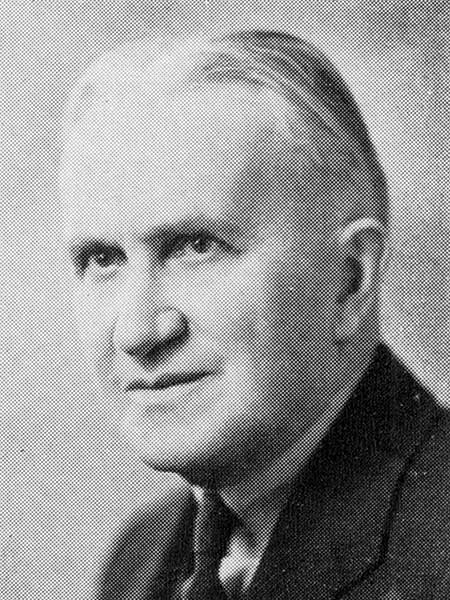
William Talbot Allison
Copyright, Canada, 1949, by
THE RYERSON PRESS, TORONTO
All rights reserved. No part of this book may be reproduced
in any form (except by reviewers for the public
press), without permission in writing from the publishers.
Published October, 1949
PRINTED AND BOUND IN CANADA
BY THE RYERSON PRESS, TORONTO
| CONTENTS | |
| Foreword by Carlyle Allison | |
| I. | A Word on the Lips of Millions |
| II. | The Last Day at Camp |
| III. | My Glass Door-Knob |
| IV. | The Archbishop Goes Home |
| V. | The Ubiquitous Wheel-Tapper |
| VI. | A, B, and C with a Shovel |
| VII. | Registration Day |
| VIII. | Father Martin’s Dilemma |
| IX. | Shadows on the Back Shed |
| X. | Twenty-One and Broke |
| XI. | The Nest Above the Door |
| XII. | Finding the Ghost |
| XIII. | My Honeysuckle Bushes |
| XIV. | Old Classmates Celebrate |
| XV. | The Jubilee Singers |
| XVI. | Signal from the Height |
| XVII. | City Noises Then and Now |
| XVIII. | A King and a Skylark |
| XIX. | Why Not Revive Old Fads? |
| XX. | A Postmaster’s Recreation |
| XXI. | Spoiling a Pretty Myth |
| XXII. | The Old Kitchen Table |
| XXIII. | Astronomers Need a Holiday |
| XXIV. | Freak Memories |
| XXV. | So Many Worlds, So Much to Do |
This For Remembrance
The other afternoon when a blizzard filled the air with drifting snow, I was sitting in my cosy library alone with my thoughts. And as I looked at Jill, our fox-terrier, curled up on the sofa, I was conscious of an extra sense of comfort just because the storm raged through the wintry sky. Our back shed, buried under a foot of snow, gleamed with no golden shadow, but, curiously enough, I thought of a text which was pertinent on this occasion:
“And a man shall be as an hiding place from the wind, and a covert from the tempest; as rivers of water in a dry place, as the shadow of a great rock in a weary land.”
A man, not a house, shall be as “an hiding place from the wind, and a covert from the tempest.” What a wonderful compliment to pay any son of Adam! Tennyson once referred to a statesman as “the pillar of a people’s hope,” but I never heard of any of the great men of history being called “an hiding place” for a people in fear or distress. Perhaps we might apply such a phrase to Fabius Maximus, King Alfred, Charlemagne, Wellington, Washington (father of his country), Lincoln, and George the Fifth. Hitler and Mussolini are storm-brewers rather than coverts from the tempest, but millions of people in the United States would cheerfully acclaim President Roosevelt as an hiding place from the sharp winds of the Great Depression.
But, to those individuals who have had the good fortune to be born in warm and happy homes, pater familias is “an hiding place from the wind, a covert from the tempest.” And this is why the very word “father” seems to have a tranquilizing effect on the human heart.
My earliest memory of my father dates back to a cold January night when I had but recently entered upon my fourth year. Father wakened me in the wee sma’ hours, and wrapping me up in a blanket, carried me downstairs in his arms. He said to me that he was going to show me a new baby brother who had just been brought to our house by the doctor. I still remember, and it is my earliest memory, how interested I was as I looked down from the safe shelter of my father’s arms at the red-faced little brother.
When you come to think of it, there are surprisingly few references to fatherhood in English poetry. William Cowper wrote a poem, each stanza of which winds up with the exclamation, “My mother!” but no poet has ever given such honour to his father.
Two references to father are put into Hamlet’s mouth by Shakespeare. The first occurs when the young prince hails the ghost on the ramparts of his castle of Elsinore. It was believed in those days that unless you addressed a ghost properly, he could not reply. So Hamlet exclaims, “I’ll call thee Hamlet, King, father, royal Dane: O answer me!” and the word, used with tenderness this time, is also to be found in the ghost’s message to his son, conveyed in that marvellous climactic sentence which winds up with the awful revelation that murder has been done, “If thou didst ever thy dear father love, revenge his foul and most unnatural murder.”
A more majestic use of the word occurs in Milton’s “Paradise Lost” (Book III), where we read these lines:
Thus while God spake, ambrosial fragrance fill’d
All Heav’n, and in the blessed spirits elect
Sense of new joy ineffable diffus’d:
Beyond compare the Son of God was seen
Most glorious, in him all his Father shone
Substantially express’d, and in his face
Divine compassion visibly appear’d,
Love without end, and without measure grace.
When we compare this, the grand style, with the words of the Lord’s prayer, “Our Father which art in Heaven,” we realize that the height of art is simplicity.
Hundreds of millions of people throughout the world repeat this simplest and most beautiful of prayers every day. It may therefore be confidently asserted that Father is the word oftenest used in religious parlance.
And when we remember the uses of the word Father in the Bible, we are struck with their range and power. Abraham was called the father of the faithful, the father of nations. God is invoked as “God of our fathers”—the opening phrase of Kipling’s “Recessional”—“Father of the fatherless,” the “everlasting Father,” “Father in Heaven,” “the Father of mercies,” “the Father of spirits,” “the Father of lights.”
Father is the outstanding word in one of the finest similes that has ever been conceived by any poet. In a rude and bloody age, by some flash of genius or Heaven-sent inspiration, a Psalmist reached forward to Christ’s teaching of God as a father, “Like as a father pitieth his children, so the Lord pitieth them that fear Him.”
Next to the reference in the Lord’s prayer, I prefer for its human interest that moving cry of the Prodigal Son, “I will arise and go to my father, and will say unto him, ‘Father, I have sinned against Heaven, and in thy sight, and am no more worthy to be called thy son.’ ”
And passing over other memorable sayings of Christ in which He refers to the Father, let us not forget those two last direct appeals to Him from the cross, “Father, forgive them; for they know not what they do,” and “Father, into Thy hands I commend my spirit.”
There is so much to be done on the last day at camp that there is little time for reflection. But when the dishes have been put away in the packing-case cupboard; when the mattresses and bedding have been piled on top of the dining-room table, the legs of which have been set in empty jam tins to prevent the mice from ascending to a snug winter boudoir; when the canoe and row boat have been ensconced on the front verandah, and the windows of the little house have been darkened by stout battens, and the doors barricaded in the same way, we find ourselves at sunset, sitting on the dock amid a motley collection of suitcases and club bags, waiting for the launch which is to take us to the railway station six miles away.
It is then that we begin to feel melancholy. As if to heighten our sadness, the clouds which have oppressed us for three days roll away, and Nature paints for us a gorgeous sunset which flames behind the heavy-treed island across the lake and tints the still water with soft tones of rose and green and gold. The days are rapidly shortening now; even the after-glow of sunset, which in July lingered so long with its riot of reflected colour, soon comes to an end.
But we still have time to take a long last look at our camp before the light fails and gathering darkness brings the launch. Never does our little lodge in the vast wilderness seem so attractive as in this hour of farewell, not even on the first day of our vacation when we come to it with joyous expectations of weeks of fishing, swimming, boating, and all those dear delights of summer far from the noise and dust of the city.
There it stands, our little palace of pleasure, perched on a granite ledge overlooking the lake. An architect would smile at its lack of proportion, for it seems to be three-quarters verandah. It has a Queen Anne front and a Mary Ann back, but our humble summer home is large enough for our purpose and with its natural setting it seems more beautiful in our eyes than any city mansion. On its right it is guarded by two large Norway pines; on its left are three fir trees; posted like sentinels on the rocky shore at its feet stands a bevy of graceful silver birch. And the forest primeval creeps right up to the back door, a wall of thick enshrouding green, a shady cool retreat on the hottest July day, full of delicious woodland scents and pierced by enticing paths to the back of beyond.
Every year when we put out its eyes and leave our little summer home standing there to brave in utter solitude the storms of winter, we are saddened by the thought that we may come this way no more. Will all the members of our now unbroken, happy family take their pleasure here next year? Ah, who can say? Life is a more fragile thing for human beings than it is even for those sturdy pine trees which lay their evergreen arms about our island home. Some day we shall return here and our memories of cheerful yesterdays will be pensive because one who dearly loved this place and all its beautiful surroundings will be absent. Even if death withholds his hand for many a year, the children will soon be grown up, and the struggle for existence may take them far away, too far for them to return to this wilderness retreat. It will be for them in that day an enchanted isle, replete with golden memories of the long holidays of childhood spent near to Nature’s heart.
But the launch is here. We scramble aboard with our baggage and soon lose sight of our island home as it disappears in the distance beneath the swift-dropping veils of night.
The man who built my house had the good taste to fit a large pane of plate glass into the upper part of the front door. Moreover he adorned this artistic door with a glass knob. It is not a round knob; it has bevelled edges and its action is governed by a Yale lock.
I suppose some aesthetes would prefer one of those specially designed ornate, brass door-knobs which are to be found in such abundance in the provincial parliament building, but glass seems to me to be cleaner, warmer, and more inviting.
There is an old saying which has not become obsolete, although I fancy that its literal meaning remains obscure to those who use it. When one person wishes to give a warm welcome to another to visit him, he says, “The latch-string is always out for you!” The general meaning is that the door will swing open quickly and he will be received with hearty hospitality. But this old saying dates back to the time when the door-knob had not yet been invented. In those far-off days when Brown went to see his friend Smith, he saw a stout piece of string, a boot-lace, or a deer-thong drooping from a little aperture about halfway up the left side of the door. When he pulled this cord, the latch was lifted on the inside of the door and it could be opened with a gentle shove. When the front and other doors were closed at night, the latch-strings were pulled in as a measure of protection against marauders or unwelcome guests.
In primitive communities it is possible that the latch-string is still used, but when iron door-knobs were first made, it was quickly relegated to oblivion by all up-to-date householders.
I have seen little iron knobs on doors in old houses and I have a vague memory of seeing a latch-string somewhere, but when I was a boy civilization had advanced to the luxury of white, black, straw and wine-coloured door-knobs. As nearly as I could make out, these were produced by crockery manufacturers. The red or black glaze on their round surface was much the same as that on a butter crock and I imagine that their substance was potter’s clay. They were not beautiful, those door-knobs; in fact the white and black ones repelled one. The only ones I cared for were those of a rich, red hue.
Those crockery door-knobs did not have the durability of their iron, brass, and glass brethren of today. They were fastened to an ugly cast-iron base by some kind of glue or plaster, and it was a common casualty for a boy who kept rattling impatiently at a locked door to have the red or straw-coloured knob come loose and leave him there tongue-tied before his angry mother or worse still some other boy’s mother, if he was not at his own door. That was certainly a moment of extreme embarrassment, “when,” as Mr. Briggs would say, “a feller needed a friend.”
But to return to my own glass door-knob. It has never come loose and it has been doing duty for many years. I have lost the key to the door and the Yale lock has gone on strike several times, but the cultured-looking glass knob carries on with a look of serenity and of transparent honesty.
And one of the best things to be said of it is that it never needs to be dusted or polished. It is kept bright and shining by the quick grasp of many friends.
For years Miss Sarah Milidge, of 35 Kennedy Street, has been deaconess in St. John’s parish; for a long time before that she was matron in St. John’s College. Although she is in her eighty-second year, she is remarkably active. Her eyes are bright, her voice clear, her personality full of charm. She carries with her an atmosphere of genial spirituality. She is not of the dreamy type; in fact she seems to belong to the practical Marthas rather than to the mystical Marys of the Christian Church.
On the grey afternoon of October 30, Miss Milidge kept to her warm room. A few minutes before three o’clock she turned casually to the closing pages of Pilgrim’s Progress and began to read Bunyan’s description of the passing of Mr. Valiant-for-Truth through the river of Death to the other shore, “a region with horses and chariots, with trumpeters and pipers, with singers and players upon stringed instruments, to welcome the pilgrims as they went up, and followed one another in at the beautiful gate of the city.”
And this was the passage which Miss Milidge was reading:
“Then said Mr. Valiant-for-Truth, I am going to my Father’s; and though with great difficulty I have got hither, yet now do I not repent me of all the trouble I have been at to arrive where I am.
“My sword I give to him that shall succeed me in my pilgrimage, and my courage and skill to him that can get it. My marks and scars I carry with me, to be a witness for me that I have fought His battles who will now be my rewarder. . . . So he passed over, and all the trumpets sounded for him on the other side.”
And as Miss Milidge read those words she could almost hear the flourish of trumpets. Sitting there quietly in her room, an eerie feeling came to her that she had not come upon this account by chance. She had a strong impression that someone was dying or about to pass into the other world. At first she thought it was meant as a notice to herself. She had often had heart weakness. Was another spell about to begin? Had her last hour come? No, her pulse was strong. “It must be someone else that is going,” she said to herself, and so pronounced was the impression made upon her that she jotted down in the margin of her copy of Pilgrim’s Progress—“Oct. 30, five minutes to three.”
Not for several hours did she learn that it was at this very time that Archbishop Stringer was suddenly summoned to cross the dark river.
If this fine old lady whose hands for over half a century have been so quick unto good, and who has been a co-worker with and an almost daily associate of the late archbishop, had been able to hear angelic music at the same time that she received the message of a soul’s passing, who knows but what she might not have caught the sound of the trumpets?
“Just a coincidence!” some will say as they read this story. “It just so happened that the deaconess in the archbishop’s parish should have opened Pilgrim’s Progress at that page at that time.” It may be so, but it does seem to me to be wondrous strange that she should have pencilled in the margin, “Oct. 30, five minutes to three.”
And how appropriate the identification of Archbishop Stringer with Mr. Valiant-for-Truth! During his forty years of missionary work in the north, he certainly deserved such a name as he drove his dog-sled through blizzards, voyaged across the ice-choked Arctic Sea, and went in jeopardy of his life amid the treacherous Indians that abound in the barren lands and the lower reaches of the Mackenzie river. The most perilous field of service in Canada was his when, year after year, he visited the lodges of the red man and the igloos of the Eskimo on his itinerary of 5,000 miles. He braved death from wild animals, from drowning, from starving, from extreme cold, not once but scores of times.
Oh yes, the trumpets must have sounded a triumphant flourish for this man, the great northland’s great son, Mr. Valiant-for-Truth, and we can imagine that, when he crossed that river which is far darker than the Mackenzie, a radiant host of friends of by-gone years, Eskimo hunters and Indian chiefs, with Bishop Bompas at their head, carried him on and up to the gates of the celestial city and spoke for him an abundant entrance!
The other day I hopped off the train for a breath of fresh air at a divisional point on one of the branch lines of the C.P.R. and, while a fresh engine was being attached, I stood by the rear passenger coach and watched a yard-man tapping the wheels with a long-handled hammer.
For more than forty years I have been familiar with the ceremony and never yet have I seen the man with the hammer detect a fault in a steel tire. I might add, in parenthesis as it were, that hundreds of times I have seen men fishing on banks of lakes, rivers, and streams and never yet have I seen an angler pull up a fish. So the other day, out of a long-ripened curiosity, I asked the wheel-tapper if he had ever been rewarded for his assiduity. He replied that in the course of years he had found not a few defectives. He said this with a smile and in a joyful tone of voice. I was relieved, for it would be just too bad to perform that interesting exercise train after train, day after day, year after year, and always with a sense of frustration. So perhaps the carefulness with which he had done his job had prevented several wrecks and saved not only railway rolling stock but valuable lives.
I suppose the nearest approach to the railway wheel-tapper is the medical doctor. Instead of a hammer he uses a stethoscope. He gently taps your chest to find whether there are defects in your lungs or in your heart. By hammering on your chest with his fingers, a skilful physician can learn many things about the trouble in your respiratory tract. When he dons his ear-phones and places his stethoscope over the heart area, he can often tell just how the unseen engine is behaving, but if there are abnormal noises, sinister murmurs indicating that cardiac valves are wearing out and “all the wheels of being running slow,” he can send the coach to the roundhouse, but he cannot substitute a new heart for the old one.
When you come to think about it, however, the wheel-tapper is not confined to railway yards or sick rooms. He is wandering up and down the world, in the person of every critic. How many wheels did you tap with your little hammer today? And what of your findings? It is only rarely that a railway man discovers a defective wheel, but if you are a keen critic I am sure that few characters ring true to your sensitive ear.
From the dinner table, the smoking car, the store and the office, the political wheel-tappers search diligently for flaws and always find them.
It is the same in the social, religious, educational and newspaper worlds. We are all looking for defects in our neighbours, our co-workers, our leaders, our associates. The clang of criticism that ascends to heaven in one day’s exchange of views in Canada is prodigious. The recording angel would never be able to jot down the smallest fraction of it, but he doesn’t bother with the bulk of it; it is too piffling; all he has time for are the malicious lies, the dire slanders, the unjust allegations.
“Judge not that ye be not judged” is a counsel of perfection that no one can obey; it is too high for us; we cannot attain unto it. But perhaps we would make better progress in the direction of fairness and tolerance if we were to tap our own wheels now and again with the hammer of self-criticism.
Many of my older readers will remember (most of them with unhappy recollections of agonized hours) various intricate questions in the High School Arithmetic used in Ontario some forty years or so ago. Its author was one MacKay, sometime a teacher in the Parkdale Collegiate Institute, Toronto, where I came under his baleful eye, and later professor of mathematics in McMaster University. When Professor MacKay gathered the problems for his arithmetic (I remember it was a volume of a dirty-brown colour), he exercised what I would call a ferocious ingenuity in thinking up difficult questions which occupied practically all of the space in the last forty or fifty pages of his book.
In those days no self-respecting maker of an arithmetic failed to set A, B, and C to work rowing boats up and down stream with or against the current which travelled at so many miles an hour. It was astonishing what MacKay could do with those three alphabetical Amalekites. And if they weren’t doing tricks in leaky boats rowing speedily or half-heartedly up and down a river, they were working on dry land in such a way as to make problems in arithmetic. Of all the sons of toil who figured in the questions in MacKay’s book, I hated A, B, and C the worst.
But there was another sort of question that worried me even more than the A, B, and C ones. I refer to clock questions.
Such questions, however, did not occupy all the space in the arithmetic. I was always thankful (that is when they were not too hard!) for such questions as “How many yards of paper would be required to cover the walls and ceiling of a room of such and such size?” Or “How many men working how many days with how many carts containing two cubic yards of dirt per load, would be required to excavate a lot 280 by 64 feet, to a depth of 12 feet?” I do not know whether I could do a question like that correctly now, but I used to succeed fairly well at this species of problem in the long ago.
And these memories of dismal hours spent with MacKay’s arithmetic came to me almost unbidden as a result of that remarkable dust-storm which swept over Manitoba a short time ago. This was not the first storm of the kind that we have experienced in Winnipeg, but, so far as I am aware, it was the most prolonged. I know that from the dark and lowering sky descended dirt which covered the snow on my front lawn, and it is a very safe estimate that dirt carried by the south wind from the Dakotas was deposited over Manitoba to an average depth of one thousandth of an inch. In many parts of the Province it would be more; in some places it might be less. Now, then, here is where the arithmetician comes into the picture. A friend of mine, who used to be a professor of mathematics and who still likes to play with figures, asked me the other evening how much of a load did I think the wind carried north during that afternoon and night or how much of Uncle Sam’s surface soil invaded Canada and settled down here. Of course, I had no idea; in fact such questions had never troubled me since I closed the pages of MacKay’s arithmetic for the last time. Nor did I volunteer to work out the question, if he would give me the ingredients. No, no, no more of that brain-fag! So, very kindly he set to and solved the problem himself.
And here is the result which I put in much the same language that he used. Assuming that one thousandth of an inch of dirt was deposited throughout the Province, the total would amount to 21,000,000 cubic yards. Now that did not convey very much to me, so he explained further that the average load of dirt carried by a truck, in excavating jobs, for instance, is two cubic yards. To move the above gigantic deposit brought hither on the wings of the wind, would require (allowing even so much as an average load of five cubic yards) more than 4,200,000 trucks.
To illustrate this result in another way he proceeded to inform me that the roads under the Good Roads Board of Manitoba cover 1,700 miles. Now, allowing each truck 25 feet on the road, or 211 trucks to each mile, these roads under the Good Roads Board could accommodate about 350,000 trucks going one way at one time. And each of the 350,000 trucks would have to make 12 trips to move this deposit which fell from the skies!
It is not likely that the dust reached to all parts of the Province, so I asked how much must have fallen in Winnipeg. He replied that there are 15,961 acres in the area of this city. The total deposit would then amount to 2,145 cubic yards. If a number of trucks were loaded with, say two yards each, of this gift from the Dakotas, considerably more than 1,000 of these vehicles would be needed to cart it back home. Allowing 25 feet on a roadway for each of these trucks, they would stretch along a road more than four and a half miles.
We can gather from this mathematical excursion, therefore, what a power of work the south wind performed in a few hours. We do not say thank you for this gift, for we know that it is hard luck for the farmers to the south of us to lose so much surface soil and another thought worries the Manitoba farmer. How many grasshopper eggs rode along with the dust, by the aerial route, to points far, far beyond those reached by their parents and uncles and aunts and most distant relations last summer? I wanted my mathematical friend to include those eggs in his calculations, but he hooted at my suggestion. But if Professor MacKay had ever had enough imagination to think up a dust-storm question like the above, I feel sure that he would have brought those eggs into it somehow or other, and made a perfect mathematical omelette.
This is registration day at the University of Manitoba. To many this remark conveys no suggestion of romance, no fillip for the imagination. If they have ever been near the University on such a day, they have a confused memory of hundreds of overgrown boys and girls milling around on the campus and in the lecture halls, like lambs without a shepherd. But to some passers-by this first day at college for shy maiden and callow youth carries with it a greater wealth of suggestion than the “Romance of the Rose.” The old graduate, perhaps one of the grey-haired, round-shouldered professors, ambling gently past groups of bewildered freshmen and bevies of bright-eyed freshettes, views this scene with a clear vision and an understanding heart.
The old graduate thinks of the spirit of hope and sacrifice represented by these “seekers after learning’s crumbs,” these young men and young women who have come from homes in city and country where parents are scarcely equal to the strain of financing them through college. He can easily imagine that the youth in the ill-fitting brown suit, standing lonely there before the bulletin board outside the crowded office of the Registrar, was driven to the station yesterday in a rattle-trap Ford. And when his father said good-bye to him, just as the train was about to pull out did the youth realize the impulse of strong, abiding, self-sacrificing love in the clasp of the rough hand and the note of pride and hope in the old man’s voice? Father and mother are going to live in homesteader style for a few years longer and go on slaving in order that their boy may have an education and fulfil his life’s dream of being a doctor. Will the boy make good or will he lack the necessary will-power and self-discipline to arrive with distinction at the end of his long seven-year course? Awkward and timid the youth stands there gazing at the bulletin board with unseeing eyes, for the first touch of homesickness is upon him and he is utterly unconscious of the fact that today Romance has placed his feet upon a shining path that may lead him to renown as one of the great benefactors of humanity, one whose name will be written on the scroll of fame with those of De Laennec, Jenner, Pasteur, Simpson, Lister and Banting. In their day these heroes of the curative art were obscure and humble freshmen.
When we consider the infinite possibilities of the three hundred or more high school students who become university undergraduates today we are lost in speculation. If we could only conjure up the circumstances from which these young people came, the struggles behind them, the prayers which follow them, we should have material for stories which would set up a novelist for life.
There are young people here whose parents came to Canada from the slums of London and Liverpool and have found health, independence and wealth, in the prairie country. There are boys and girls of old Ontario stock whose great grandfathers were United Empire Loyalists and who have inherited along with a love of learning the pioneer instinct which brought their fathers and mothers to Western Canada. And along with those of British or American origin, there is a large company of sharp-witted boys and girls, nearly all from city homes, whose fathers and mothers twenty years ago lived on the banks of the Vistula or the Danube. Ground down by centuries of oppression, they lifted up their eyes to a fair, free land across the seas. Not knowing a word of English, desperately poor, here they found their opportunity, together with a liberty of speech and action they had never known in the homeland, and now they are ambitious for their children to grasp a privilege denied to them and their fathers, a higher education that will give them positions of leadership in their adopted country. From the congested Jewish pale of Russia, from the steppes of the Ukraine, from the crowded tenements of Warsaw, the trail of romance has led in twenty years of patient but hopeful toil to the doors of the university with its possibility of still greater prosperity and progress in the third generation.
To the prophetic eye, therefore, the Registrar of the University is attended today by angelic presences. Romance and Hope look over the shoulders of every new student as he or she signs the roll, but let the newcomers remember that hard work lies ahead, lonely, midnight vigils, fits of depression, weariness, heartache. It is a difficult road that leads to the heights of intellectual achievement and few there be that find the summits:
Wings for angels but feet for men!
We may borrow the wings to find the way—
We may hope and resolve, and aspire and pray;
But our feet must rise or we fall again.
Only in dreams is a ladder thrown,
From the weary earth to the sapphire walls;
But the dreams depart, and the vision falls,
And the sleeper wakes on his pillow of stone.
Heaven is not reached by a single bound;
But we build the ladder by which we rise,
From the lowly earth to the vaulted skies,
And we mount to its summit, round by round.
“Out and in the river is winding,” wrote John G. Whittier, long, long ago, before the first water-thrashing, wood-burning steamboat wormed its way up to Fort Garry from the American boundary. I was thinking of the gentle Quaker poet the other day as I stood on the lawn of a friend who owns a beautiful summer house on the left bank of the Red, half way between Winnipeg and Selkirk. The lawn is a long stretch of land high above the water and commanding a five-mile vista where the circuitous Red tries hard to run straight for a time.
As I stood there with my host on that high, cultivated point of land and surveyed the dwellings of foreign born people of various European nationalities who have made their ribbon-like farms on the right side of the Red River, I reflected on the great changes which Manitoba has seen since the lone voyageur of Whittier’s poem listened to the vesper bell of St. Boniface as he paddled his canoe on the homeward stretch.
Changes have been many, but one thing changes not. Spring comes along the banks of the Red in the same old way. The birds, for example, return from the south just about the same time that they did sixty, a hundred, a thousand years ago. On top of a tree near the edge of the river bank, a tree still waiting to be clothed in green, a meadow lark greeted us with his rich and all-too-brief song. Bronzed grackles flitted in a clump of trees nearer the house and uttered their hoarse note which sounds like a gate opening on rusty hinges.
And every minute or two we heard the screams of gulls as they flew north. They were flying high in the blue heaven and my host informed me that they are good weather prophets. Every day they fly from the mouth of the Red River up to Winnipeg to spend the day in foraging for food and every afternoon they make the return flight to their reedy homes along the lake shore. If they fly low, the following day will be rainy or stormy; if they fly high, fair weather will be enjoyed.
For many years my friend and his better half have done their best to make their bird visitors feel at home on their property. To this end a few years ago they set up a commodious bird-house on top of a stout white pole. This house has eighteen compartments and last year provided a comfortable home for a colony of purple martins.
When I visited the Red River plantation on one of the first of those lovely opening days in May, the bird-pole was there, but not the house. The family having but recently moved into summer quarters, this job had not been attended to. I should explain that at the approach of winter with its high winds and storms, the gardener takes down the bird-house and stores it away for service during the following summer.
So it happened that as we looked at the white pole, we saw a martin sweeping round it, gliding up and down in the warm air nearby in the best martin style, and evidently looking for the missing house. Was this the father of the flock a day or so ahead of his large family, returned to the scene of last summer’s residence to prepare everything for the family’s return? Judging by the bothered way he flew about and rested on the pole to cogitate, we concluded that he was terribly disappointed to find the nice large white house no longer there.
My friend, the owner of the said bird-house, was quite dashed at this early arrival of Father Abraham Martin. He felt like addressing the black patriarch to advise him that the house would be put up the very next day, and that his flock, his wives, his children, his men servants and his maid servants, his whole patriarchal establishment would once more be accommodated. But, alas, martins, the bird variety, are unable to make head or tail out of our language. So Father Martin just had to hang around until the next morning before his summer home problem was happily solved.
Did you ever see pink shadows on the snow? A post-impressionist Canadian artist has painted them, and, although I have never seen any of that sort, I should not be surprised if they are to be found somewhere. But I have seen plenty of blue shadows, not only in the paintings of my friend, W. J. Phillips, R.C.A., but in reality. And on our back shed, late the other afternoon, I saw a beautiful golden shadow on a nice, even square carpet of pure, white snow.
Every painter keeps a keen lookout for shadows. A favourite with the painting fraternity must be R. L. Stevenson’s charming little poem, “I have a little shadow that goes in and out with me.” For in a certain light every landscape is full of shadows, big and little, and your careful artist is as zealous in reproducing them as a certain river in Muskoka to reflect in its surface the trees, grasses and rocks along its shore.
But interesting and fairly exciting as are some of the shadows we see in modern pictures, my vision of beauty resting delicately, almost momentarily, on the back shed induced me to try to resurrect from my memory my own connotations of the word shadow or shadows.
The first one that came to me was the expression of Edmund Burke, who, as he followed the body of his dissolute but beloved son to the grave, murmured to himself, “We are as shadows pursuing shadows.” And he was quoting a sentiment expressed thousands of years ago.
It was easy to drift from this memory to the great passage in Macbeth—one of Shakespeare’s most eloquent renditions of saddest thought—where the miserable king is informed of the death of his wife and breaks out:
She should have died hereafter;
There would have been a time for such a word,
Tomorrow, and tomorrow, and tomorrow,
Creeps in this petty pace from day to day,
To the last syllable of recorded time;
And all our yesterdays have lighted fools
The way to dusty death,
Out, out brief candle!
Life’s but a walking shadow; a poor player.
That struts and frets his hour upon the stage,
And then is heard no more.
“Life’s but a walking shadow,” exclaims Macbeth. But I refuse to allow my thoughts of shadows to remain gloomy. I think of all the detective stories I have read and what fun I have experienced in seeing the suspect shadowed by one or even three or four detectives. In real life I should not enjoy such a sight, but it is passing strange how you will like shadowings, inquests, arrests, and really horrible situations in a mystery story.
Hereupon a humorous memory bubbled up from my subconsciousness and I remembered a story of a man in the Arctic who found the temperature so low that his shadow froze to the icy shore and he peeled it off. I also remembered another story, European, I think it is, of a man who was doomed to go through the world without a shadow and this defect got him into all kinds of trouble. Stevenson’s shadow poem rises next; then I think of shadow boxers and of a newly-elected premier framing up a shadow cabinet.
An old-fashioned novel began, “The shadows of the evening were falling across the landscape when a horseman came over the hill.” My memory of that is pleasant and so are thoughts of tree-shadowed garden-seats in the good old summertime.
And at this point I recall the sun-drenched land of Palestine. What a refreshing metaphor to Orientals is that of Isaiah (32:2): “And a man shall be . . . as the shadow of a great rock in a weary land.” Canadians would think of a tree rather than a rock, but in nearly every section of the Holy Land there is little shade offered by big green branches or even small bushes.
When we hark back to the Bible, that great repository of poetry, we realize that “shadow” is a word that is both grateful and sinister. The reference to “the valley of the shadow of Death” belongs to the latter category; so does the lament of the Psalmist that all his days are “as a shadow;” but the majority of Bible shadows are productive of joy not of gloom. The Old Testament saints rejoiced because they felt that they were living under the paternal shadow of the Almighty, “in the shadow of His hand,” as one of them expresses it.
This last thought has a modern echo in Francis Thompson’s remarkable poem, “The Hound of Heaven,” where he reaches the conclusion that even the trials and difficulties of life are for the soul’s good:
Is my gloom, after all,
Shade of His hand, outstretched caressingly?
In the whole range of my shadowy recollections, however, I am inclined to think that not even the cry of the doomed Macbeth is more poetical than that lovely line in Solomon’s Song (4:2):
“Until the day break, and the shadows flee away.”
At a dinner in Pittsburgh marking the retirement of a successful steel manufacturer who had begun as a labourer at a dollar a day, he was asked what he would like to be if his wish could be granted. Without hesitation, he said, “Twenty-one and broke!”
Think that over, all you elderly people who attended the Commencement ceremonies of the University the other day and felt sad as you thought of the difficult world through which the small army of new graduates must now search for a foothold. Things were different when you were young; almost any young person with an education could make good in that prosperous era.
But while you were sitting there, filled with pity for the graduates, you did not realize that these same young people who will have such a difficult task in finding each for himself or herself a spot in the sun would not have changed places with any of the wrinkled governors, grave senators or grey-haired professors on the platform, no matter how wealthy, learned, or distinguished they may be.
Think how pleased Dr. J. W. Dafoe, Chancellor of the University, would be if he could only be transformed into a cub reporter, a rosy youth shrinking from the blistering sarcasm of a city editor! Imagine how blithely Judge Dysart, august chairman of the Board of Governors, would, if he could, become a humble clerk, aged twenty-one, in a moth-eaten law office! And if Sanford Evans LL.D., could exchange his brilliant doctor’s gown for the toga of a Victoria College freshman, aren’t you sure he would joyfully discard the burden of years?
And even Professor Reginald Buller, with all his degrees and honours, so many that he is as hard put to it as the father of eighteen children to name them, do you not realize that, even with his immense mushroom lore, and with probably many lectureless years of retirement ahead of him in which to learn still more about plain and coloured fungi, he would prefer to turn back the horologe of time and begin life over again?
And so we might go on, putting every fifty-year-old professor, every thin-blooded university pundit on the spot asking him if he would exchange his present lot for that of the youth of twenty-one with no job in sight. Except for perhaps a mere handful of theologians who still cling to the belief that “this world is but a desert drear, heaven is my home,” they would all with one accord say, “Yes, yes, strip us of honour, preferment, place and pelf, and let us be twenty-one and broke!” For, adapting Wordsworth’s lines:
Bliss is it in this dawn to be alive,
But to be young is very Heaven!
Many of my readers, old and young, may think that I am making light of present-day conditions with their tragedy of unemployment in this and other lands and the possibilities of a vast social upheaval. Not so, for I am full of sympathy for all those who suffer privation, and, what is perhaps worse, deprivation of opportunity to work. Life promises to be no bed of roses to those in their twenties, but former generations have gone through great perils and crushing miseries. The dawn of a new and better day, however, has followed many a dark night of affliction.
And the great game of life goes on with the promise of romance and adventure. The younger players may be obliged to sit a little longer on the side lines than their fathers did, but they will have their chance to go in and win.
And what things will be accomplished, what victories won by the lads of twenty-one in their efforts to make civilization more civilized! In every field of endeavour, political, social, mechanical, intellectual, spiritual, there will be advances of transcendant moment.
It is possible that the young man of twenty-one will outlive the present century and what miracles of invention he will see, what growth of knowledge, what triumphs of good over evil, of truth over error! The old men of today dream of “such things to be,” but to the young men belongs the glorious adventure of possessing the future.
For all we thought and loved and did,
And hoped and suffer’d, is but seed
Of what in them is flower and fruit.
There is an empty robins’ nest over the door of our front porch and I am still hoping that it will be occupied this season. Last year it was deserted, for what reason I know not, but in the preceding summers robin families grew up safely within its encircling charm.
The other day two robins hopped across our front lawn. They seemed to have had an enjoyable winter in the Southern States, judging by their embonpoint and the vivid colour of their breasts. They were the first robins I had seen this spring and naturally I hoped they were old friends who had decided to remain with us all summer. For years we have always had a pair of robins somewhere in the vicinity of our house, although as I have said, we have been honoured by their intimate patronage for only one season.
But there is one question which I should like to have cleared up. Touching these robins which pranced across the lawn the other day so blithely, I kept asking myself the question, “Are they or are they not the same couple which have been nesting here during the last four or five years?” As they have no Jack Miner tags on their legs, nor any birthmarks, or other stigmata to distinguish them from other members of the Robin Redbreast clan, I despair of establishing their identity. Some robins are a little plumper than others, some have a livelier colour, but, speaking generally, all birds of this class look alike to me.
But when I considered the thing, I began to speculate on the permutations and combinations of this problem of robin identity. The late Viscount Grey, who was a great bird lover and tagged wild ducks that visited his estate, declared that the birds he knew were monogamous in their habits. The same duck and drake returned year after year; they were faithful to their first love.
My friend, Professor V. W. Jackson, says that robins are as affectionate as ducks. They are constant in their marital relations and they are also constant in their devotion to the pied-à-terre where they first tasted the succulent fish-worm. He informs me further that the first wave of robins that pass our way are bound for Alaska and that they are of the male gender. They go on ahead to establish their claim to the small demesne which they or their fathers and grandfathers have held in former years—for how many years back no one, not even the oldest robin knows.
If the two robins I saw the other day were males bound for the friendly Arctic region, they could not have viewed me with any gleam of recognition in their bright eyes, but in a week or so when another robin wave comes from Florida or Central America, I must once more lose myself in conjecture as to the identity of those which settle here. At any rate I can rest assured that our front lawn will yield up worms to: (a) either the same pair of robins which piped to us on summer dawns last year; (b) the same husband with a new wife, owing to the decease of last year’s mate; (c) the same wife with a new husband, owing to the unfortunate demise of her husband; (d) a male, a son of last year’s pair that has taken unto himself a partner and returns to his native heath; or (e) a daughter of last year’s pair that has persuaded her partner that there is better picking in Winnipeg where she was born than farther north, where he was born, say in Prince Albert or Le Pas. Perhaps last year’s pair will arrive bringing their married children with them, trusting that there will be meat enough in our lawn, backyard, and other portions of their demesne to furnish them and their progeny with adequate rations.
If in the course of the next two weeks I see four or six robins hereabouts instead of our usual spring couple, I am going to help out their bill of fare by an occasional offering of Hamburg steak. Although I have never tasted an earthworm myself, I understand that in texture and protein content it bears a close resemblance to steak, and therefore ought to be favourably received by Mr. and Mrs. Robin Redbreast.
And here’s hoping that if I bribe them with some nice juicy steak, two of our summer visitors will fill the old nest above the door with new life.
Camille Flammarion, the French astronomer, published a big book in which he collected scores of stories of haunted houses. We gather from these narratives that a great many investigators have experienced super-thrills in sleeping in gloomy rooms in houses where murders have been committed. But students of psychic phenomena are not the only ones who look for ghosts. A friend of mine, a piano builder by trade, tells me that in every big store where they sell uprights and baby grands they keep a man who makes a specialty of ghost finding. A complaint is telephoned to the office that Mrs. Smith is dissatisfied with her new baby grand. She reports that there is something radically wrong with the instrument, for every time she plays C sharp it emits a raucous sound, a horrible note. Is it possible that the piano could have been injured in being moved from the showroom to her home? The good lady is assured that a man will be sent up to her residence at once to discover the cause of the trouble. A few minutes later the expert is called into the office and told to go up to Mrs. Smith’s house. “Find the ghost!” he is instructed, and he knows just what he has to do.
And what do you think the ghost is? An evil spirit inside the piano, a noisy little demon, the agent of Ate, the goddess of strife and discord? Not at all. The ghost is not in the piano, but in the room, and ghost though the disturber may be called, it is not of supernatural origin. The ghost-finder arrives; he strikes the ivory key that seems to the fair owner of the piano to be an aching tooth, so painful is the vibration that it sets up; then he surveys the drawing room. To the surprise of the mistress of the house he walks straight away from the piano, goes to a window, pulls out a pencil with a rubber cap on one end, and then asks the lady to sound the discordant key. Greatly wondering she does so, and the ghost-finder holds his pencil against the window pane. As she thumps the key, he feels the answering vibration in the pane, and he says, “There is the ghost. This is the seat of the trouble. C sharp’s tone-wave is the same as this window pane’s; they have the same rate of vibration, and when one responds to the other a disagreeable noise is the result. I’ll tighten up the glass in the frame and then we’ll find there will be no more ghost.” In this way the ghost is well and truly laid and the new piano is productive of nothing but harmony.
As like as not, however, the window pane is not the offender. The ghost may be a vase on the mantelpiece, a tobacco tin on a table, a Dresden shepherdess on the piano itself, or even one of the casters of the piano. In fact it may be any object capable of resonance. And the way to lay the ghost is usually either to remove the object from its position or to move the piano.
In ninety-nine cases out of one hundred the simpler method is to take the ghost to another room. Of course, when it is a window pane, or a caster on the piano, it has to be dealt with in another way. Often, however, the owner of the piano is so enamoured with the ghost, especially when it is a costly piece of bric-a-brac, that she prefers to change the location of the piano.
Can we not extract an interesting human analogy from this curious illustration from the piano-builder’s experience? As we all know, there are innumerable men and women whose lives are not harmonious. Something about them jars on their friends, perhaps makes them hate themselves. The thing for them to do is to call in an expert, an intimate friend maybe, or a preacher, or a psychologist, and have him make a diligent search for the ghost. I fancy, however, that nearly every discordant person could tell what and where the ghost is if he only would. It is usually a person or a thing, in sight or out of sight. It may be a cranky furnace or a loquacious mother-in-law; it may be a bottle of whiskey on the pantry shelf or a bottle of mustard pickles. Probably, however, it is something outside the home altogether, something at a distance which sets up a horrible vibration when a man is in a certain mood and harps on B flat—a bad debt owed him by one whom he trusted, a vacant lot bought in the days of the boom and still drawing blood money, or a foolish investment in oil stock. It must be admitted that even the most learned psychologist would find it difficult to lay a ghost of this sort. And when a man touches on C sharp—when he talks about the best way of circumventing the tax-gatherer, federal or provincial, or how to drive a keen bargain in business—his wife and friends are jarred by the discord. How is the ghost of sharp practice to be laid? This is a most difficult problem, for it is almost impossible to prevent the tone-wave of dishonesty from setting up a vibration with something or other in a world of dupes and easy marks. But my readers can work out this theme for themselves. If you find that there is a lack of harmony in your relations with your family, your friends, and the subjective and objective world, do your best to find the ghost that is spoiling your character, your own peace and happiness of mind, and the esteem of those whose good opinion you would do well to cherish. And if you are not equal to the task of finding the ghost yourself, take counsel with your wife, your minister, or your best friend.
I do not know whether you have ever noticed them, but I am very proud of three honeysuckle bushes that shade the cement walk that leads from the sidewalk to my front door. I found them here when I took over this house many years ago, two on one side of the walk, one, the largest of all, on the other side. They were big bushes ten years ago, now they might well be called trees, for they are at least fifteen feet high and between them they cover at least eighteen square feet of territory.
Now, the wonderful thing about these honeysuckle trees is their ability to blossom every year. They have never failed me yet and all three are exceedingly generous in their flowering. Never have I seen such a mass of pink loveliness adorning the two larger trees as this June. I think it would be impossible for either of them to find a place for one more blossom. In truth the upper branches, the whole crown of each tree, are so abundantly in blossom that, when it rained for some hours the other day, they became so heavy-laden with moisture that they bowed their proud heads as if they had suddenly experienced an affliction. When the sun cheered them up the next morning, however, they soon lost their dejected appearance, and once more lifted their glorious pink beauty to heaven.
Two of my honeysuckle trees belong to the Rosea family; the third is another species, and his name is Alba, so named from his whitish flowers. His blooms, I might say, are not so large as those of the Rosea sisters, and so he suffers by contrast. If he were standing there all alone, he would no doubt cut a pretty figure. Because I own him I pay him some admiration, but, if he could speak, I am sure he would bemoan the fact that so many people compare him unfavourably with the Rosea sisters. But perhaps I am misjudging him. If trees have souls, is it not possible that he is so generous and appreciative that he counts it a privilege to have such beautiful neighbours. Who knows but that he has a secret passion for one of the Rosea girls; at least he mingles his branches and blooms with those of the elder Miss Honeysuckle who leans to him across the walk.
And as the bees quietly and swiftly pass from bloom to bloom, sucking honey from each honeysuckle, and pollinating it at the same time, I wonder if their hosts ever talk to them about the time, ages ago, when a French botanist brought their ancestors from far-off Tartary, the country of the original Huns. The Rosea and Alba bushes once took the morning sunshine and listened to the hum of the bees on a Russian steppe. During the centuries they have certainly travelled far but the prairie air must seem to them much the same as that of their native land. Hence they thrive mightily in Manitoba.
The Rosea sisters have flourished so greatly that their interlaced boughs are making my walk to the street almost impassable. The shade they cast has also been a misfortune to a lilac bush nearby. It has managed to exist all these years and I am glad to say that at long last it has produced three lovely mauve spikes of bloom on its crest. The lilac bush is a native of Bulgaria. Both the lilac and the honeysuckle are redolent of the magic east but they take kindly to the golden west. Winnipeg has never been so beautiful with lilac and honeysuckle as in this rainy June.
This week’s gathering of graduates of Wesley, Manitoba, St. John’s and St. Boniface colleges as well as old-time students of the university proper, to celebrate the diamond jubilee of their Alma Mater has led to the interchange of innumerable recollections of the dear, dead days beyond recall.
When old college chums foregather they do not spend their time theorizing on that thorny subject, Education. Nor do they indulge in speculation regarding the future of their college or of the university. And I have a strong suspicion that one bald-headed graduate does not say to his grizzled contemporary of the class of 1910, “Now just tell me whether in your opinion a university education is worth while.” No, such a demand would be quite out of order, for the very fact that the two classmates have taken the trouble to come back for the jubilee proves that in their opinion the years spent in college walls were well worth while.
The old grads are probably all agreed that some of the subjects they studied did them very little good, that much that was taught to them was “sheer waste,” but they obtained a way of looking at things, a slant on human learning, a mental background that has been a tremendous benefit.
The graduates who are revisiting Alma Mater this week are not telling of the intimate results of investigation which they pursued ten or twenty years ago. They are more interested just now in the animate results of education, its human interest, the personal element in learning. They have many happy memories of the friendliness of college life, of the personal relations they established with other students and with their professors. These mean to them more, at least in the way of happiness, than the learning of the ages. If they had their choice of enjoying a ten-minute chat with Socrates or a tête-a-tête with that golden-haired freshette who dazzled all the boys in their year, why Alice W. would win out instanter. And when Walter T., now a federal M.P. from Saskatchewan, visits the lecture room where he used to be bullied by his Latin professor, he would like nothing better than to see once more and thank most sincerely that master of sarcasm who delivered him in his freshman days from the perils of indolence, and who became his sincere and idolized friend by the time he reached his third year. But that masterful teacher is now with Arnold of Rugby in the high heaven to which all good professors go.
There is probably more jolly camaraderie among the members of a class of college graduates than is to be found in any fraternity or sisterhood. In Manitoba University where co-education has obtained for many years, there has been the extra social joy which the presence of the gentler sex always ensures. And not only “joy in widest commonalty spread” but frequently romance into the bargain. It is surprising how many college boys fall in love with and marry college girls. This is as it should be, for those who have had the same intellectual environment are usually able to see eye to eye, certainly share pleasant college memories, and have similar tastes through life. And, in view of the fact that there is so much in heredity, there should be satisfaction among all eugenists when a college man marries a college woman, for the children of such a union ought to have more grey matter than either of the parents.
Universities send out from their laboratories new discoveries in physics and chemistry which contribute immensely to a nation’s material progress; but let us not forget that Alma Mater also educates the Alma Mammy whose Grade A children will contribute immeasurably to the ideal development of our country.
On Easter Sunday I listened with great pleasure to a broadcast of Negro folk-songs rendered by the student choir of Fisk University, Nashville, Tennessee. The spirituals which they sang were given to an audience of many millions by the network of the National Broadcasting Company on this continent and by the B.B.C. in Great Britain. Professor Johnson, the greatest living poet of his race and an authority on Negro folk-song, introduced the choir by saying that the original Fisk Jubilee Singers visited Great Britain in 1873 and received an enthusiastic welcome. The Earl of Shaftesbury was their patron; Gladstone listened to them with delight; Queen Victoria invited them to Windsor Castle. During their tour in the old land the Jubilee Singers raised the sum of £10,000 which enabled the trustees of Fisk University to erect a lecture hall which is still in use.
As I listened to Professor Johnson’s historical remarks and to the music that followed I recalled the time when I first listened to Negro melodies. It must have been in the early eighties when I was a small boy living in a little Ontario village. These Fisk Jubilee singers—for aught that I know the original group who visited England—made an extensive tour throughout Eastern Canada, not disdaining even country places. To this day I remember the thrill that I received that evening in the little Methodist church of Kleinburg when those rich southern voices first sounded in my ears. The impression was probably heightened by the fact that the singers were the first coloured people I had ever seen. I remember the name of only one of them, Pinkie Johnson. I can see her yet, an ample Negress with a remarkably expansive smile. She sang like an angel and seemed as happy as if she had just floated down through the spheres. One of the bass singers, a great big darky with flashing ivories and an extensive nose gave as a solo, “Rocked in the Cradle of the Deep.” I have heard that old song scores of times in the intervening years, but that was its premiere as far as I was concerned, and I do not think I have ever heard anyone go down deeper into the cave of harmony than that black-avised southerner. It was on that night of blessed memory that I first listened to what we now call spirituals, such touching ones as “Steal Away to Jesus,” such naïve humorous folk-songs as “One More River to Cross,” and “Little Boy David,” and many lively dialogue lyrics about Moses, Samson and other Bible characters.
The Jubilee band who toured Ontario in those days sold a volume bound in brown cloth to those who attended their concerts. My grandfather bought one of these books which told all about Fisk University and its singers, and included dozens of their songs. Often when I visited my grandfather’s home, I used to get down that slim brown book and read those songs in Negro dialect.
Darky humour is in a class by itself and has always amused me very much. It never seems forced, it is always kindly, and is often unconscious. As a specimen of the latter variety, Horace Porter relates that in the mountains of New Hampshire, he met a coloured veteran of the Civil War who was still “fighting nobly,” driving a stage on a country route. He said to him, “What is your name?” Said he, “George Washington, sah!” Porter said, “That is a name that is well known to everybody in this country.” Said he, “I reckon, sah, it ought to be. I’se been drivin’ heah eber since de wah!”
Here is another anecdote which is characteristically droll: An old coloured man down in Virginia was riding a mule and was caught in a violent thunderstorm while passing through a dense forest. Being unable to make any headway except through the agency of the fitful flashes of lightning which occasionally revealed his surroundings, and becoming greatly alarmed at the loud and terrible peals of thunder which shook the earth and reverberated over his head, he at last appealed to the Throne of Grace in this fashion: “O Lawd, if it’s jes’ the same to you, I’d rather hev a little less noise an’ a little mo’ light.”
Immense interest not only in religious but in non-religious circles throughout the world will greet the frank pronouncement of Marconi on the mystery of life. When man surveys the far-off heavens, “the splendid-mooned and jewelled night,” his soul is filled with awe. His thoughts wander through eternity, but he cannot begin to conceive the vastness of the nearest star. And when he turns from the telescope to gaze into the microscope, he is equally baffled. The proton and electron are new words in our vocabulary and only a scientist like Rutherford begins to understand the laws which govern these whirling centres of electric force which flash like a mimic galaxy of stars within the atom.
But, as Signor Marconi pointed out to his brother scientists man does not need to sweep the skies with his telescope or to study the latest experiment in the physical laboratory where atoms are being bombarded until they split asunder. He finds that his own body is just about as wonderful as anything in the heavens above or in the earth beneath.
And Signor Marconi has indicated a few of these wonders in a paragraph that is so compact in style, so freighted with the marvellous, that it is well worth our most respectful and concentrated reflection. He refers to, “the complexity of the different organs which all work out in co-ordinated and determinate functions, the constant preoccupation for the conservation of the species, man’s marvellous adaptation of his constitution to surroundings, the transmission of instincts, the mechanism of thought and reasoning, and lastly, the secret of death which places man, who wishes to explain the tormenting mystery, before a book closed with seven seals.” All this mysterious process of life and death “would be truly frightening were it not for faith.”
All of which is a modern paraphrase of the exclamation of the Psalmist poet that man is “fearfully and wonderfully made,” and Marconi’s reference to faith in a future life implies that he would re-echo the same poet’s expression of a belief in God, “marvellous are Thy works; and that my soul knoweth right well.”
Lively as is the hope with which a Christian looks through death, even the scientist or philosopher of today who cannot accept what so many regard as “divine revelation,” has good reason to view the doctrine of man’s immortality with more tolerance than the materialists of the last generation. The late Lowes Dickenson, Cambridge don and author, summed up his own rather timid faith in a speech by Vivian, the philosopher, in A Modern Symposium, in these significant words:
We do not know. We know only the impulse and the call. The gleam on the snow, the upward path, the urgent stress within; that is our certainty, the rest is doubt. But doubt is an horizon, and on it hangs the star of hope . . . by that we live. . . . Our eyes must open, as we march, to every signal from the height. And since the soul has indeed “immortal longings in her,” we may believe them prophetic of their fruition. . . . Science hangs in a void of nescience, a planet turning in the dark. But across the void faith builds the road that leads to Olympus and the eternal Gods.
Marconi’s feet are on the road of faith, and, like him, all those today who follow the advance of knowledge are encouraged by “every signal from the height.”
The epidemic that has fallen with such disastrous results upon horses in this part of the world must have impressed many elderly Winnipeg citizens with the fact that the statistics of this disease came almost wholly from country places. A different story would have been told had such a pestilence occurred twenty-five or thirty years ago, when horses were still to be seen by the hundred attached to delivery wagons or lorries on city streets.
The exchange of the horse and buggy for the passenger automobile, and later the passing of sturdy teams and heavy wagons to make way for motor trucks, have been regretted by those who in their youth were brought up on the farm and prefer animals to machines.
With all due respect to that noble animal, the horse, this city was a much noisier place when his four feet went klippety kloppity, along our echoing pavements. There is still many a young fool who toots the motor horn when there is no occasion for doing so, injuring the nerves of other drivers and waking the sick from healthful, precious sleep, but there is no denying the fact that the pneumatic tire carries a huge traffic along choked streets in comparative silence.
I can remember the time when crowded streets in big cities were scenes from bedlam. It is astonishing what heavy wheels big delivery wagons had in those days. When they rattled over stone or brick pavements, street car tracks included, and when their drivers in awkward jams exchanged roars, hoots and curses, which rose shrilly above the clanging of street car gongs, the noise was horrific.
Except for rattle-trap street cars on certain streets, Winnipeg of the present day reminds me of that line by Robert Louis Stevenson, “where essential silence cheers and blesses.” In the supposedly silent watches of the night, however, there are noises which were familiar to us when our life began and will probably sound dimly in our ears when we are sinking into our last sleep. At least this applies to those like myself who live within a mile or two of railway yards.
Last night I had a spell of insomnia and as the atmosphere was in a sympathetic condition for the carriage of sounds, I was forced to listen to the chugg-chugging, tooting and mournful whistling of several locomotives. As nearly as I could make out, there were two yard engines constantly at work, and occasionally a locomotive that gave a peculiar crescendo of coughs which seems to be necessary when a heavy freight train begins to annihilate space.
Strange as it may seem, I do not dislike the puffs and grunts, the wheezes and the clankings with which the locomotive engineer assails the ear of old night. A horse’s shoe striking a pavement or a hoarse motor horn is to me a cacophony, but night noises from a railway yard form a concord of sweet sounds which are peculiarly pleasant when there is enough moisture in the air to make them carry distinctly over quite a long distance.
From the days of my childhood I have enjoyed such railroad symphonies, but I was wondering last night if persons who are habitual sufferers from insomnia are admirers of the brotherhood of locomotive engineers. Do querulous invalids, brought back suddenly to consciousness by a toot, a whistle, or a violent meeting of box-cars, become more querulous?
I first saw His late Majesty, who at that time bore the title, “Duke of Cornwall and York,” in Toronto, in October, 1901. He and the Duchess were making their first official tour of the Empire. Completing a voyage from Cape Town, they arrived at Quebec on the S.S. Ophir on September 16. Proceeding to Montreal and Ottawa, they crossed Canada.
A month later, on their return journey, they spent three or four days in Toronto. The enthusiastic reception they received in that city was fabled at the time to have outshone anything in the wide Dominion, in fact, after the return of the Duke and Duchess to England, Lord Wenlock, the Comptroller of the Royal party, declared that Toronto outdid every city in the Empire.
And it was at the peak of the loyal city’s demonstration that I made my first and only contact with the future king, George V. At that time I was parliamentary reporter on the staff of the Toronto News and it was my duty to attend a reception to the Royal visitors and to the Governor-General, Lord Minto, and Lady Minto. It was held in the Parliament Building in the beautiful chamber where the provincial M.P.’s made the laws for Ontario.
The House was capacious enough for its ordinary purpose, but on the night of which I speak it was crowded to suffocation by Toronto’s pride and chivalry. I sat in the Press Gallery and looked down upon the colourful scene somewhat cynically, for I was then young and super-critical of polite society and its ambitions. I pitied the poor Duke and Duchess and Lord and Lady Minto as they stood in line, hour after hour, shaking hands with the well-dressed but democratic throng.
For a time I persevered in the resolve not to go downstairs and be “received,” but the thought that this might be my only opportunity to shake hands with those who would in all probability one day be King and Queen, overcame my radicalism. I went, I put my hand in that of Royalty; I received a feeble shake from the tired Duke who at that moment was talking to Lady Minto and did not give me a single glance. I think the Duchess smiled, but I cannot be sure; if she did it must have been hard work. I never realized before how dreadfully monotonous it must have been for those Royal guests to sustain such an ordeal.
The second time I saw the late King George on his Coronation Day, June 22, 1911. As I was representing The Winnipeg Telegram at an Empire Press Conference, in London, I received a complimentary ticket which enabled me to view the procession from a wooden stand erected in the Mall. I shall never forget that pageant of Empire, the most indelible impression of all was the sight of King George and Queen Mary passing by in their Royal coach, an equipage which seemed all gold and glass.
Their Majesties sat there stiff and ceremonious. Both were pale and, so it seemed to me, keyed up to a high pitch, a trifle apprehensive, as with all imaginable pomp and circumstance they were escorted by the Life Guards and numerous military units from all parts of the Empire to their crowning in Westminster Abbey.
I am not sure, but I think it was during the same summer that I saw King George for the third and last time. This occasion was for me, and perhaps for him, the happiest of the three. Accompanied by an Ipswich friend, I went to Norwich to attend the Royal Agricultural Show. This exhibition is an annual affair at which prize cattle and other stock from the Sandringham estates are entries.
My friend and I were standing leaning against the rope which enclosed the cattle ring, when suddenly I heard the sweet notes of a bird’s song. I had never heard such a song in Canada, so I looked about me and up into the blue sky, but the bird was not in view. I said to my friend, “What bird is that singing? I never heard such a piercingly sweet song!” He replied, “Oh, that’s a skylark!” “What,” I exclaimed, “is that Shelley’s skylark?” “Yes,” he said, “that’s Shelley’s skylark. It goes right up beyond the point of vision, but you can still hear it singing.”
I was thrilled to hear that little bird’s song, for I had read about it since boyhood days. And just as I was listening in ecstasy, the crowd began to cheer. The King was coming! He was in a smart yellow-wheeled dog-cart and as he drove by he lifted his silk hat, and smiled affably to right and left. I noticed that he had a bald spot on the back of his head the size of a small saucer. And every year since then, whenever I have read Shelley’s poem, “To a Skylark,” I have associated that “blithe spirit” with the fat cattle in the Norwich ring, and with the kindly, unaffected gentleman, King George the Fifth.
Would it not be interesting if the eighteenth century fad called patching could be revived during the approaching election campaign? In the days of Addison and Pope many fashionable ladies and a few foppish young men wore a patch on the right cheek if they were Tories and one on the left if they were Whigs. These little bits of black velvet enhanced their beauty, but they also advertised their party. So widespread was the custom that it brought prosperity to the velvet makers of Coventry, while Birmingham and Liverpool jewelers and Bristol glass-makers reaped goodly profits from the manufacture of dainty boxes in enamel and glass Tazzas or patch-stands for the display of these pretty partisan trade marks. How enlivening it would be if we could walk down Portage Avenue and tell at a glance how women were lining up—a patch on the right cheek for Bennett, one on the left for King, one on the forehead for Woodsworth, or one on the chin for Stevens!
The fan craze introduced into England from France lasted until the last decade of the eighteenth century. It got into its stride in the days of Queen Anne and proved a wonderful boon to thousands of employees of fanmakers. In a paper read before the Royal Society of Arts in London, Mrs. Herbert Richardson stated that the Fanmakers’ Company was incorporated by Royal Charter, and this organization, together with Gordon, of the Golden Fan and Crown in Covent Garden, and other dealers produced an endless variety—fans historical, geographical, and botanical, fans with the latest dance tunes on them or even the church service for use on Sunday. Tea importers introduced Chinese fans; importers of Italian goods brought in artistic fans from Bologna, and even well-known English artists designed fans for those who wanted something specially expensive and, of course, exclusive.
Fans enjoyed a revival about fifty years ago and it is quite possible they may become fashionable any year. Their manufacture would probably give employment to thousands of people now out of work, but let us hope that the craze for bobbed hair will not have such a reaction as to popularize high hairdressing. This was the silliest and the most expensive fad of 18th century women. It was the age of wigs when every genteel home had a powdering closet, a room set aside for the treatment of wigs and coiffures. A woman’s coiffure, say about 1760, is thus described by Mrs. Richardson:
The new head dress was built up on a cushion of horsehair or wool, the hair combed over it, loops and rolls of false hair added, the whole smeared with pomatum, powdered, and then further decorated with flowers, ribbons, feathers, or even, as the caricaturists suggest, vegetables, making an erection sometimes three feet high.
This monstrous affair could not be taken down every day. A “head” usually lasted three weeks before it was “opened;” sometimes it was worn for nine weeks. At night a long nightcap was pulled over the contraption. And in addition to the discomfort of wearing this tower by night and day there was always the fear that mice might get into it. This is proved by an advertisement of 1777 which shows that even this possible mishap stimulated the jewelry business.
“The many melancholy accidents, which have lately happened in consequence of mice getting into ladies’ hair in the night time,” so runs the advertisement, “induced the Society of Arts, at their last meeting, to offer a premium to the person who should invent the neatest and most useful bedside mousetrap.”
A silver wire trap is offered for sale at three guineas.
It was the influence of the French Revolution which wiped out absurd coiffures, also much that was colourful and costly in apparel. On account of this wave of simplicity many trades in England suffered a catastrophe. For example, the elimination of the polished buckle as a dress detail threw 200,000 English workmen into dire distress.
If some magician could make fashionable a Bennett buckle, a Woodsworth waistcoat, a King fan or a Stevens steel fob-chain, we should probably see the end of unemployment in Canada.
It is doubtful whether Winnipeggers in this busy age ever cut out newspaper articles and paste them in scrapbooks, but in the days of our grandfathers it was an honoured custom. On a back shelf in my library there lies a scrapbook compiled by my father-in-law in the eighties of the last century. In its prime this book was an office ledger, for the man who kept it was postmaster in an Ontario city. From the nature of the clippings which he made it is easy to see that he was a devout man. Most of the entries are from church papers and religious magazines. Once in a while the secular press was laid under tribute when anything useful could be gleaned from its columns. Unfortunately, however, the compiler was oblivious to murder mysteries, political speeches, and other mundane topics. The old book is ponderous in the extreme, didactic to the nth degree, gorged with religious lyrics and truncated sermons.
In this old scrapbook I find a good many articles and items along medical lines. Human beings have always been interested in their ailments. If there had been daily newspapers in the middle ages there would have been items with such titles as these, “Hot Milk for Grippe,” “Remedy for Night-Sweat,” “Remedy for Smallpox” and “For a Cold in the Head.” Consider what progress has been made in medicine in the brief period of forty years! The conscientious compiler of this scrapbook, a paterfamilias, prudently pasted into his book this sure cure for diphtheria: “Recipe—Pulverized cayenne pepper and warm water, make it into a thin paste, wrap a rag to the end of a small stick, dip it in the paste, and apply it three or four times a day; if the throat has matter in it, gargle it well with yeast every hour or two. P.S.—The doctors are using the above, and nothing else, in and about Chicago.” Let us be thankful that the anti-toxin treatment has supplanted this Chicago recipe. Few are the deaths resulting from diphtheria today, but it was a fell disease that killed its hundreds of thousands of children only forty years ago!
But the religious material makes up the bulk of the contents of this faded old book. Forty years ago the religious press was ringing with assaults against the higher critics. Joseph Cook, the famous Boston lecturer, was then in his prime, and one article in the scrapbook is a reproduction of Cook’s deliverance entitled “A Nightmare of Non-Sequiturs; Joseph Cook on Extreme Higher Criticism.”
Charles Sheldon, author of the once-popular book, In His Steps, was also in his glory forty years ago. An item in the scrapbook commemorates the now-forgotten fact that once upon a time the once-famous Sheldon undertook to publish a daily newspaper on the lines laid down in his book. He did not have a nose for news, however, so the project fell through. It was a paying proposition while it lasted, but it did not last long, and did not give entire satisfaction.
Back in the seventeenth century that mine of curiosity, Sir Thomas Browne, wrote a book with a horrific title, Pseudodoxia Epidemica, in which he did to death not a few popular errors. For example, by eating little red spiders himself, he demonstrated that they were not poisonous. But while the Norwich physician proved by actual experiment that many ideas about natural history were erroneous, he failed to clear up numerous foolish imaginings about animals and insects that have come down to us from remote times.
Everyone knows that ostriches do not hide their heads in the sand when they are pursued by an enemy, but an old idea which I was forced to discard only yesterday is the aged belief that snakes are charmed by the sound of sweet music, especially when it is addressed to them by a native Indian playing on his pipe. The scientist has spoiled this pretty myth for me by announcing that snakes have no tympanic cavities in their heads, no eustachean tubes, with the result that they are as deaf as cement gate posts. All efforts to charm them by seductive sounds are therefore in vain.
I think I hear you interrupt me here by saying, “What about those pictures I have seen wherein the cobra sits with head erect swinging its sinuous body from side to side as the snake-charmer tunes his pipe? How is it that Mr. Cobra oscillates to the piercing music if he cannot hear it?”
The answer is that he doesn’t hear a thing, but that he is interested in the musician. He watches him and, as the man sways from side to side while playing on his instrument, the snake follows suit as one fencer watches another.
Mr. E. G. Boulenger, the English naturalist to whom I am indebted for this interesting information, relates that a few years ago he was approached by a firm of gramophone record makers who showed him photographs taken in the African desert professing to depict serpents apparently enjoying the strains of native music. The result was a challenge to try out the theory in the reptile house at Regent’s Park, London. “The cobras,” writes Mr. Boulenger in The Observer, “were treated to organ music, the piercing notes of the snake-charmer’s gourd pipe, and the more pleasing efforts of Miss Gracie Fields.
“Some of the most violent tunes could have been heard several hundred yards away, but the snakes did not exhibit the slightest emotion.”
So the next time you catch sight of a snake just slip up on him from behind and, provided you do not agitate the atmosphere, for he is keen on detecting changes in air currents, you will have him at your mercy.
Seeing that it was discovered in ancient times that the adder is deaf, it seems strange that the snake-charmer’s bluff was not called several thousand years ago. But we must not be unjust; for it is quite possible that the charmer is himself the victim of the popular error.
There is another mistaken notion about snakes. Most of us have regarded the serpent’s practice of darting out its forked tongue as a defiant gesture as it makes its sinuous way in your direction. But if you were hidden in the underbrush and saw it travelling along the road on peaceful business bent, you would notice its forked tongue darting back and forth.
The modern scientist explains that the snake is helping out its very poor eyesight by flickering its tongue to test air conditions as an aid to protection. The poor creature is at two distinct disadvantages in that it is deaf and has such poor sight that when it strikes at a foe it frequently misses its aim.
Speaking of the reaction of animals in general to music, Mr. Boulenger states that experiments in the London Zoo show that the rhinoceros has no ear at all for a concourse of sweet sounds; music hath no charms to soothe that savage breast. It arouses only a passing interest in cats, great or small; apes and monkeys show a little attention, but soon forget it in what seem to them matters of greater interest.
Dogs, wolves, jackals and foxes rather like orchestra music, but the instant a minor note is struck they elevate their muzzles and howl as though in pain. Crocodiles, strange to relate, are all attention, and remain with heads erect until the orchestra ceases, and the zoo seals and sea lions enjoy it most of all, “resting high in the water, with heads sunk between shoulders and eyes closed, apparently enthralled.”
We smile at the idea today, but, in 1860, when a young couple set up housekeeping, say in London, Canada West, all the tables in their new home were built by a strolling English cabinet-maker, and every table was made of solid walnut. Two of those tables are in the writer’s home today. One is a fall-leaf table which was probably used in the dining-room, and, if it could speak, what jolly stories it could tell of family gatherings and Gargantuan appetites of long ago! But I am more interested in table number two, and I wish to tell you of its strange metamorphosis.
This table is a heavy affair of a peculiar shape, six feet long and twenty inches wide, and was no doubt intended to be placed over against the window in the 1860 kitchen. And this has been its appointed place in the kitchen of every house which we have occupied. We have always had a broader, shorter table in the kitchen, and this Long Tom was the temporary repository for I do not know how many things. In the course of its seventy odd years of service, the old table, so sturdily built that its legs are as strong as the day it was made, suffered the ravages of time in only one respect. It was scarred and dinted and chipped by bread-knives, meat-choppers, and can-openers, and so much fluid had slopped upon it, from cider and raspberry vinegar to hot starch and cranberry juice, that it had shrunk until it was concave. This battered top consisted of one solid board an inch thick. No one in our family ever saw anything beautiful in old Long Tom. He was a kitchen table, very useful it is true, but no one had ever thought enough of him to have him varnished. He had been stained, but was innocent of all polish.
But you should see him now! Long Tom was rescued from his humble estate one day not so very long ago by an Austrian cabinet-maker, who was so eager to get work that he went from door to door looking for old furniture to mend. We found some disabled chairs in the cellar for him to rehabilitate, and then, by a happy chance, he was conducted to the kitchen and asked if he could take the kink out of the long table. He went into ecstasies over old Long Tom. He pointed out the gracefully turned legs and assured us that the man who made it was a master of his craft. He thought he could take off the top, steam it, press it into shape, and replace it bottom side up.
The Austrian was as good as his word. He took his time at the job, and, when he placed Long Tom in our parlor one day, we were just about breathless with surprise. It was as if our Austrian travelling artist had taken away a scullion and brought back an angel. You can see yourself in the gleaming, polished stretch of richly grained walnut, and every time I enter the parlor, where Sir Thomas stands across the end of the room near the front window, I feel like quoting Keats’ famous line, “A thing of beauty is a joy forever.”
But if the old table only had a soul, I fancy he would often be lonely for the fragrant scents and pleasing commotion of the kitchen. It is a fine thing to be living in a glorified state, varnished and polished, but ennui often afflicts the idle rich.
And wouldn’t it be a jolly thing if the itinerant English cabinet-maker of long ago could thank his Austrian brother of today for his redemptive work?
Astronomers, at least the practical ones who look through telescopes (not content to confine themselves to the textbooks on the subject and to learned papers read at conventions) should knock off work. Some years ago the Rt. Hon. Winston Churchill suggested to Admiral Tirpitz that Great Britain and Germany should have a naval holiday; he meant that the shipbuilding competition should cease. Although there is no race on in the study of celestial mechanics, would it not be a wise thing for savants in the observatories of the world to indulge in a holiday?
The practical astronomers might go on a world cruise, or devote themselves to technocracy, or even to social credit for the next couple of years, put in the time loafing or reading free verse, or in any way until the new 200-inch telescope is mounted in its tower somewhere near Pasadena, California. The enormous mirror for this new searcher of the heavens is now being patiently polished in California, and it is calculated that it will be at the service of science two years hence.
It must be three years since the huge disc was first cast in New York State, and, although astronomers should have a contempt for terrestrial time, they must find it wearing to wait so long for the great day when the far-off stars will pour their light into this mammoth optic tube.
And not only are astronomers excitedly impatient for that day to arrive, but tens of thousands of people who know only a smattering of the celestial science. The other week Rev. Dr. Fosdick, the famous New York divine, declared in a radio sermon that he could scarcely wait for the coming of this great event. Undoubtedly there are millions of people who are absolutely apathetic about the 200-inch telescope, but they are unfamiliar with the motto, “Per aspera ad astra.”
It was an epoch-making event when the 100-inch telescope of Mt. Wilson observatory revealed millions of new suns to human eyes. In Canada, our observatory near Victoria, has a 72-inch mirror. Now, while these telescopes would have seemed giants to Galileo, they are babes when compared with the Pasadena mirror.
And what, you ask, do the astronomers hope to discover through the new 200-inch telescope? Enough, probably, to upset many theories and to establish new facts about the constitution of the stars, all of which will require the rewriting of textbooks and the publication of hundreds of learned reports on old topics seen in a new light.
And the 200-inch mirror will reveal not only millions of new suns, but will probably enable astronomers to compute more accurately than is possible at present the increasing rate of speed at which the farthest stars are travelling. Our sun pushes along into space, carrying his family of planets with him, at the respectable rate of 18½ miles per second. It is supposed by some stargazers, however, that the rate of star travel doubles with about every ten million light years’ distance. Some stars are tearing along at the rate of 12,000 miles a second. Will the new telescope bring to our eyes the light of stars that are proceeding twice as fast, or even three times as fast?
“Well, what of it?” you say. “Will the new telescope tell us for certain that this is an expanding universe?” It is hoped that such will be the revelation. It is just possible that the 200-inch mirror will enable the astronomer to see right over the edge of what was once considered the infinite universe. And how will they know when they have detected that “last relay and ultimate outpost of eternity?” Ah, there will be no more lights—there will be nothing but the black field of outer space. The fleet-footed suns will have exploded into nothingness.
But my own feeling is that when the 200-inch discoverer of the most ancient heavens catches the star-shine which has been travelling our way for ten million light years, it will not be possible to ascertain whether the stars are popping off, or going down into darkness, or just rushing on with still more maddening speed.
Professor Allen, of the University of Manitoba, who is an authority on light, fancifully speculates that the day may come when a telescope with a 500-inch mirror will be set up under the cloudless skies of Egypt in an observatory as high as the Eiffel Tower. But if that event ever takes place, it will probably be seen that this vast universe is still on the move, expanding and expanding, never continuing in one stay.
Some individuals are blessed (or cursed) with a freak memory. They read a page of print and it is photographed upon the brain, or, to change the metaphor, stored away in a grey matter cell to be produced letter perfect perhaps twenty years afterwards. The marathon feat of all these astonishing remembrances is related by the late Neil Munro in his lively volume, The Scotland I Remember. The hero, a decidedly queer one he was too, was Sam Bough, a Glasgow artist. Always an omnivorous reader, he fed on the best poets and prose writers. Alexander Frazer, a fellow-painter, and he were once storm-stayed in an inn at Lanark during a sketching tour.
“To kill time,” writes Munro, “Bough began to repeat by heart the contents of Carlyle’s Past and Present, the only book obtaining in the place. Giving Frazer the book to check him, he started an oral repetition which lasted nearly the whole day.” He went through the task almost verbatim, and Frazer declared it was rarely that any error could be detected even in the most involved or long-drawn-out passages of Carlyle’s prose.
It is quite likely that Macaulay could have performed such a tour de force, for he also had a photographic memory. When he was a boy eight years old he got by heart all of “The Lay of the Last Minstrel” and most of “Marmion.” In his admirable biography of his uncle, Sir George Trevelyan says that Macaulay was always willing to accept a friendly challenge to a feat of memory. One day, in the board-room of the British Museum, Sir David Dundas saw him hand to Lord Aberdeen a sheet of foolscap, covered with writing arranged in three parallel columns down each of the four pages.
This document, of which the ink was still wet, proved to be a full list of the Senior Wranglers at Cambridge, with their dates and colleges, for the hundred years during which the names of Senior Wranglers had been recorded in the university calendar. On another occasion Sir David asked: “Macaulay, do you know your Popes?” “No,” was the answer, “I always get wrong among the Innocents.” “But can you say your Archbishops of Canterbury?” “Any fool,” said Macaulay, “could say his Archbishops of Canterbury backwards,” and thereupon he went off at score, drawing breath only once in order to remark about the oddity of there having been an Archbishop Sancroft and an Archbishop Bancroft, until Sir David stopped him at Cranmer.
But to such performances as those of Bough and Macaulay we may apply the phrase, “Cui bono?” There is no more use in burdening the mind with whole books or whole strings of names of kings, popes or wranglers than in storing up memories of the daily weather of by-gone years.
Professor William Lyon Phelps records the fact that his brother, the Rev. Dr. Dryden Phelps, can recall some particular thing that has happened on any day during the last sixty years; and he can recall it immediately upon demand, in response to any challenge. If he is asked what happened on any date, say March 6, 1879, in a few moments he will tell you what day of the week it was and will proceed to give the weather for that day, and describe some particular thing that happened. The professor, who is a Baptist deacon and the son of a Baptist preacher, and therefore the soul of truth and honour, declares that he has seen his brother’s freak memory tested many times and has never known him to fail in dredging up facts that have lain dormant in his mind decade after decade.
It is a wonderful gift to have a memory of the Bough-Macaulay-Phelps variety, but, if its possessor talks too much, it can also be a torment to relatives and acquaintances.
The world explorer, Magellan, who went on his last voyage more than four hundred years ago, figures largely in works on astronomy because his name was given to a galaxy which is seen to great advantage in southern climes. The Clouds of Magellan consist of several millions of giant and super-giant stars that are of higher candle power than our own sun, some of them being ten thousand times as bright.
Multitudes of suns never revealed to the best photographic plates have been brought into our ken by a photoelectric “eye” attached to the hundred-inch reflecting telescope at Mount Wilson. Scientists are now persuaded that the galaxy of which our solar system is a small unit is not as much superior to its cosmic neighbours as it was supposed to be. But vast as is our universe and other universes it is a safe assertion to make nowadays that all of them, whether gaseous or “solid,” are pulsing with electric energy. From the biggest seen in the Clouds of Magellan to the smallest lump in the sugar bowl of Mary Ellen electrons are at work, fixed there and revolving, each in its orbit by the power of the Eternal Will.
The size of an electron is about one hundred-thousandth part of the diameter of an atom. And these tiniest bodies known are whizzing round at tremendous speed. If an atom be thought of as a solar system, then its nucleus, or what is called its proton, is the sun, and the electrons revolving about it are like the planets flashing in their orbits round the sun. And just as in the solar systems in the heavens there are few collisions because of the small sizes compared with the distances at which satellites are spaced out, so proportionately there is plenty of space inside an atom for electrons to move about without risk of collision.
Sir Oliver Lodge says that when we find in an atom a sort of solar system, we begin to question whether there is anything in absolute size at all. “It has been suggested,” he says, “that solar systems may be atoms of a still larger universe.” There are questions that are too hard. But there appears to be no end to the infinity of the universe, and all that we can say is that the probability is that it is infinite in an infinite number of ways.
If this is so, we are all going to have a busy intellectual career ahead of us when we arrive in “the next world,” as we sometimes vaguely describe the hereafter. Tennyson was struck with this idea when he wrote in “In Memoriam” (published in 1850):
So many worlds, so much to do,
So little done, such things to be,
How know I what had need of thee,
For thou wert strong as thou wert true?
He was mourning the loss of his gifted college friend, Arthur Hallam, and here expressed his faith that he whose head had missed an earthly wreath of fame had been called to more important work in another sphere. How could he know what world needed Hallam’s intelligence, his spiritual light and leading? It seemed to Tennyson that Hallam’s mind could not have been snuffed out when he died suddenly “within Vienna’s fatal walls” on that September morning in 1833.
And the same thought occurred to Matthew Arnold when he wrote “Rugby Chapel,” that best of all tributes of a son to a father. Remembering how wise and beneficent and strong his father had been and how he had been snatched away from his great work at Rugby by a heart attack when he was in his prime, his son, the poet, hopeless as he was at most times in his outlook, could not believe that death meant oblivion. So he wrote these lines:
O strong soul, by what shore
Tarriest thou now? For that force,
Surely, has not been left vain!
Somewhere, surely, afar,
In the sounding labour-house vast
Of being, is practised that strength,
Zealous, beneficent, firm.
Whether we are in the body or out of the body, there seems to be little chance that we can get away from the ubiquitous, hard-working electron. We handle these little whirling worlds of force, we toil with them and by means of them, we even eat them, and it seems as if we shall associate with them throughout all eternity in the labour-house of being.
Misspelled words and printer errors have been corrected. Where multiple spellings occur, majority use has been employed.
Punctuation has been maintained except where obvious printer errors occur.
The foreword by Carlyle Allison (1907-1972) is not public domain and is not included in the ebook.
The portrait of the author, of unknown provenance, has been replaced with a public domain photograph from 1948.
[The end of This For Remembrance by William Talbot Allison]